




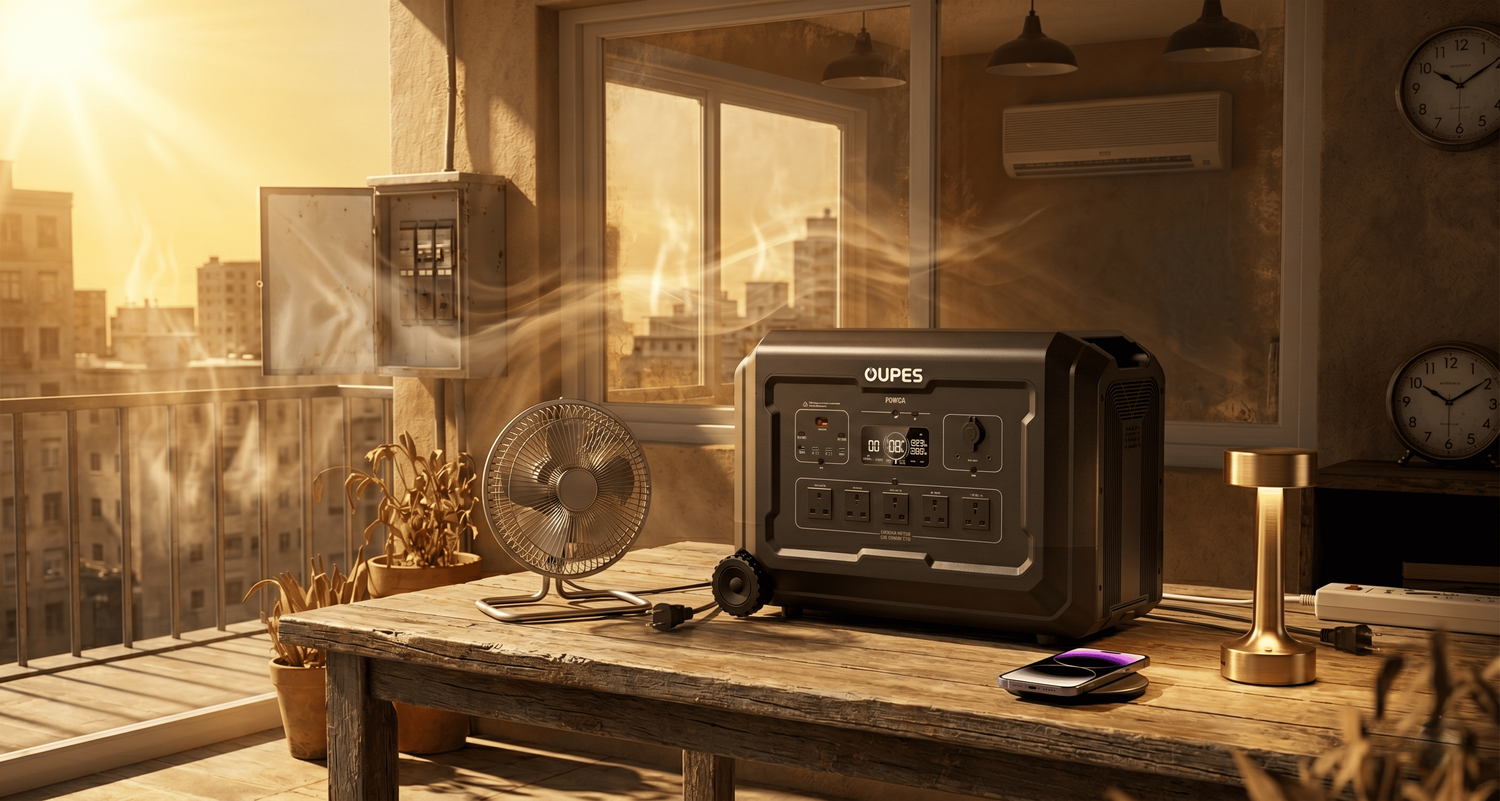
Heat waves are becoming increasingly common across the UK, and with rising temperatures comes another growing concern: power outages.
While many people associate blackouts with winter storms, flooding, or heavy rain, extreme summer heat can also place enormous pressure on the electrical grid. During prolonged hot weather, electricity demand rises sharply while power infrastructure becomes less efficient. This combination increases the likelihood of local outages and wider grid instability.
Recent heat waves across Europe have shown how vulnerable modern electrical systems can become during periods of extreme heat.[1] As UK summers continue warming, more households are beginning to prepare for heat-related blackouts.
This guide explains why heat waves cause power outages, how high temperatures affect electrical infrastructure, what risks households face during summer blackouts, and how portable power stations can help improve emergency preparedness.
Article Navigation
- Why Electricity Demand Increases During Heat Waves
- How Extreme Heat Damages Power Infrastructure
- Why Power Plants Struggle During Heat Waves
- Why the UK Is Vulnerable to Summer Blackouts
- The Risks of Heat-Related Power Outages
- Why Portable Power Stations Matter
- Detailed OUPES Product Guide
- Real Appliance Runtime Calculations
- How to Prepare for Summer Blackouts
- FAQ
Why Electricity Demand Increases During Heat Waves
The main reason heat waves cause power outages is the sudden increase in electricity demand.
As temperatures rise, households, offices, supermarkets, and data centres all consume significantly more electricity to maintain cooling. Refrigerators work harder, fans run continuously, and portable air conditioners operate for longer periods.
Unlike short-term demand spikes, heat waves often last several days or even weeks, placing continuous pressure on the power grid.
Common Devices Increasing Summer Electricity Demand
| Device | Typical Power Usage | Usage During Heat Waves |
|---|---|---|
| Portable Air Conditioner | 900W–1500W | Continuous |
| Electric Fan | 50W–120W | High |
| Refrigerator | 100W–300W | Longer cooling cycles |
| Freezer | 150W–400W | Higher workload |
| WiFi Router | 8W–15W | Constant operation |
| Data Centre Cooling | Very High | Rapidly increases |
According to climate and grid studies, electricity demand can surge dramatically during extreme heat events.[2]
How Extreme Heat Damages Power Infrastructure
Heat waves do not only increase electricity usage — they also physically affect the infrastructure that delivers electricity.
1. Power Lines Expand and Sag
Transmission lines heat up during hot weather. As temperatures rise, cables expand and sag lower, reducing efficiency and increasing transmission losses.
Higher temperatures also increase electrical resistance, meaning more energy is lost while transmitting power.[3]
2. Transformers Overheat
Transformers distribute electricity to homes and businesses. During heat waves, they face two simultaneous problems:
- Higher external temperatures reduce cooling efficiency
- Increased electricity demand raises workload
If transformers become too hot, they may fail or automatically shut down to prevent permanent damage.
3. Ageing Infrastructure Struggles
Some parts of the UK electrical grid were designed decades ago, when extreme summer temperatures were less common. Prolonged heat places additional stress on older infrastructure.
Why Power Plants Struggle During Heat Waves
Power stations themselves often become less efficient during extreme heat.
Thermal Power Plants Require Cooling
Gas and nuclear plants rely on cooling systems to operate safely. Hot weather reduces cooling efficiency and can force temporary reductions in power generation.[4]
Lower Wind Speeds
Some heat waves are associated with lower wind conditions, reducing renewable energy generation during periods of peak electricity demand.
Water Temperature Problems
Many power stations rely on water for cooling. During heat waves, rivers and reservoirs may become too warm for efficient cooling operations.
Why the UK Is Vulnerable to Summer Blackouts
Although the UK has traditionally experienced milder summers than southern Europe, the situation is changing.
1. Record-Breaking Temperatures
The UK has experienced temperatures exceeding 40°C in recent years.[5] These conditions place unprecedented pressure on the electrical grid.
2. Increasing Cooling Demand
Air conditioning usage in the UK is growing rapidly in homes, offices, and commercial spaces.
3. Urban Heat Islands
Cities such as London experience higher temperatures due to dense buildings, roads, and reduced airflow.
4. Greater Dependence on Electricity
Modern households rely heavily on electricity for internet access, remote work, communication, and cooling.
The Risks of Heat-Related Power Outages
Food Spoilage
Refrigerators and freezers can only remain cold for limited periods during outages.
Loss of Cooling
Fans and cooling systems stop working immediately during blackouts, increasing discomfort and heat exposure risks.
Communication Problems
WiFi routers, mobile charging systems, and internet connections may fail.
Medical Equipment Risks
Some households rely on powered medical devices that require uninterrupted electricity.
Why Portable Power Stations Matter
Portable power stations are becoming increasingly important for emergency preparedness in the UK.
Unlike petrol generators, LiFePO4 portable power stations are quiet, emission-free, and suitable for indoor use.
They can power essential devices such as:
- Fans
- Refrigerators
- WiFi routers
- Lighting
- Laptops
- Medical devices
- Portable cooling systems
Many models also support solar charging, providing additional flexibility during prolonged outages.
Detailed OUPES Product Guide
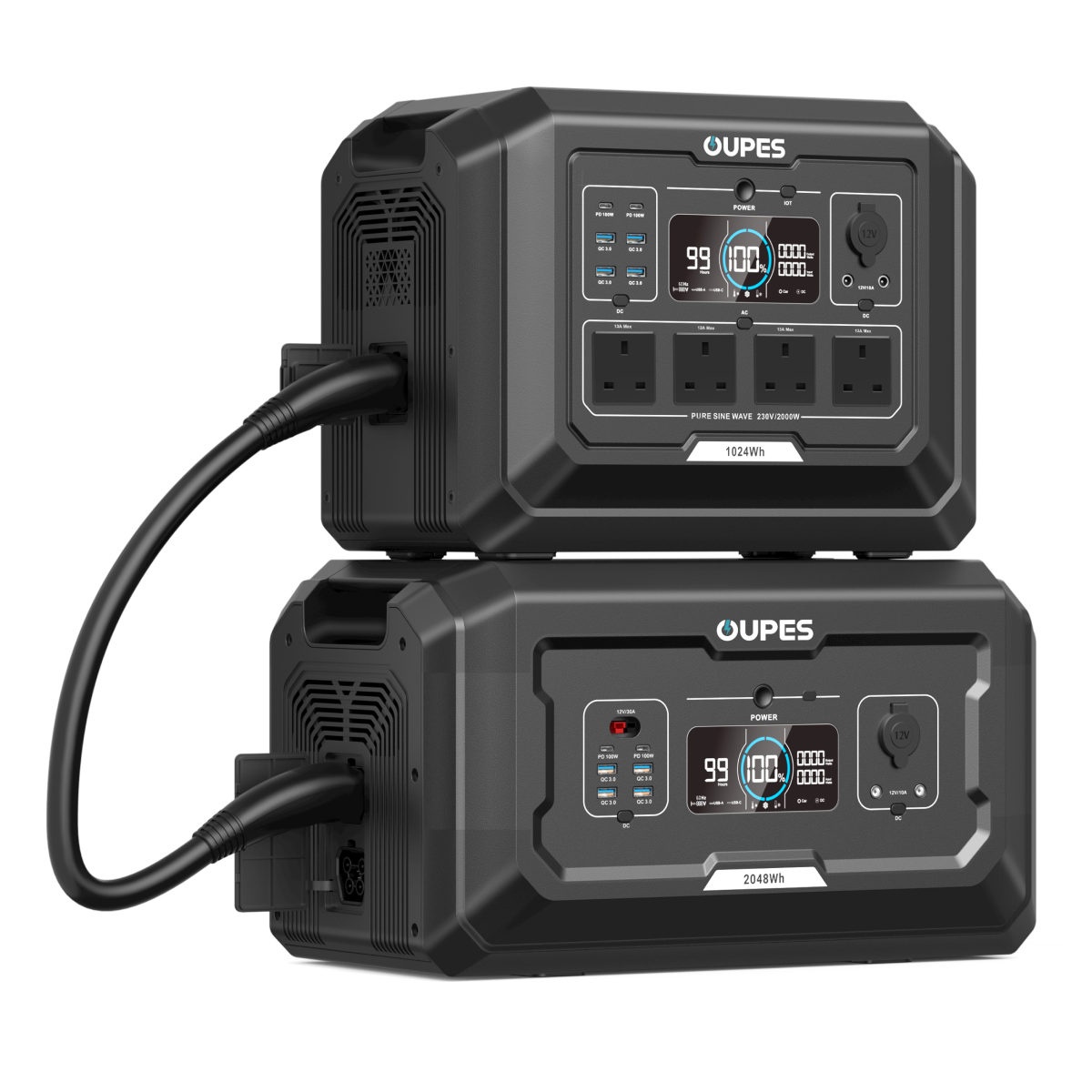
OUPES Mega 1 — Compact Home Backup Power
OUPES Mega 1 is designed for households needing reliable backup for essential devices during short outages.
| Specification | Details |
|---|---|
| Battery Capacity | 1024Wh |
| Usable Capacity (80%) | 819Wh |
| AC Output | 2000W |
| Battery Chemistry | LiFePO4 |
| UPS Support | <20ms |
| Best For | Routers, lighting, fans, laptops, refrigerators |
The Mega 1 is particularly suitable for flats, apartments, and smaller homes where essential backup power is the priority.
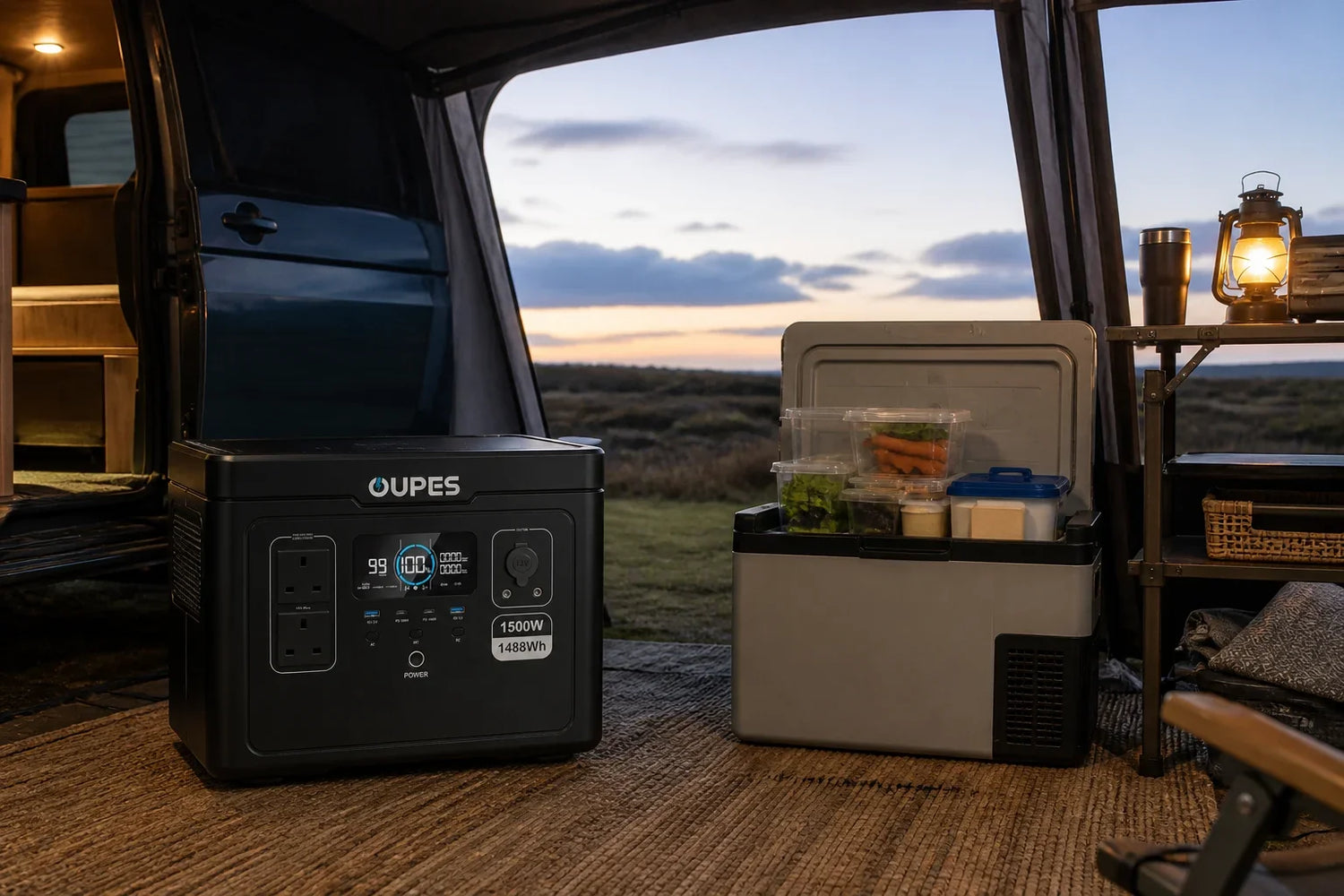
OUPES Exodus 1500 — Portable Emergency Backup
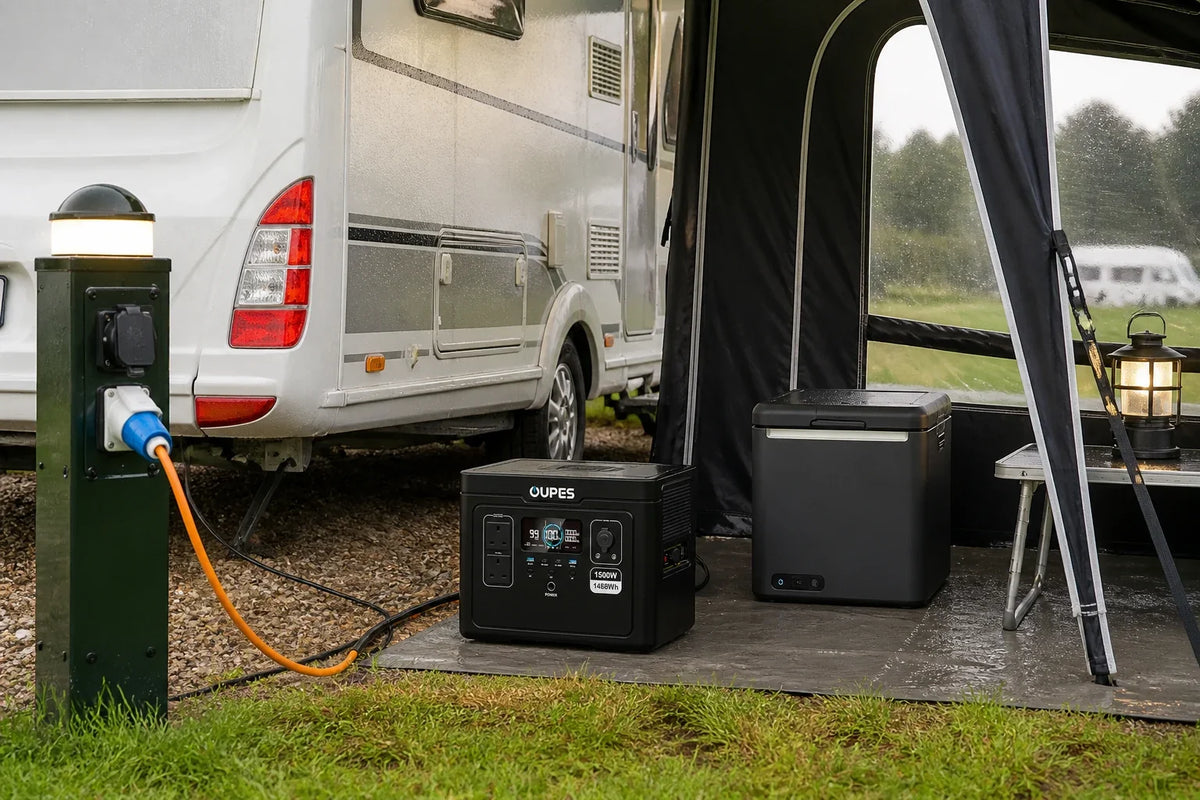
OUPES Exodus 1500 balances portability and performance, making it suitable for both emergency home backup and outdoor use.
| Specification | Details |
|---|---|
| Battery Capacity | 1488Wh |
| Usable Capacity (80%) | 1190Wh |
| Output | 1500W |
| Best For | Fans, CPAP machines, remote work equipment |
Its compact design also makes it practical for camping and road trips during summer.
OUPES Exodus 2400 — Multi-Device Backup Solution
OUPES Exodus 2400 is designed for households requiring longer runtimes and support for multiple appliances simultaneously.
| Specification | Details |
|---|---|
| Battery Capacity | 2232Wh |
| Usable Capacity (80%) | 1785Wh |
| AC Output | 2400W |
| UPS Support | Yes |
| Best For | Refrigerators, TVs, laptops, fans, lighting |
OUPES Mega 3 — High-Capacity Emergency Backup
OUPES Mega 3 is designed for larger households and more demanding backup situations.
| Specification | Details |
|---|---|
| Battery Capacity | 3072Wh |
| Usable Capacity (80%) | 2457Wh |
| AC Output | 3600W |
| Expandable Capacity | Up to 15.36kWh |
| Best For | Long outages and multiple appliances |
Real Appliance Runtime Calculations
In real-world usage, portable power station runtime calculations should use approximately 80% of the rated battery capacity to account for inverter losses and system efficiency.
Runtime Formula:
Estimated Runtime = Battery Capacity × 80% ÷ Device Wattage
Estimated Runtime Comparison
| Appliance | Power Consumption | Mega 1 (819Wh Usable) | Exodus 2400 (1785Wh Usable) | Mega 3 (2457Wh Usable) |
|---|---|---|---|---|
| 50W Fan | 50W | Approx. 16 Hours | Approx. 35 Hours | Approx. 49 Hours |
| 100W Refrigerator | 100W | Approx. 8 Hours | Approx. 17 Hours | Approx. 24 Hours |
| 10W WiFi Router | 10W | Approx. 81 Hours | Approx. 178 Hours | Approx. 245 Hours |
| 60W Laptop | 60W | Approx. 13 Hours | Approx. 29 Hours | Approx. 40 Hours |
| 1000W Portable AC | 1000W | Not Recommended | Approx. 1.7 Hours | Approx. 2.4 Hours |
These estimates may vary depending on appliance efficiency, ambient temperature, and usage patterns.
How to Prepare for Summer Blackouts
Create a Cooling Strategy
- Use blackout curtains
- Keep emergency drinking water available
- Ventilate during cooler evening hours
- Reduce unnecessary appliance usage
Prepare Backup Electricity
Portable power stations can help maintain access to cooling, internet, communication, and food preservation during outages.
Monitor Weather Alerts
Track official UK weather warnings and National Grid alerts during major heat events.
Conclusion
Heat waves are placing increasing stress on the UK electrical grid. Rising electricity demand, overheating transformers, reduced power generation efficiency, and ageing infrastructure all contribute to growing blackout risks.
As extreme summer temperatures become more common, portable backup power is becoming an important part of household emergency preparedness.
Portable power stations such as the OUPES Mega and Exodus series provide quiet, reliable emergency electricity for cooling devices, refrigerators, communication equipment, and essential home electronics during summer outages.
FAQ
Why do heat waves increase power outage risks?
Heat waves increase electricity demand while reducing the efficiency of power infrastructure and generation systems.
Can transformers fail during extreme heat?
Yes. High temperatures combined with increased electricity demand can cause transformers to overheat.
How should portable power station runtime be calculated?
Real-world runtime calculations should use approximately 80% of the battery capacity to account for system losses.
Can portable power stations run refrigerators?
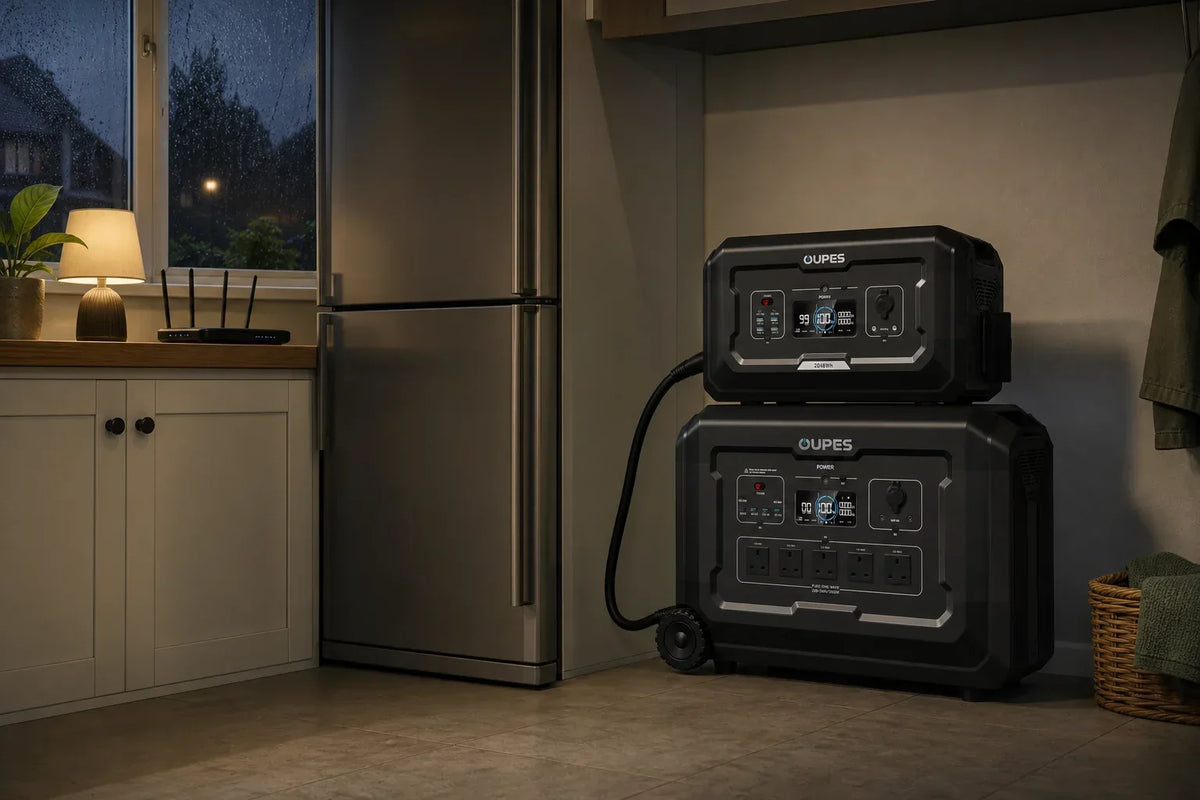
Yes. Larger models such as the OUPES Exodus 2400 and Mega 3 can support refrigerators during outages.
Are portable power stations safe indoors?
Yes. LiFePO4 power stations produce no direct emissions and are suitable for indoor emergency use.
Can solar panels recharge portable power stations during blackouts?
Yes. Many portable power stations support solar charging for extended emergency usage.
Will heat waves become more common in the UK?
Climate studies indicate that extreme heat events in the UK are becoming more frequent and more intense.[5]
Sources:
[1] Ember Energy – European Heatwave Power Impact
[2] Climate Central – Heat Season Power Outages
[3] U.S. Department of Energy – Heat Effects on Transmission Systems
[4] Powerstar – Energy Resilience During Heatwaves
[5] UK Met Office – UK Climate Trends

Leave a comment
This site is protected by hCaptcha and the hCaptcha Privacy Policy and Terms of Service apply.