




A hail storm can feel sudden, but good preparation usually starts well before the first ice hits the roof. In the UK, hail is often tied to thunderstorms, and the Met Office notes that thunderstorms are not only about lightning. They can also bring intense rainfall, large hail, and even tornadoes.[1] That is why preparing for hail should never be treated as only a car-protection task. It is a wider severe-weather plan that covers shelter, alerts, emergency supplies, property protection, and what to do if power or communications are disrupted.
For most households, the best approach is practical rather than dramatic: understand warning levels, know where you will shelter, secure loose outdoor items, move vehicles under cover if time allows, keep key devices charged, and have a realistic plan for short power cuts.[2][3][4] If you do those basics well, you will already be in a much stronger position than people who wait until the storm is overhead.
Table of Contents
- Why hail deserves serious preparation
- How to use UK weather warnings properly
- What to do before a hail storm
- How to protect your home, garden, pets and car
- What to do during a hail storm
- What to do after the storm passes
- Why backup power matters after hail and storm damage
- OUPES options for practical storm backup
- Bottom line
- References
- FAQ
Why hail deserves serious preparation
Hail is dangerous because it rarely arrives alone. The Met Office’s thunderstorm factsheet explains that thunderstorms can create not only lightning, but also intense rainfall, large hail and tornadoes.[1] In practice, that means a hail event can damage roofs, skylights, conservatories, cars, gardens and outdoor equipment while also bringing electrical disruption, difficult travel conditions and local flooding pressure.
The UK Government’s Prepare campaign also warns that storms can disrupt power, internet and phone networks, bring down trees, and cause transport problems.[5] That makes hail preparation about more than impact damage. It is also about keeping your household safe and functional if the storm affects services for several hours.
| Risk Area | Why It Matters in a Hail Storm |
|---|---|
| Roofs, windows and glazing | Hail can crack or weaken vulnerable exterior surfaces |
| Vehicles | Cars, vans and caravans are often exposed and expensive to repair |
| Outdoor belongings | Furniture, bins, garden tools and lightweight items can be damaged or become hazards |
| Power and communications | Storms can interrupt electricity, mobile charging and internet access |
| Personal safety | Hail often comes with lightning, strong winds and dangerous outdoor conditions |
How to use UK weather warnings properly
One of the most useful preparedness habits is checking warnings early and interpreting them correctly. The Met Office says it can issue warnings up to seven days ahead for weather including thunderstorms, and those warnings are colour coded as yellow, amber, or red based on a combination of impact and likelihood.[2]
That warning system is practical because it tells you not just what weather is coming, but how seriously you should react. The Met Office explains that yellow warnings often mean some disruption or lower-level impacts, amber warnings mean there is an increased likelihood of more serious impacts and you should think about changing plans and protecting yourself and your property, while red warnings mean dangerous weather is expected and you should act now to stay safe.[2]
| Met Office Warning Colour | What It Means | Best Household Response |
|---|---|---|
| Yellow | Some disruption or lower-level impacts are possible | Review your plan, monitor updates, charge devices, and secure easy outdoor items |
| Amber | Higher likelihood of disruptive impacts, including power cuts and property risk | Protect property, adjust travel, move vehicles, finalise shelter plan, avoid unnecessary exposure |
| Red | Dangerous weather is expected, with serious risk to life and infrastructure | Act immediately, avoid travel where possible, and follow official safety advice |
If you only do one thing during storm season, make it this: do not just glance at the warning colour. Read the actual warning text. The Met Office specifically says yellow and amber warnings can cover a range of impact levels, so the details matter.[2]
What to do before a hail storm
A good hail-storm plan starts before the warning is urgent. The most important preparations are simple:
- check Met Office warnings and keep alerts switched on
- decide where everyone in the household will shelter
- charge phones and essential devices
- keep a torch, batteries, radio and basic emergency items together
- know what you will move indoors first if an amber or red warning is issued
The UK Government’s emergency-preparation guidance recommends keeping a battery or wind-up torch, because torches are safer than candles, as well as a portable power bank, a battery or wind-up radio, spare batteries, and backup battery support for essential medical equipment where needed.[6] That is especially relevant for hail storms because the same thunderstorm that damages property can also cause a local power interruption.
The Met Office also advises unplugging non-essential appliances before a thunderstorm if you are not already using surge protection, because lightning can cause power surges.[3] That small step is often overlooked, but it is one of the easiest ways to reduce avoidable electrical damage during severe weather.
How to protect your home, garden, pets and car
Most property protection steps only work if you take them before the storm is directly overhead. Once hail starts falling, you should stop trying to save belongings and focus on shelter. Before that point, however, a short checklist can make a real difference.
Start with vehicles. If you have a garage or covered parking, use it. If you do not, even moving the vehicle to the best available sheltered location can reduce exposure. The next priority is loose outdoor equipment: folding chairs, lightweight tables, tools, toys, planters, and anything that could be damaged or turned into flying debris by storm gusts.
You should also bring pets indoors early rather than waiting for the weather to worsen. And if your home has vulnerable glazing, rooflights, or older conservatory panels, it is wise to stay especially alert when thunderstorm warnings are issued.
The Met Office’s safety advice is clear that during storms you should stay indoors as much as possible, avoid going out to repair damage while the storm is still in progress, and avoid sheltering close to buildings and trees if you are outside.[4] That supports a practical rule: do your securing early, not late.
| Priority | Action | Why It Helps |
|---|---|---|
| 1 | Move cars under cover | Reduces one of the most common and expensive hail losses |
| 2 | Bring in loose outdoor items | Reduces breakage and prevents storm debris problems |
| 3 | Bring pets inside | Prevents panic and injury once hail and thunder begin |
| 4 | Charge phones and emergency devices | Improves communication if the storm affects power or mobile use |
| 5 | Unplug non-essential appliances | Helps reduce damage from lightning-related power surges |
What to do during a hail storm
Once the storm is hitting, the safest response is straightforward: stay inside a substantial building and keep away from windows. The Met Office warns that when you hear thunder, you are already within range of the next lightning strike, and lightning can strike as far as 10 miles away from the centre of a storm.[3] That matters because hail often arrives with or just ahead of the most dangerous part of the thunderstorm.
The same Met Office guidance says to seek shelter if possible, but avoid underground or low-lying spaces such as underpasses or basements that might flood rapidly.[3] For most households, the safest choice is an interior room away from windows, skylights and glazed doors. If you are in a conservatory or a room with large glass areas, move deeper into the house.
Do not go outside to film the hail, check the car, or pull in one last item once the storm has arrived. This is one of the most common avoidable mistakes. During the storm, personal safety matters more than property.
What to do after the storm passes
When the noise stops, it can be tempting to go straight outside and inspect everything. Be careful. Even after the worst has passed, there may still be loose branches, broken glass, slippery surfaces, or unstable roof materials. If there has been any interruption to power or communications, your priority should be to check the household first, confirm everyone is safe, and make sure you still have light, phone access and updates.
The broader UK storm-preparedness guidance emphasises that storms can affect power, internet and phone networks.[5] That is why post-storm readiness is not only about damage inspection. It is also about resilience for the next few hours. A charged phone, a torch, a radio, and some backup power can matter just as much as a ladder or a camera.
Inspect visible damage from safe ground where possible. Look for cracked glazing, dented metal trim, displaced roof materials, blocked gutters, broken garden structures and water entry. But do not climb onto a wet or damaged roof unless it is genuinely necessary and safe to do so.
Why backup power matters after hail and storm damage
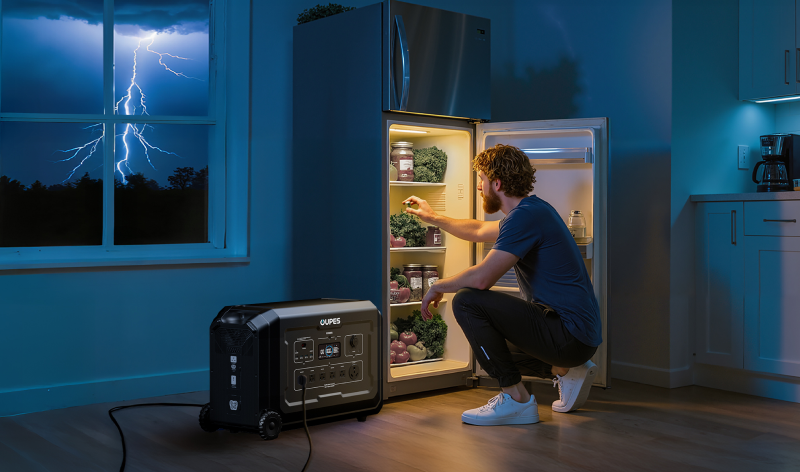
Most people think of hail as a damage problem, but it is often a continuity problem too. If a thunderstorm knocks out power, even briefly, the household immediately notices the loss of lighting, router access, phone charging and small-device support. That is exactly why the UK Government’s emergency kit guidance includes a torch, radio and portable power bank.[6]
For some households, a small power bank is enough. For others, especially families working from home, people relying on routers for communication, or households wanting a stronger short-outage backup plan, a larger portable power station makes more sense. This is where storm preparation starts to overlap with backup-power planning: the question becomes not just “How do I stay safe?” but also “What do I want to keep running if the storm interrupts normal life?”
OUPES options for practical storm backup
If you want to add backup power to your UK hail-storm plan without turning the article into a product pitch, the most useful way to think about OUPES is by backup tier. The goal is not to buy the biggest unit by default. It is to match the device to the kind of storm disruption you actually want to handle.
| OUPES Model | Rated Capacity | Rated Output | Best Storm-Prep Fit |
|---|---|---|---|
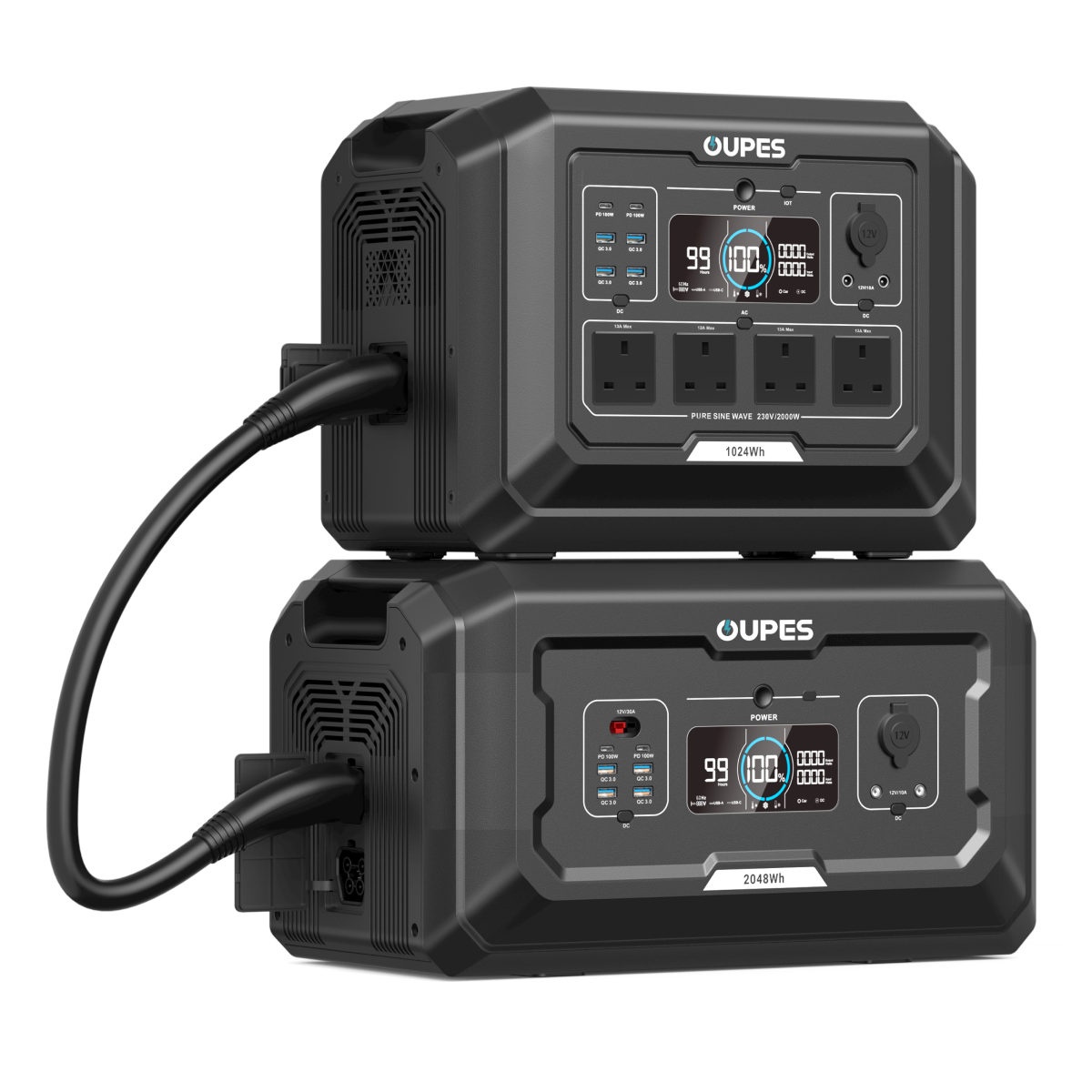
| OUPES Mega 1 | 1024Wh | 2000W | Short outages, lights, phone charging, router support and basic essentials |
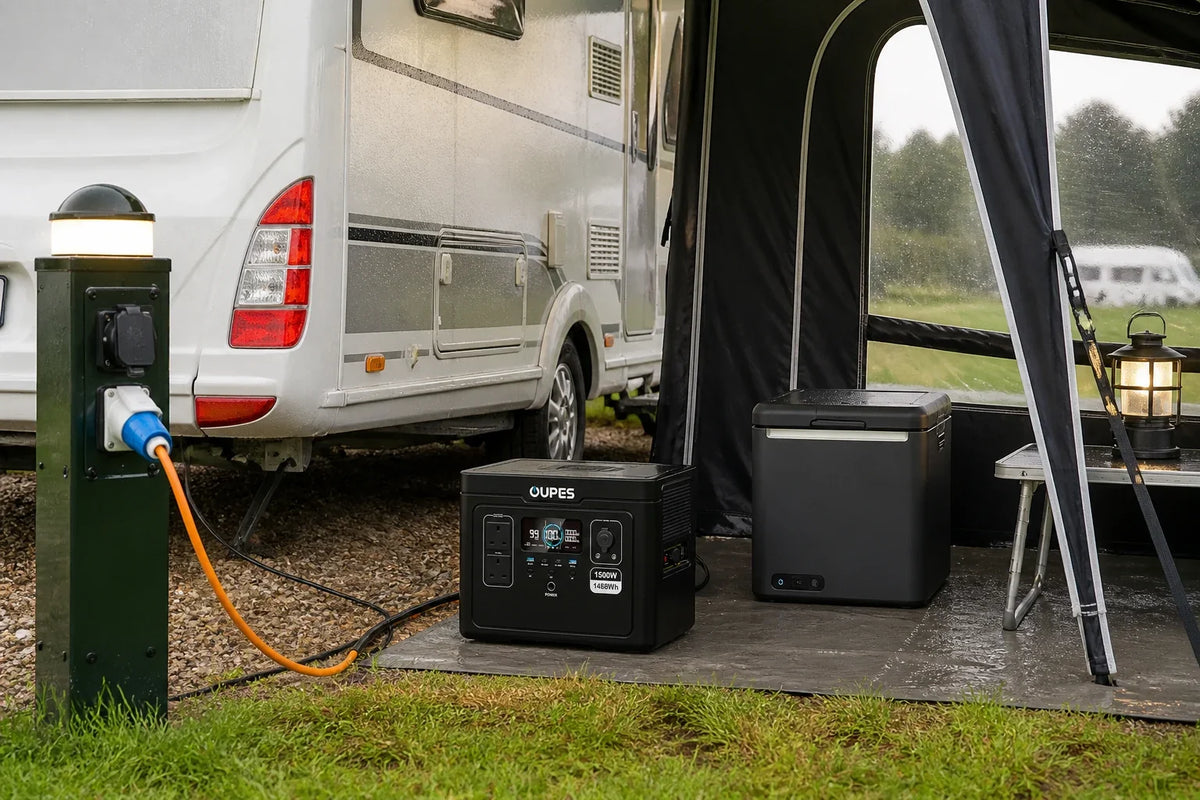
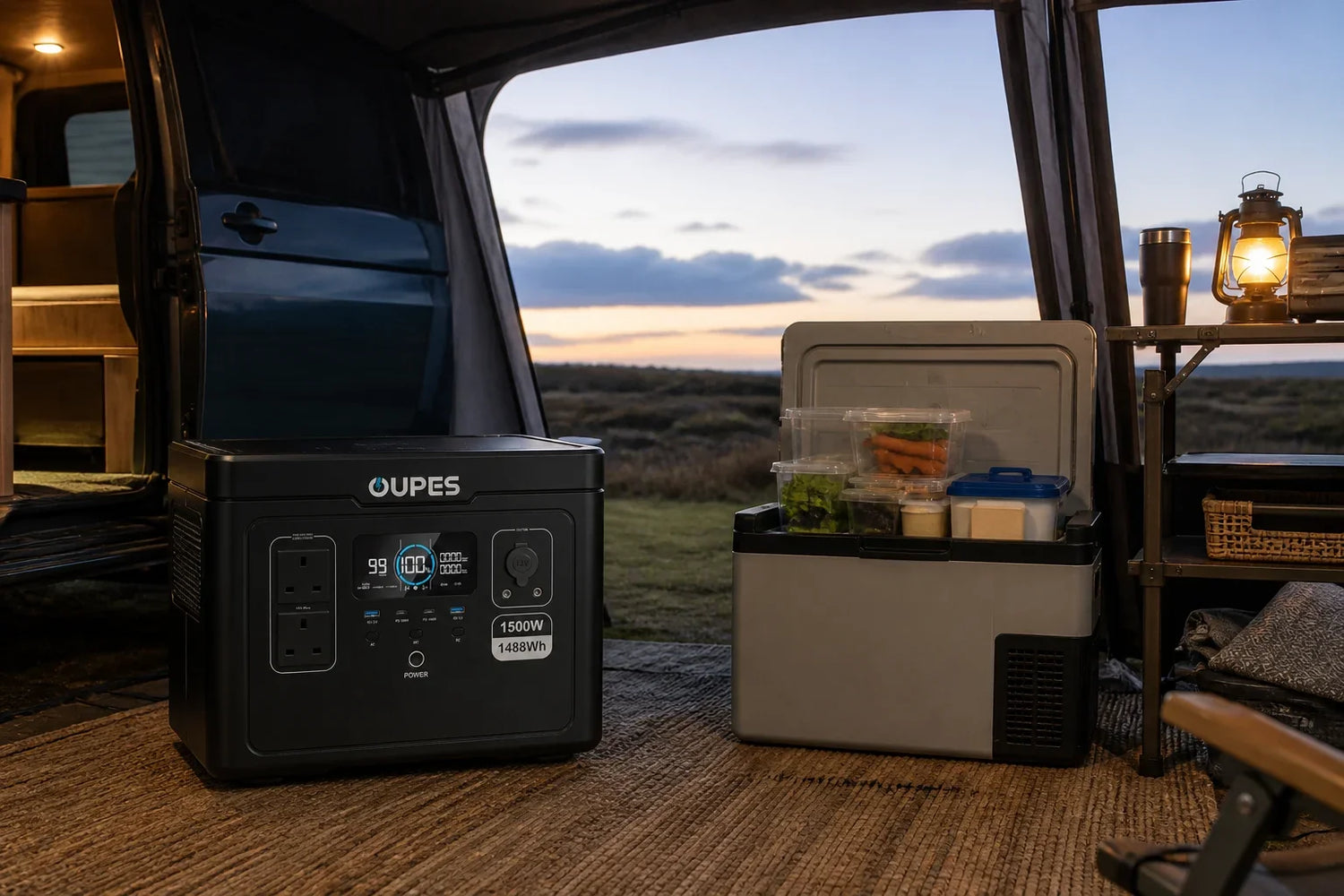
| OUPES Exodus 1500 | 1488Wh | 1500W | Entry-level storm backup with more runtime headroom for household basics |
| OUPES Exodus 2400 | 2232Wh | 2400W | Longer outages or households that want more flexibility for multiple devices |
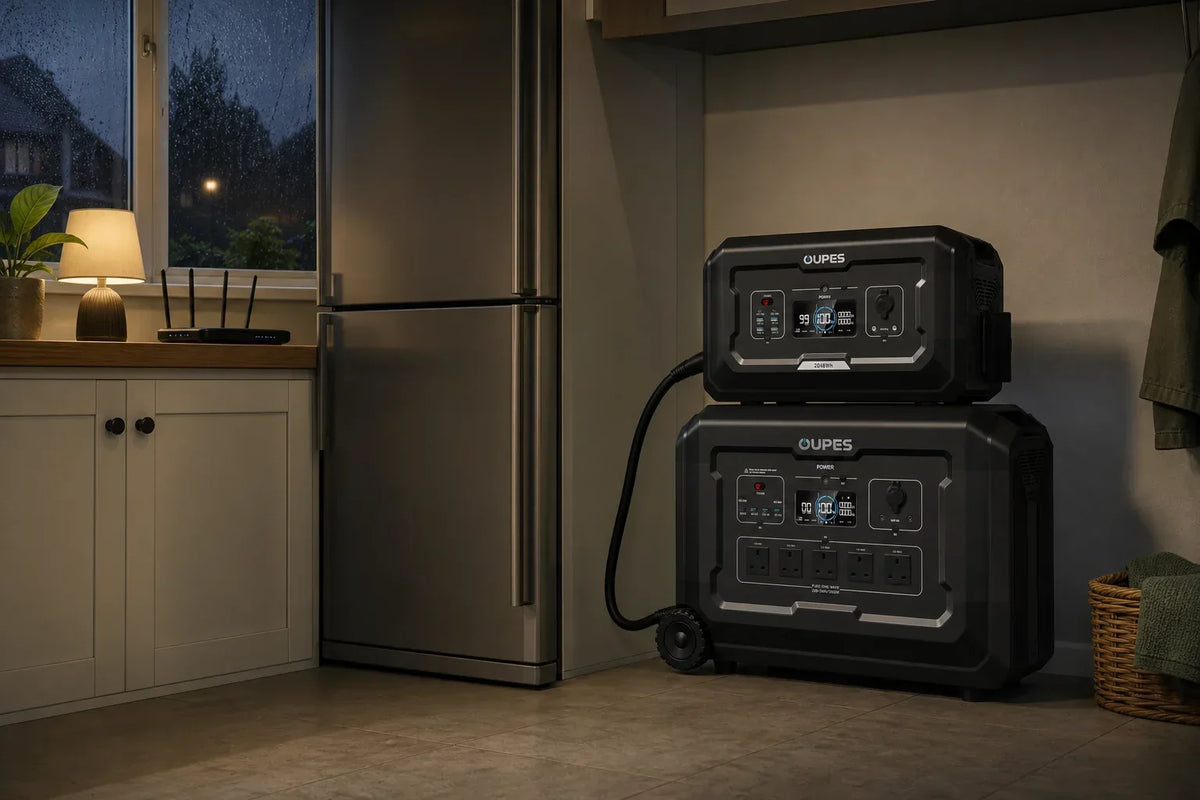
| OUPES Mega 3 | 3072Wh | 3600W | More demanding emergency backup plans and broader home resilience use |
The OUPES Mega 1 is the lightest step into serious storm readiness in this group, because its 1024Wh capacity and 2000W output make it easy to understand as a “core essentials” unit rather than a full-house solution.[7] For many UK households, that is enough to cover the most immediate hail-storm inconvenience: lights, communications and small everyday electronics.
The OUPES Exodus 1500 adds runtime with its 1488Wh capacity while staying in a relatively accessible size class, which makes it a sensible option for people who want more margin than a simple power bank but do not need the heaviest-duty setup.[8]
The OUPES Exodus 2400 moves into a more substantial backup role. With 2232Wh capacity and 2400W output, it suits households that want to keep more devices supported during a longer disruption, especially when a thunderstorm affects power and communications at the same time.[9]
At the top of the four linked models, the OUPES Mega 3 is the strongest fit for readers who want storm backup to be part of a broader home-resilience plan. Its 3072Wh capacity and 3600W output position it less as an occasional gadget and more as a serious backup-power tool for outage planning.[10]
The key point is not that everyone needs a large portable power station. It is that hail-storm preparation in the UK increasingly includes a power question. For some people, a torch and power bank are enough. For others, a more capable backup system is a rational next step.
Bottom line
The best way to prepare for a hail storm is to think in phases. First, use Met Office warnings early and take yellow, amber and red guidance seriously.[2] Second, secure the easy things before the storm arrives: vehicles, pets, loose outdoor items, charged devices and a basic emergency kit.[4][6] Third, once the storm is in progress, stay inside, keep away from windows, and do not go out to fix damage.[3][4]
For a UK audience, that is the most practical approach: treat hail as part of a wider thunderstorm risk, and make sure your plan covers both safety and short-term household continuity. If you can do that, you are not just reacting to weather. You are managing it well.
References
- Met Office — Thunderstorms Factsheet
- Met Office — Weather Warnings Guide
- Met Office — Stay Safe in Thunder and Lightning
- Met Office — Stay Safe in a Storm
- GOV.UK Prepare Campaign — Storms
- GOV.UK Prepare Campaign — Get Prepared for Emergencies
- OUPES — Mega 1 Home Backup & Portable Power Station | 2000W 1024Wh
- OUPES — Exodus 1500 Portable Power Station | 1500W 1488Wh
- OUPES — Exodus 2400 Portable Power Station | 2400W 2232Wh
- OUPES — Mega 3 Home Backup & Portable Power Station | 3600W 3072Wh
FAQ
1. Is hail in the UK usually linked to thunderstorms?
Yes. The Met Office explains that thunderstorms can bring intense rainfall, large hail and even tornadoes, which is why hail should be treated as part of wider thunderstorm preparedness.[1]
2. What is the most important thing to do before a hail storm?
Monitor warnings early, decide where you will shelter, and secure the items that are easy to protect before conditions worsen. Waiting until hail begins usually means you have left it too late.
3. Should I stay near windows to watch the storm?
No. During a thunderstorm or hail event, staying away from windows is the safer choice, especially if the hail is large or wind-driven.[3][4]
4. What should be in a basic UK storm kit?
A torch, spare batteries, a wind-up or battery radio, a portable power bank, and any household-specific essentials such as medication or backup battery support for critical equipment are good starting points.[6]
5. Is a portable power station necessary for hail-storm prep?
Not always. Some households only need a torch and power bank. But if you want stronger support for phones, lighting, routers and short outage continuity, a portable power station can make the plan more resilient.
6. Which OUPES unit is the best for simple storm preparedness?
That depends on how much backup you want. The Mega 1 is a practical essentials-level option, while the Exodus 1500, Exodus 2400 and Mega 3 step up progressively for households wanting longer runtime or broader outage support.[7][8][9][10]
7. What should I do right after the storm?
Check that everyone is safe, avoid rushing outside, inspect damage carefully from safe ground, and make sure you still have lighting, communication and weather updates if services have been disrupted.

Leave a comment
This site is protected by hCaptcha and the hCaptcha Privacy Policy and Terms of Service apply.