




A second heatwave can feel more stressful than the first. By the time another spell of extreme heat arrives, homes may already be warm, people may be sleeping poorly, and electricity systems may be facing higher demand from fans, refrigerators, freezers, portable cooling units, window air conditioners, and U-shaped air conditioners.
For UK and European households, heatwave preparation is no longer only about opening windows at night or closing curtains during the day. It is also about power resilience. When temperatures climb, electricity demand can rise quickly. If the grid becomes strained or a local outage occurs, essential devices such as cooling equipment, WiFi routers, food storage appliances, medical devices, and communication tools may stop working exactly when they are most needed.
This guide explains how to prepare your home for power and climate emergencies during a second heatwave. It focuses on practical home cooling, window AC and U-shaped AC power planning, appliance runtime estimates, and OUPES Mega 3 solar generator kits for emergency backup power.
Why a Second Heatwave Requires Better Preparation
A second heatwave can be more difficult because buildings may retain heat from earlier hot days. Brick, concrete, roof spaces, lofts, and poorly ventilated rooms can store heat and release it slowly overnight. This means indoor temperatures may remain uncomfortable even after outdoor temperatures begin to fall.
Across Europe, recent extreme heat events have affected public health, infrastructure, agriculture, ecosystems, and labour productivity. The World Meteorological Organization reported that a late-June European heatwave broke numerous temperature records and brought major impacts across the region.[1]
In the UK, official hot weather guidance recommends keeping rooms cooler by closing curtains in sun-facing rooms during the day and opening windows when outdoor air is cooler, if it is safe to do so.[3] These steps are useful, but during repeated heatwaves, many homes also need a more complete plan for cooling, refrigeration, communication, and emergency power.
Main Home Risks During Heatwaves
Heatwaves create overlapping risks. A household may face indoor overheating, food spoilage, disrupted work, higher energy use, poor sleep, and possible power cuts at the same time.
| Risk | What It Means at Home | Preparation Priority |
|---|---|---|
| Indoor overheating | Rooms stay hot during the day and may not cool properly overnight. | Create a cool room and block direct sunlight. |
| Cooling appliance demand | Fans, window AC units, U-shaped AC units, and portable AC units may run for long hours. | Know the wattage before planning backup power. |
| Food spoilage | Refrigerators and freezers work harder in hot rooms. | Keep doors closed and prepare backup power. |
| Communication loss | WiFi routers and phones may lose power during outages. | Keep routers and phones charged. |
| Medical device interruption | Powered medical equipment may require reliable electricity. | Prioritise medical loads in backup planning. |
| Local power cuts | Grid stress or local faults may interrupt electricity. | Prepare a battery backup system in advance. |
Window AC and U-Shaped AC Power Needs
Window air conditioners and U-shaped air conditioners are becoming more attractive for households that want stronger room cooling than a fan. They are especially relevant for flats, bedrooms, home offices, and smaller living spaces where installing a full fixed cooling system may not be practical.
A window AC is usually installed in a window opening and cools one room directly. A U-shaped AC is a type of window AC design where the window can close into the middle gap of the unit, helping improve separation between indoor and outdoor sections. Many users prefer this style because it can reduce noise, improve window use, and make room cooling more comfortable. However, from a backup power perspective, both types should be treated as medium-to-high power appliances.
Home air conditioning wattage varies by cooling capacity, efficiency, room size, thermostat setting, and outdoor temperature. UK energy guidance notes that portable air conditioning units may commonly range from about 750W to 1500W, depending on the model and specifications.[6] Window AC and U-shaped AC units can fall into similar planning ranges, though efficient smaller room models may use less once the room is near the target temperature.
| Cooling Device | Typical Planning Wattage | Best Use Case | Backup Power Note |
|---|---|---|---|
| Electric fan | 30W–70W | Air movement and personal cooling | Very suitable for long backup runtime. |
| Small window AC | 500W–800W | Bedroom or small room cooling | Can run from a large power station for limited hours. |
| Medium window AC | 800W–1200W | Medium room cooling | Requires careful runtime planning. |
| U-shaped window AC | 600W–1200W | Quieter single-room cooling | Check rated watts and startup behaviour before use. |
| Portable AC | 750W–1500W | Flexible room cooling | High draw; best used selectively during outages. |
During a power cut, the smartest strategy is not usually to run air conditioning all day from a battery. Instead, use the AC strategically: cool one room, close doors, block sunlight, run a fan to circulate air, and reserve stored energy for the hottest hours or for vulnerable household members.
Why Heatwaves Can Put Pressure on the Grid
Heatwaves increase power demand because more households and businesses run cooling appliances at the same time. Refrigerators and freezers also work harder in hot indoor conditions. At the same time, high temperatures can create operational challenges for power infrastructure.
The UK National Energy System Operator publishes a summer outlook to help prepare the electricity system for seasonal conditions.[4] During extreme heat, the risk for households is not only a national shortage. Local circuits, transformers, or distribution equipment may also face stress when many homes increase cooling demand together.
This is why household-level resilience matters. Even if wider supply remains secure, a local outage can still interrupt cooling, WiFi, food storage, lighting, and essential devices.
How to Prepare Your Home Before Peak Heat
1. Create One Cool Room
Choose the easiest room to keep cool, ideally one with less direct sunlight. Close curtains or blinds during the day, reduce heat-producing appliances, and keep water, chargers, a fan, and emergency lighting in that room.
2. Use Window AC or U-Shaped AC Efficiently
If you use a window AC or U-shaped AC, cool one room rather than trying to cool the whole home. Seal gaps around the window, close doors, and avoid setting the temperature unnecessarily low. This reduces power demand and extends backup runtime if you are using a portable power station.
3. Reduce Indoor Heat Sources
Avoid using ovens, high-heat cooking appliances, tumble dryers, and unnecessary electronics during the hottest hours. Every internal heat source makes your cooling devices work harder.
4. Protect Food Storage
Keep refrigerator and freezer doors closed as much as possible during an outage. If you expect unstable power, freeze water bottles in advance and move only essential items into a smaller cooling zone.
5. Charge Emergency Devices Early
Charge phones, lamps, medical devices, routers, and your OUPES power station before peak heat arrives. A power station is most useful when it is fully charged before the grid becomes unstable.
Why Backup Power Matters During Heatwaves
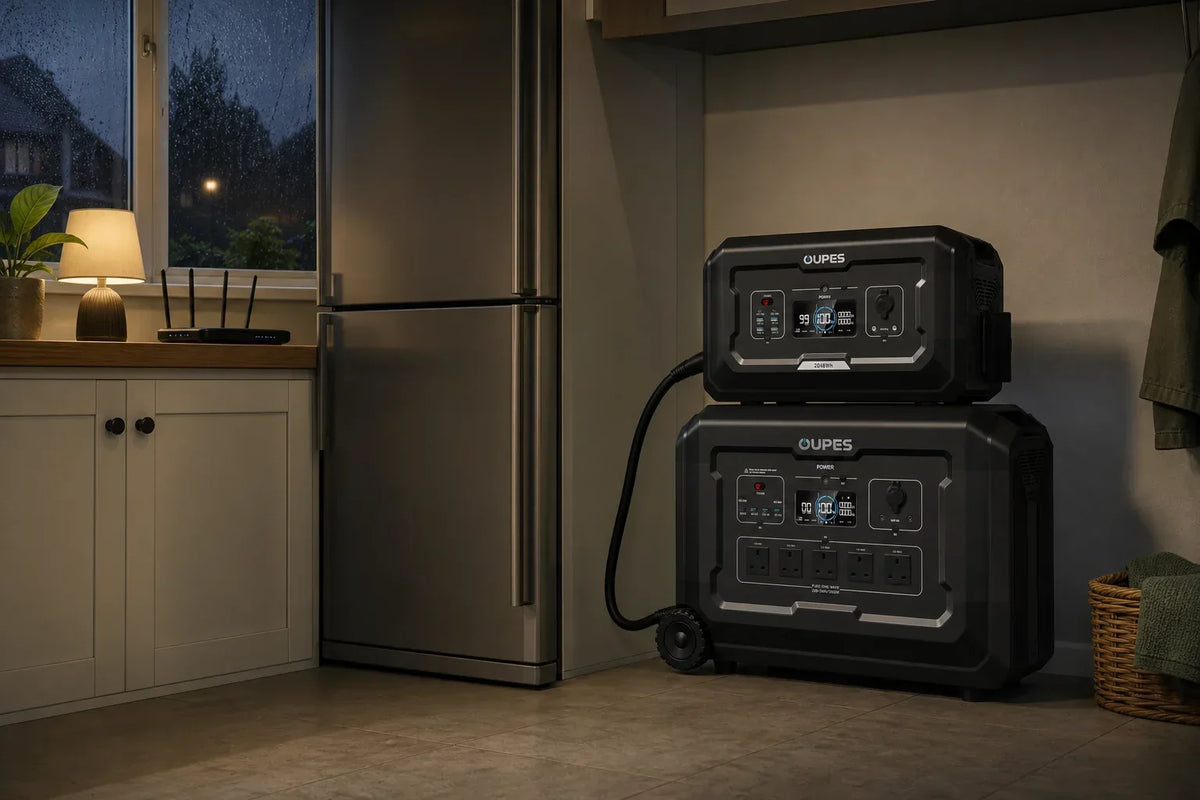
Backup power during a heatwave is not just about convenience. It helps protect the basics: airflow, refrigeration, communication, lighting, medical support, and limited room cooling.
For most homes, the priority list should look like this:
- Medical equipment and safety devices
- WiFi router and phone charging
- Refrigerator or freezer
- Fans and low-power cooling
- Short, targeted use of window AC or U-shaped AC
- Laptop or remote work equipment
Because air conditioning draws much more power than a fan or router, it should be planned carefully. A large portable power station can run an AC unit, but the runtime depends heavily on wattage.
OUPES Mega 3 for Home Emergency Backup
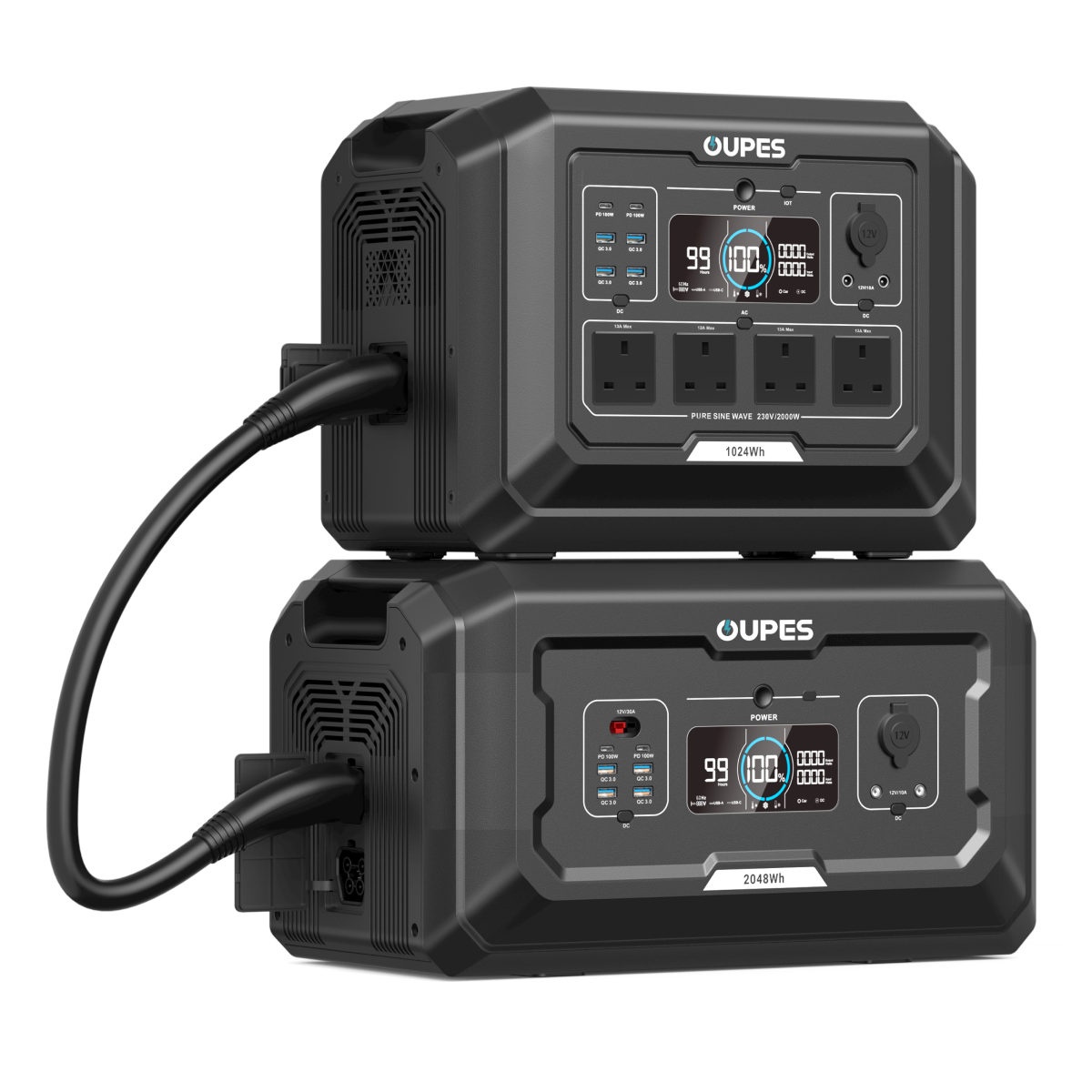
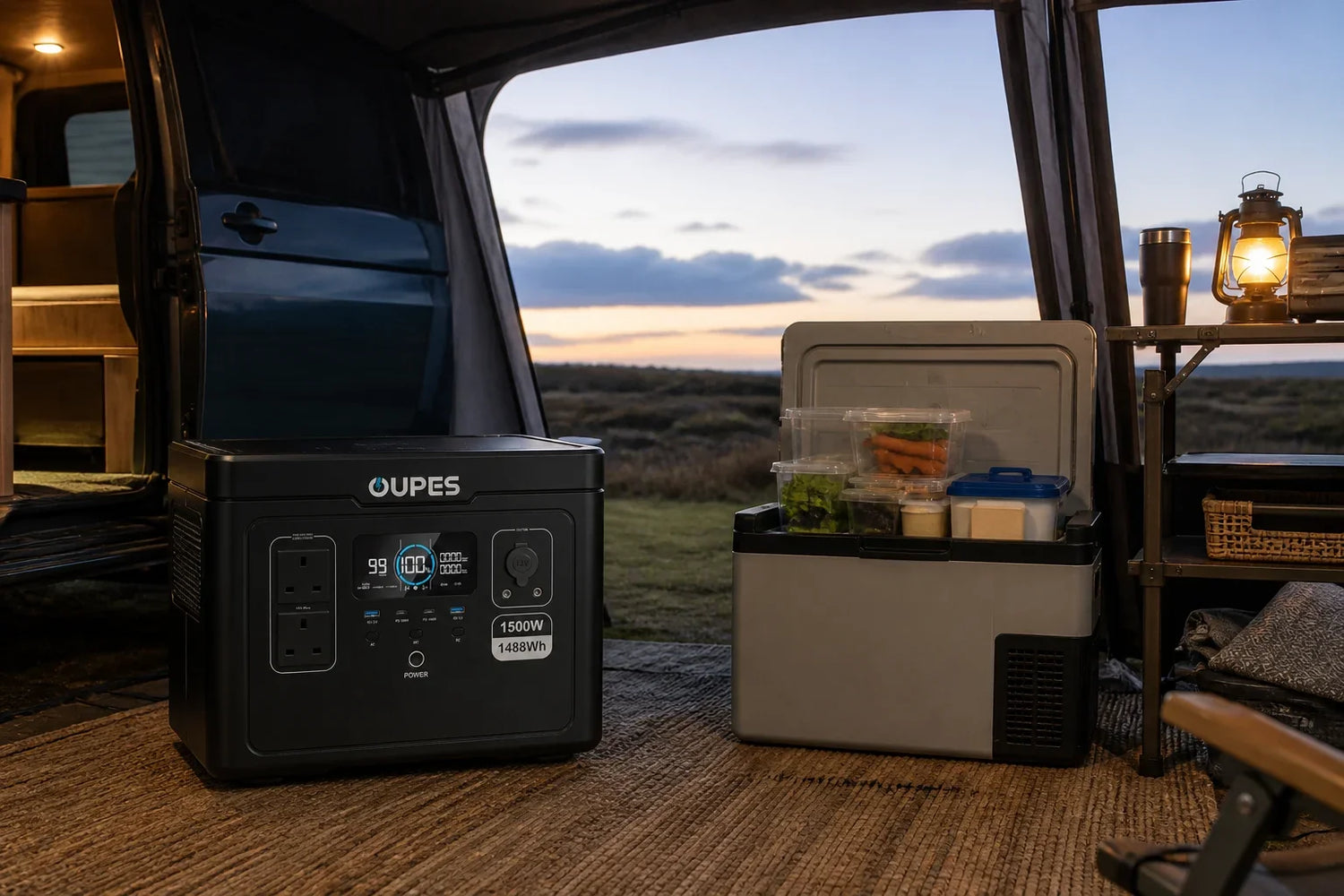
The OUPES Mega 3 Home Backup & Portable Power Station is the core product recommendation for this article because it has enough capacity and output to support essential home devices and selected cooling equipment during heatwave outages.
| Feature | OUPES Mega 3 |
|---|---|
| Rated Capacity | 3072Wh |
| Usable Capacity for Planning | 2458Wh based on 80% capacity |
| AC Output | 3600W pure sine wave |
| Surge Power | 7000W |
| Battery Type | LiFePO4 |
| Life Cycles | 3500+ cycles to 80% |
| Solar Input | Up to 2100W |
| AC + Solar Input | Up to 3900W |
| Expansion | Up to 15.36kWh with B2 extra batteries |
| Outputs | 16 outputs for multiple devices |
For heatwave use, the Mega 3 is suitable for refrigerators, freezers, fans, routers, lights, laptops, CPAP devices, and limited window AC or U-shaped AC operation. Its 3600W AC output provides strong headroom, while its expandable battery design makes it more flexible for longer climate emergencies.
OUPES Mega 3 Solar Generator Kits
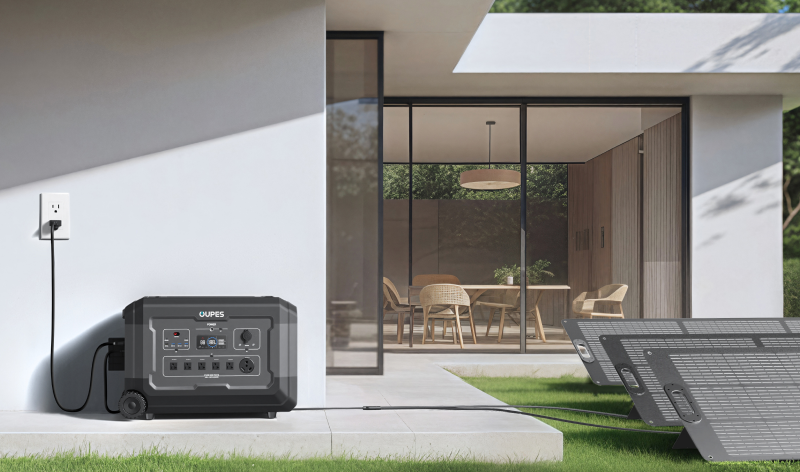
During a second heatwave, solar charging can be especially valuable. Sunny weather may allow you to recover energy during the day and reserve battery power for evening cooling, refrigeration, and communication.
| Product Combination | Rated Capacity | Usable Capacity for Planning | Solar Panel Setup | Best For |
|---|---|---|---|---|
| Mega 3 + 2*240W Solar Panel | 3072Wh | 2458Wh | 480W solar | Basic heatwave backup with solar top-up |
| Mega 3 + B2 Extra Battery + 2*240W Solar Panel | 5120Wh | 4096Wh | 480W solar | Longer backup for fridge, fan, router, and selective AC use |
| Mega 3 + B2 Extra Battery + 4*240W Solar Panel | 5120Wh | 4096Wh | 960W solar | Stronger solar recovery for multi-day heat events |
The Mega 3 + B2 combinations are better for households that need longer runtime. The 4*240W solar kit is the most complete option in this list because it combines expanded battery capacity with stronger daytime recharge potential.
Runtime Estimates for Cooling and Essential Devices
All runtime calculations below use the 80% rule:
Estimated runtime = battery capacity × 80% ÷ device wattage
| Device | Planning Wattage | Mega 3 2458Wh Usable |
Mega 3 + B2 4096Wh Usable |
|---|---|---|---|
| WiFi router | 10W | Approx. 246 hours | Approx. 410 hours |
| LED light | 10W | Approx. 246 hours | Approx. 410 hours |
| Electric fan | 50W | Approx. 49 hours | Approx. 82 hours |
| CPAP device | 40W | Approx. 61 hours | Approx. 102 hours |
| Fridge or freezer average load | 100W | Approx. 24.5 hours | Approx. 41 hours |
| Laptop and monitor | 120W | Approx. 20.5 hours | Approx. 34 hours |
| Small window AC | 600W | Approx. 4.1 hours | Approx. 6.8 hours |
| U-shaped window AC | 800W | Approx. 3.1 hours | Approx. 5.1 hours |
| Medium window AC | 1000W | Approx. 2.5 hours | Approx. 4.1 hours |
| Portable AC | 1200W | Approx. 2 hours | Approx. 3.4 hours |
These estimates are for planning only. Air conditioners may cycle on and off once the room reaches the target temperature, so real-world runtime may be longer than a constant-wattage calculation. However, during severe heat, AC units may run more continuously, especially in poorly insulated rooms or sun-facing spaces.
Practical AC Backup Strategy
| Situation | Recommended Strategy |
|---|---|
| Short outage under 2 hours | Run fans, router, lights, and fridge first. Use AC only if the room is dangerously hot. |
| Evening outage | Cool one bedroom with a window AC or U-shaped AC before sleep, then switch to fan-only mode if possible. |
| Daytime outage | Use solar charging while powering low-draw essentials. Save AC use for peak indoor heat. |
| Multi-day heatwave | Use the Mega 3 + B2 + 4*240W solar kit for stronger solar recovery and longer runtime. |
How to Choose the Right Mega 3 Kit
Choose the OUPES Mega 3 unit only if your main goal is backup for essentials such as a fridge, fan, router, lights, phone charging, and occasional cooling support.
Choose the Mega 3 + 2*240W Solar Panel kit if you want a practical heatwave solar generator setup that can recover some energy during sunny days.
Choose the Mega 3 + B2 Extra Battery + 2*240W Solar Panel kit if longer runtime matters more than faster solar recovery. This setup is better for overnight outages, refrigeration, fans, communication, and limited AC use.
Choose the Mega 3 + B2 Extra Battery + 4*240W Solar Panel kit if you want the strongest heatwave emergency setup from this product list. It gives you expanded battery capacity and 960W of solar panel capacity, which is more suitable for multi-day climate emergencies.
Final Heatwave Preparation Checklist
- Check hot weather warnings before the heat peaks.
- Create one cool room and block direct sunlight during the day.
- Measure or check the wattage of your window AC or U-shaped AC.
- Use fans to extend cooling comfort with much lower power draw.
- Charge your OUPES Mega 3 or Mega 3 kit before peak demand hours.
- Prioritise medical devices, fridge, freezer, router, lights, and fans.
- Use AC strategically instead of continuously during a power cut.
- Set up solar panels safely during daylight if grid power is unavailable.
- Check on older adults, children, pets, and vulnerable neighbours.
Conclusion
The second heatwave is a reminder that home resilience now needs to include both climate comfort and backup power. Window AC and U-shaped AC units can make single-room cooling more effective, but they also require careful power planning because they draw far more energy than fans, routers, or lights.
The OUPES Mega 3 is a strong foundation for heatwave emergency backup, offering 3072Wh rated capacity, 3600W output, solar charging, expandability, and multiple outputs. For longer outages and better daytime recovery, the Mega 3 solar generator kits with B2 extra battery and 240W solar panels provide a more complete solution for UK and European homes facing repeated heat events.
Prepare before the hottest days arrive. Once a heatwave is underway, cooling equipment, emergency supplies, and backup power become much harder to organise calmly.
FAQ
Why focus on window AC and U-shaped AC during heatwaves?
These units are increasingly useful for single-room cooling, especially in bedrooms, flats, and home offices. They can cool more effectively than fans but require more power, so backup planning is important.
How much power does a window AC use?
A small window AC may use around 500W–800W, while a medium unit may use around 800W–1200W. Always check the actual product label or specification sheet.
How much power does a U-shaped window AC use?
Many U-shaped window AC units can be planned around roughly 600W–1200W depending on size and efficiency. Real usage depends on room size, temperature setting, and insulation.
Can the OUPES Mega 3 run a window AC?
Yes, if the AC unit is within the Mega 3 output limit. With 2458Wh usable capacity, a 1000W window AC can run for about 2.5 hours under a constant-load estimate.
Can the Mega 3 + B2 kit run a U-shaped AC longer?
Yes. With about 4096Wh usable capacity, a Mega 3 + B2 setup can run an 800W U-shaped AC for about 5.1 hours under a constant-load estimate.
Is it better to run a fan or AC during a power cut?
A fan uses much less power and can run far longer. Use AC only when room temperature becomes unsafe or when targeted cooling is needed.
Which OUPES kit is best for heatwave emergencies?
The Mega 3 + B2 Extra Battery + 4*240W Solar Panel kit is the strongest option in this list because it combines expanded capacity with stronger solar recovery.
How are runtime estimates calculated?
This article uses battery capacity × 80% ÷ appliance wattage. The 80% rule accounts for real-world system losses and gives a more practical planning number.
Can solar panels help during a heatwave outage?
Yes. In sunny conditions, solar panels can recharge the power station during the day and help support fans, refrigeration, WiFi, lights, and limited AC use.
What should I power first during a heatwave blackout?
Prioritise medical devices, communication, refrigeration, lighting, and fans. Use window AC or U-shaped AC strategically because they consume much more power.
Sources
- [1] European heatwave records and regional impacts
- [2] European heat build-up and UK weather context
- [3] UK hot weather safety and home cooling advice
- [4] Great Britain summer electricity system outlook
- [5] UK climate adaptation and home overheating risk
- [6] UK home air conditioning wattage guidance
- [7] OUPES Mega 3 specifications
- [8] OUPES Mega 3 + 2*240W Solar Panel kit
- [9] OUPES Mega 3 + B2 Extra Battery + 2*240W Solar Panel kit
- [10] OUPES Mega 3 + B2 Extra Battery + 4*240W Solar Panel kit

Leave a comment
This site is protected by hCaptcha and the hCaptcha Privacy Policy and Terms of Service apply.