




Table of Contents
- Introduction: Why Camping Power Matters
- What Is a Portable Power Station?
- How to Define the “Best” for Camping
- Best Choice by Camping Scenario
- How Much Capacity Do You Really Need?
- Output Power and Appliance Compatibility
- Real-World Runtime (80% Rule)
- OUPES Camping Power Station Recommendations
- Comparison Table for Camping Use
- Solar Charging for Camping
- Pro Tips for Choosing the Right Model
- Final Thoughts
- FAQ
Introduction: Why Camping Power Matters
Modern camping is no longer limited to basic lighting and a campfire. Many campers now bring essential electronics such as smartphones, drones, cameras, portable refrigerators, and even small cooking appliances. As a result, choosing the best portable power station for camping has become a critical decision.
However, “best” does not mean the biggest or most expensive. The best portable power station is the one that matches your camping style, power needs, and mobility requirements. This guide explains how to evaluate portable power stations using real-world scenarios and practical energy calculations.
What Is a Portable Power Station?
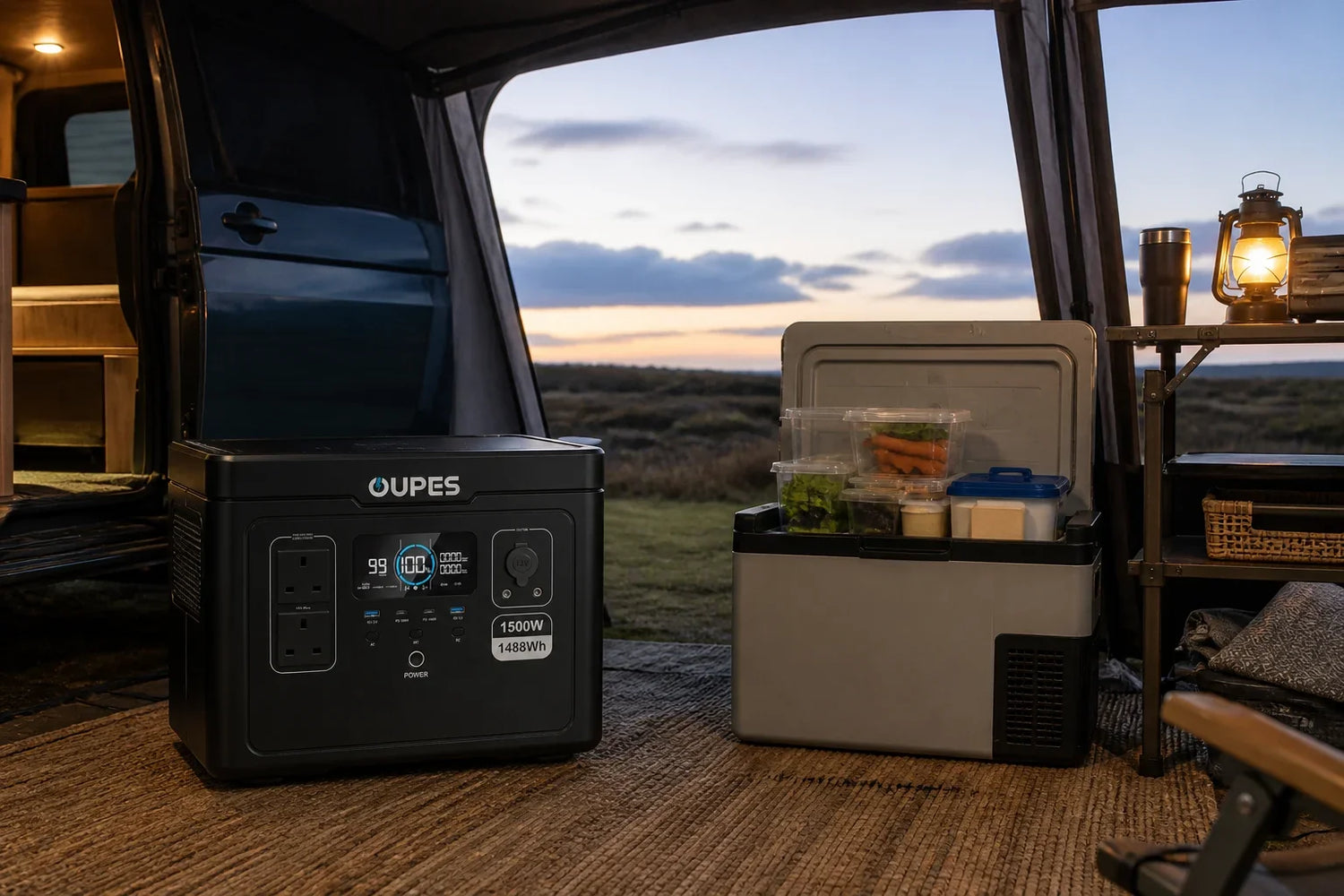
A portable power station is a rechargeable battery system designed to store and deliver electricity through multiple output ports, including AC outlets, USB ports, and DC outputs. Unlike traditional generators, it does not require fuel, produces no emissions, and operates silently—making it ideal for outdoor environments.
OUPES portable power stations use LiFePO4 battery technology, which offers longer lifespan, higher safety, and more stable performance compared to traditional lithium-ion batteries.
How to Define the “Best” for Camping
1. Capacity (Wh)
Capacity determines how long you can run devices. It is the most important factor for camping.
2. Output Power (W)
Output determines what devices you can power, especially appliances like coffee makers or mini fridges.
3. Portability
Weight and size are crucial when transporting gear to campsites.
4. Charging Flexibility
Solar compatibility and fast charging are essential for multi-day trips.
5. Durability
Outdoor environments require reliable and rugged performance.
Best Choice by Camping Scenario
Lightweight Camping (1–2 Days)
For short trips, you mainly need to charge phones, lights, and small electronics.
- Recommended capacity: 300–1000Wh
- Focus: portability and simplicity
Standard Camping (2–3 Days)
This is the most common scenario, requiring power for lighting, laptops, drones, and possibly a small fridge.
- Recommended capacity: 1000–3000Wh
- Focus: balance between power and portability
RV & Extended Camping (3–7 Days)
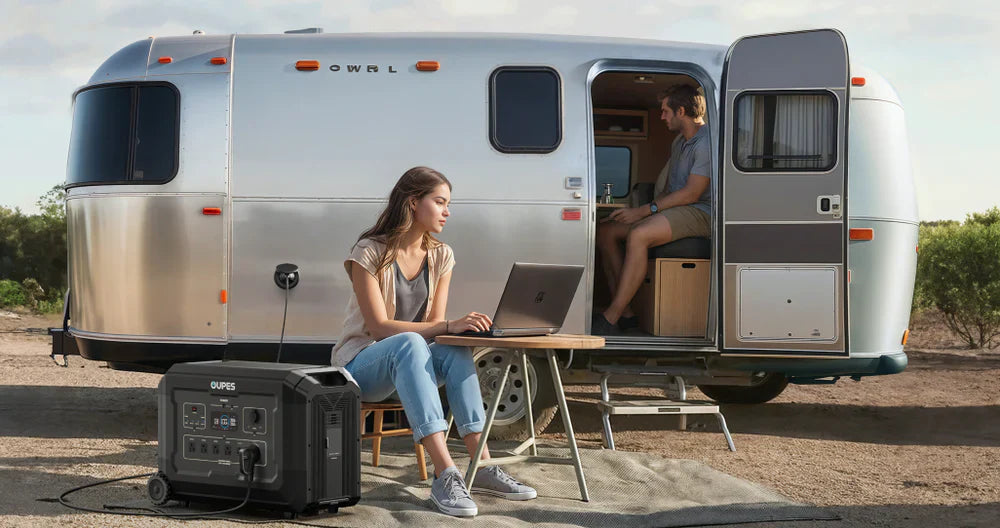
For longer trips, you need higher capacity and output to support appliances and multiple devices.
- Recommended capacity: 3000Wh+
- Focus: high output and solar charging
How Much Capacity Do You Really Need?
Here is a realistic daily usage example:
| Device | Power | Usage | Energy (Wh) |
|---|---|---|---|
| LED Lights | 10W | 6h | 60Wh |
| Smartphone | 10W | 3h | 30Wh |
| Laptop | 60W | 3h | 180Wh |
| Mini Fridge | 50W | 12h | 600Wh |
| Total | - | - | 870Wh/day |
This shows that a typical camper needs around 800–1500Wh per day, depending on usage intensity.
Output Power and Appliance Compatibility
Even if you have enough capacity, insufficient output power can limit usability.
- 500–1000W → phones, laptops, lights
- 1500–2500W → coffee makers, refrigerators
- 3000W+ → heavy appliances and multi-device use
Choosing a system with higher output ensures compatibility with more devices.
Real-World Runtime (80% Rule)
To estimate runtime accurately, use:
Runtime = Capacity × 0.8 ÷ Device Wattage
This accounts for energy loss in real-world usage.
Example
- 2048Wh battery → usable ~1638Wh
- Running 100W device → ~16 hours
OUPES Camping Power Station Recommendations
OUPES Mega 1: Entry-Level Camping Power
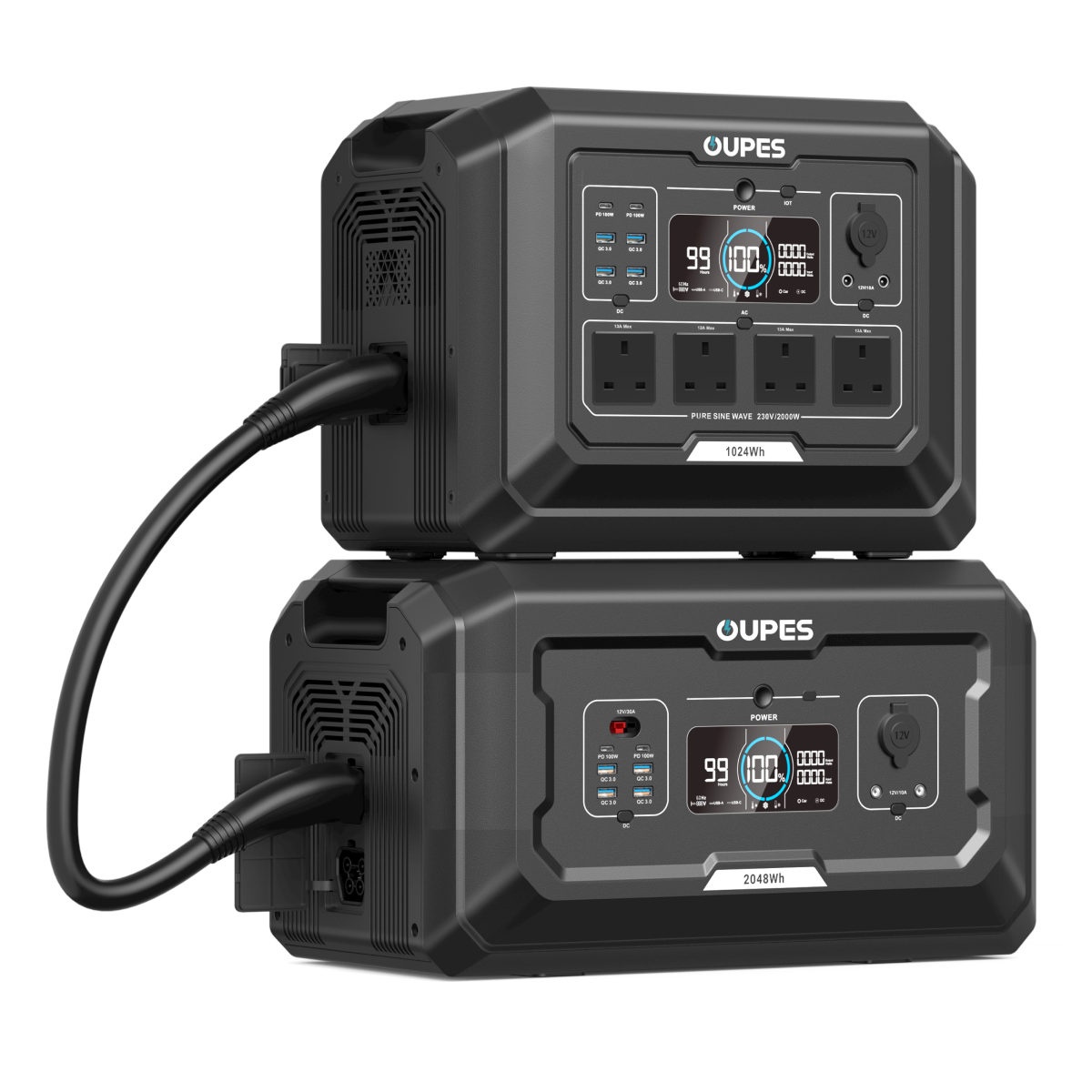
OUPES Mega 1 offers 1024Wh capacity and 2000W output. It is ideal for short camping trips and basic needs such as lighting, phone charging, and small electronics.
OUPES Mega 2: Best Value for Most Campers
OUPES Mega 2 provides 2048Wh capacity and 2500W output. It is a strong all-around solution for camping, capable of powering refrigerators, laptops, and multiple devices simultaneously.
OUPES Mega 3: High-Performance Camping Setup
OUPES Mega 3 features 3072Wh capacity and 3600W output. It is designed for extended camping, RV trips, and high-demand setups.
Comparison Table for Camping Use
| Model | Capacity | Output | Best Use |
|---|---|---|---|
| Mega 1 | 1024Wh | 2000W | Short trips, basic devices |
| Mega 2 | 2048Wh | 2500W | Standard camping, balanced use |
| Mega 3 | 3072Wh | 3600W | Extended trips, RV camping |
Solar Charging for Camping
Solar charging is essential for longer trips. It allows you to recharge your power station during the day.
Typical solar input:
- 200W panel → ~800–1000Wh/day
- 400W setup → ~1500–2000Wh/day
Combining solar panels with a portable power station significantly extends your camping independence.
Pro Tips for Choosing the Right Model
- Choose capacity based on daily energy needs, not maximum usage
- Always consider weight and portability
- Plan for at least 20–30% extra capacity
- Use solar charging for trips longer than 2 days
- Prioritize LiFePO4 batteries for durability
Final Thoughts
The best portable power station for camping is not defined by a single specification. It depends on how you camp, what devices you use, and how long you stay outdoors.
For most campers, a mid-range solution like the OUPES Mega 2 provides the best balance of capacity, power, and portability. Smaller units are ideal for lightweight trips, while larger systems are better suited for extended camping or RV use.
By understanding your real energy needs and using practical runtime calculations, you can choose a power station that delivers reliable performance without unnecessary cost or weight.
FAQ
1. What size power station is best for camping?
Typically 1000–2000Wh is ideal for most campers.
2. Can a portable power station run a fridge?
Yes, if it has sufficient capacity and output (usually 1500W+).
3. How long will a power station last while camping?
It depends on usage, but usually 1–3 days without solar charging.
4. Is solar charging necessary for camping?
Not required for short trips, but highly recommended for longer stays.
5. Are portable power stations safe in tents?
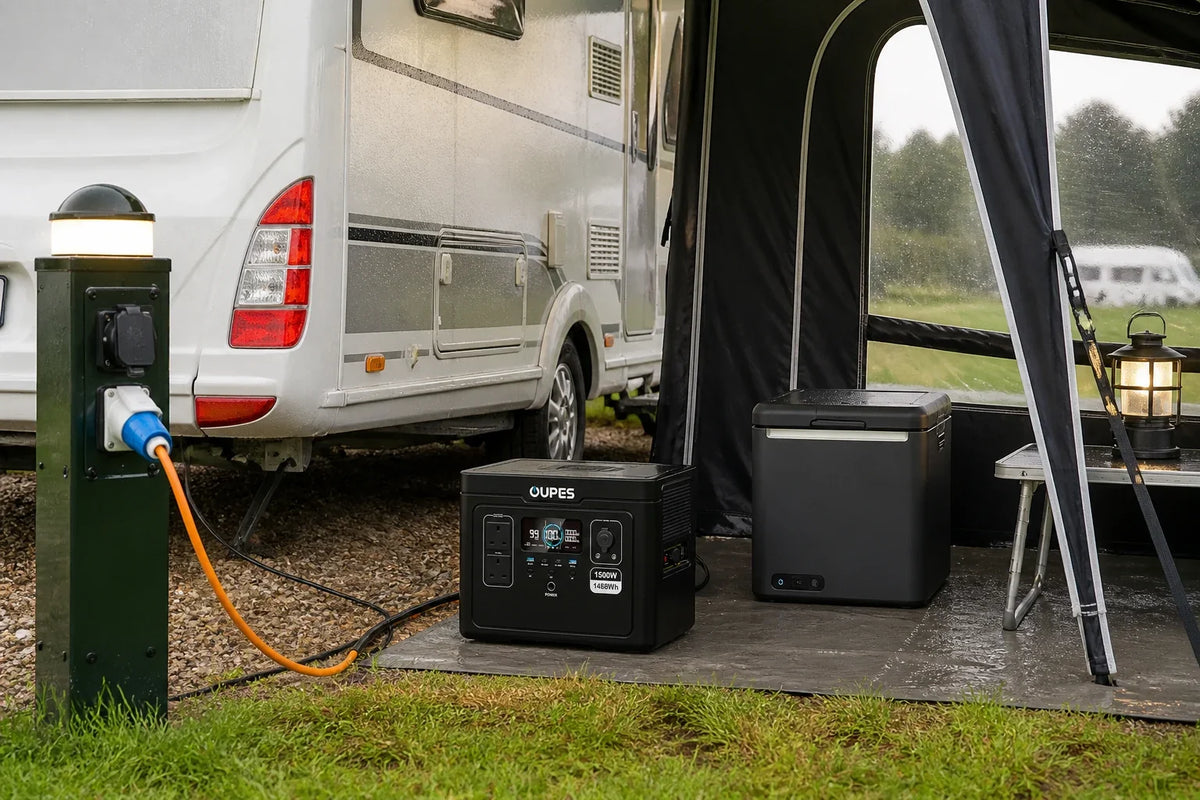
Yes, they produce no emissions and are safe for indoor use.
6. Can I charge a power station in my car?
Yes, most models support 12V car charging.
7. What is the biggest advantage over gas generators?
They are quiet, clean, and require no fuel.
8. Is a larger capacity always better?
No, larger capacity adds weight. Choose based on your needs.

Leave a comment
This site is protected by hCaptcha and the hCaptcha Privacy Policy and Terms of Service apply.