




Quick Answer
An amp-hour (Ah) is a unit of electric charge capacity. In an idealised example, 10Ah could supply 1A for 10 hours or 2A for 5 hours. Real battery performance changes with voltage limits, discharge rate, temperature, age and system losses.
Ah alone does not state energy. Convert to watt-hours using Wh = nominal volts × Ah. A 100Ah 12.8V battery stores about 1,280Wh nominally, while a 100Ah 51.2V battery stores about 5,120Wh.
Key Facts
Keep current, charge capacity, power and energy as separate quantities.
| Quantity | Unit | Formula | Meaning |
|---|---|---|---|
| Current | A | A = W ÷ V | Rate of electric charge flow |
| Charge capacity | Ah | Ah = A × h | Current available over time |
| Power | W | W = V × A | Rate of energy transfer |
| Energy | Wh | Wh = V × Ah | Capacity comparable across voltages |
How It Works
Manufacturers rate battery capacity under defined test conditions. A battery-management system may reserve part of the nominal capacity and stop discharge before cell voltage reaches a damaging level.
High current can reduce usable capacity in some chemistries, while cold weather can temporarily reduce performance. Cable resistance and conversion electronics further reduce energy delivered to the appliance.
Connecting batteries in series increases voltage while Ah remains the same; parallel connection keeps voltage and adds Ah, but only compatible batteries designed for that configuration should be combined.
Use Ah to Estimate Runtime
For a DC load at the battery voltage, ideal hours = Ah ÷ amps. For an energy-based estimate, calculate nominal Wh, apply a conservative usable factor, then divide by average load watts.
Example: 100Ah × 12.8V = 1,280Wh. At 80% usable energy and a 100W average load, the illustrative runtime is 1,280 × 0.80 ÷ 100 = 10.24 hours.
| Battery | Nominal Energy | Illustrative Usable Energy | 100W Runtime |
|---|---|---|---|
| 50Ah at 12.8V | 640Wh | 512Wh at 80% | 5.12h |
| 100Ah at 12.8V | 1,280Wh | 1,024Wh at 80% | 10.24h |
| 100Ah at 25.6V | 2,560Wh | 2,048Wh at 80% | 20.48h |
| 100Ah at 51.2V | 5,120Wh | 4,096Wh at 80% | 40.96h |
Compare the Main Options
The voltage must accompany every Ah comparison.
| Label | What You Know | What Is Missing | Next Step |
|---|---|---|---|
| 100Ah | Charge capacity | Voltage and usable fraction | Find nominal voltage |
| 1,024Wh | Nominal energy | Usable energy and output | Check test conditions |
| 2,000W output | Power capability | Runtime | Find Wh |
| 100Ah at 12.8V | About 1,280Wh nominal | Losses and limits | Apply realistic allowance |
UK Planning Considerations
Vehicle, leisure and solar batteries use differing chemistries and charge profiles. A capacity calculation never proves charger, wiring or installation compatibility.
NIST’s SI explanation of electric current provides the measurement basis. Product selection should additionally follow the battery maker and relevant installation standards.For the underlying UK guidance or current figures, check NIST SI guidance on current. Published tariffs, standards and safety advice can change, so verify the source again before acting.
Relevant OUPES UK Options
OUPES UK stations publish capacity in Wh, which avoids ambiguity across internal system voltages. Use Ah only when a nominal voltage is explicitly selected.
| UK-Site Product | Capacity | Rated Output | Solar | Planning Role |
|---|---|---|---|---|
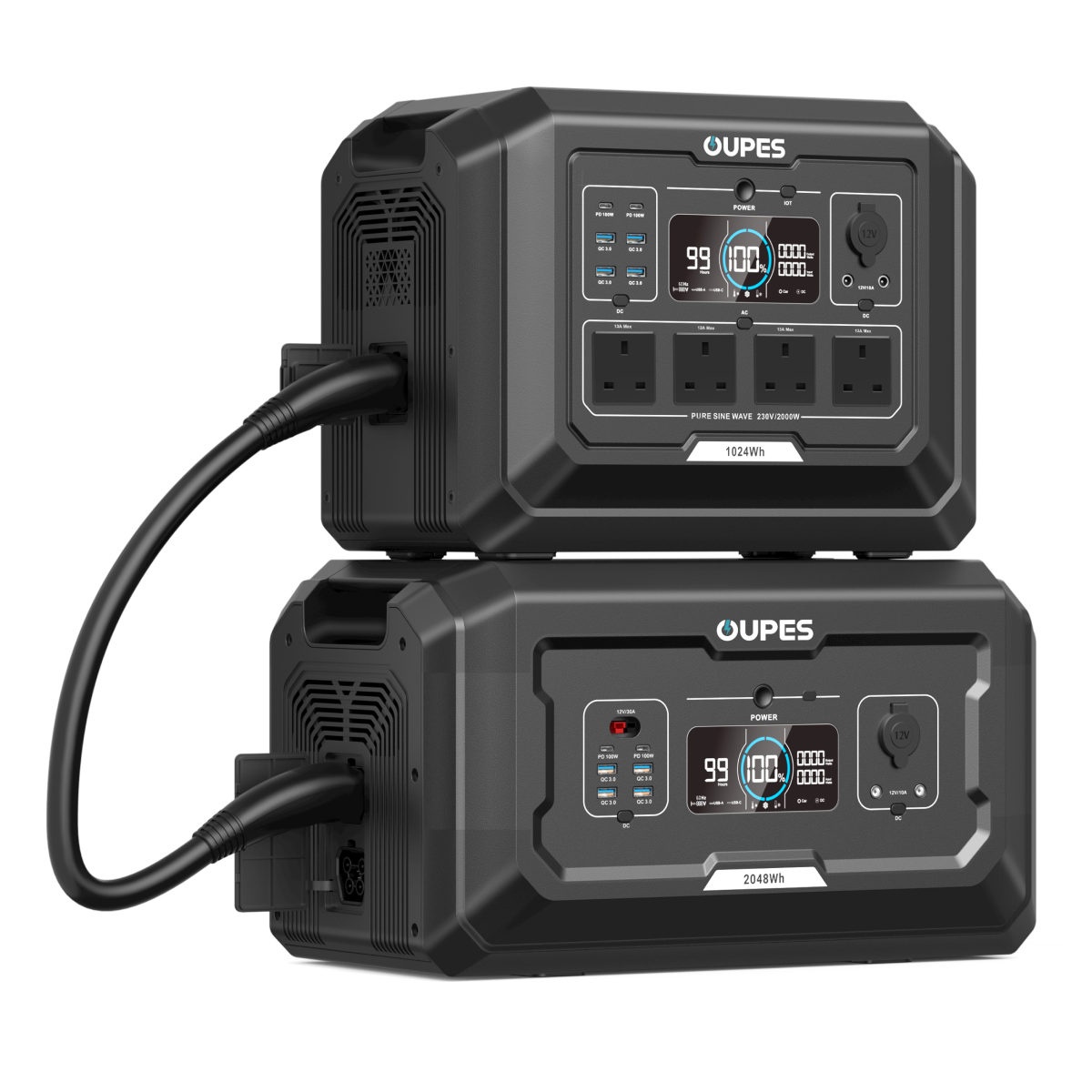
| OUPES Mega 1 | 1,024Wh | 2,000W | Up to 800W | Portable everyday loads and shorter backup sessions |
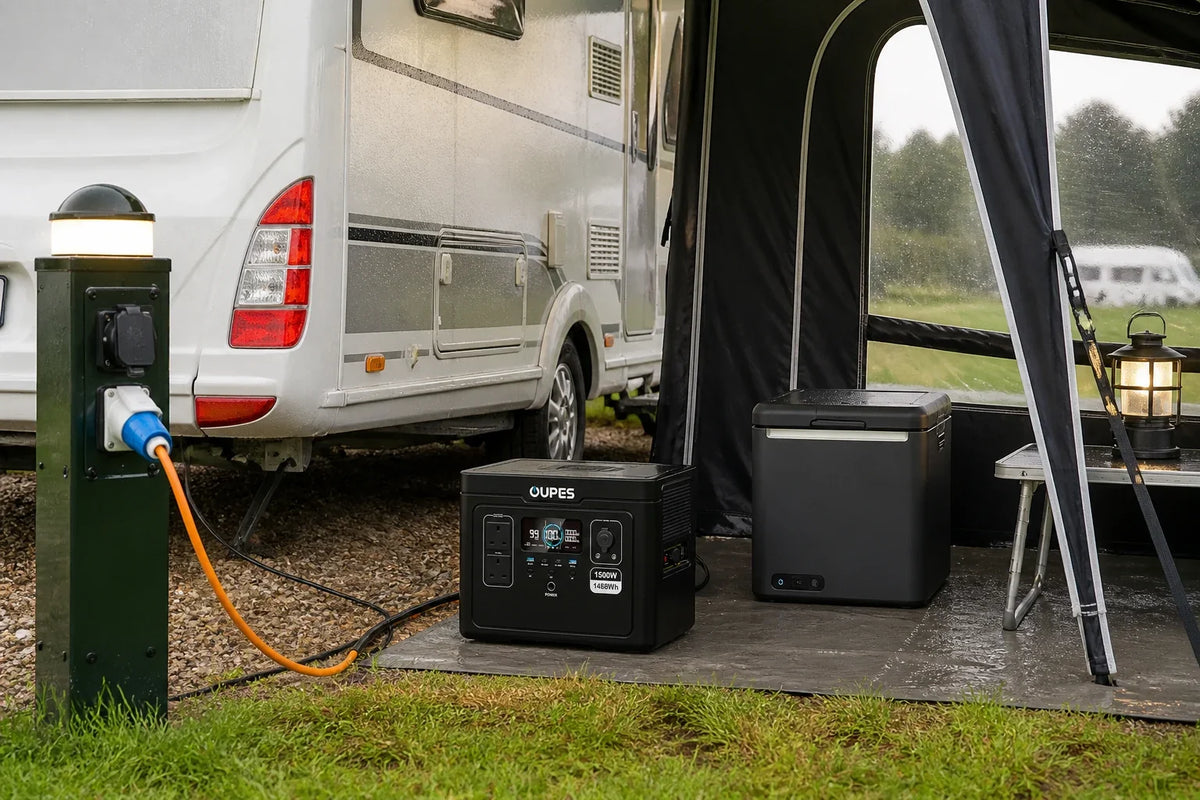
| OUPES Exodus 1500 | 1,488Wh | 1,500W | Up to 480W | Longer low-to-medium-load use where portability matters |
| OUPES Exodus 2400 | 2,232Wh | 2,400W | Up to 800W | Higher energy budgets and compatible higher-power appliances |
| OUPES Mega 3 | 3,072Wh | 3,600W | Up to 2,100W | Large loads, longer backup plans and expandable storage |
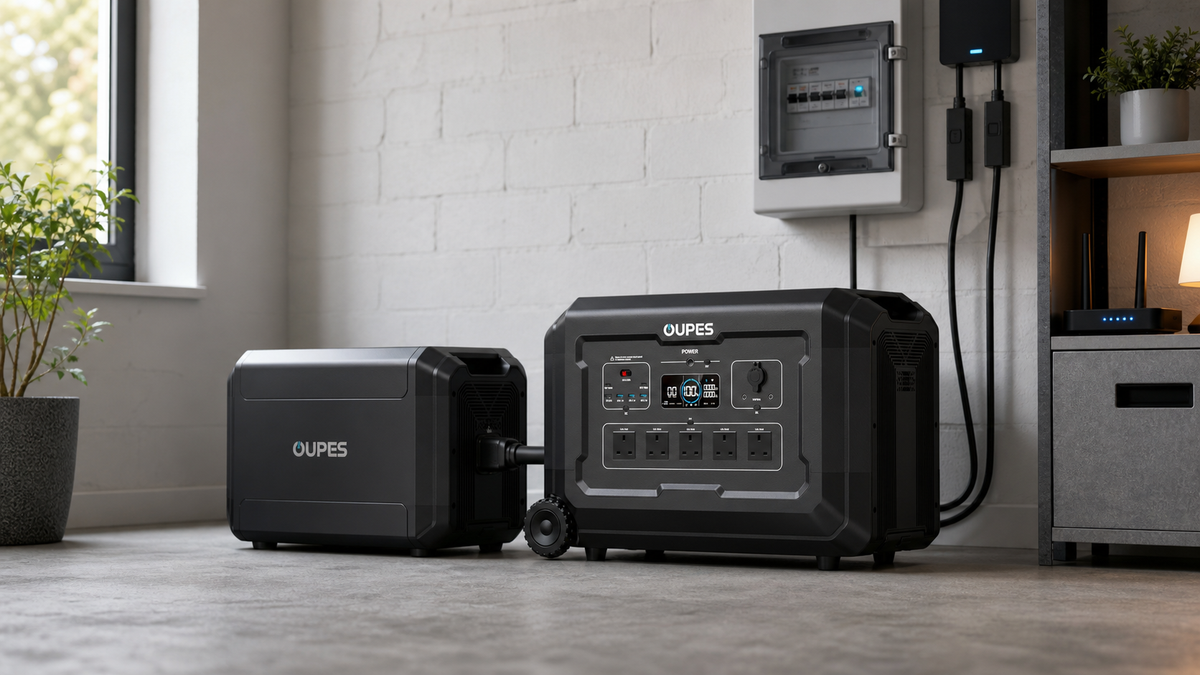
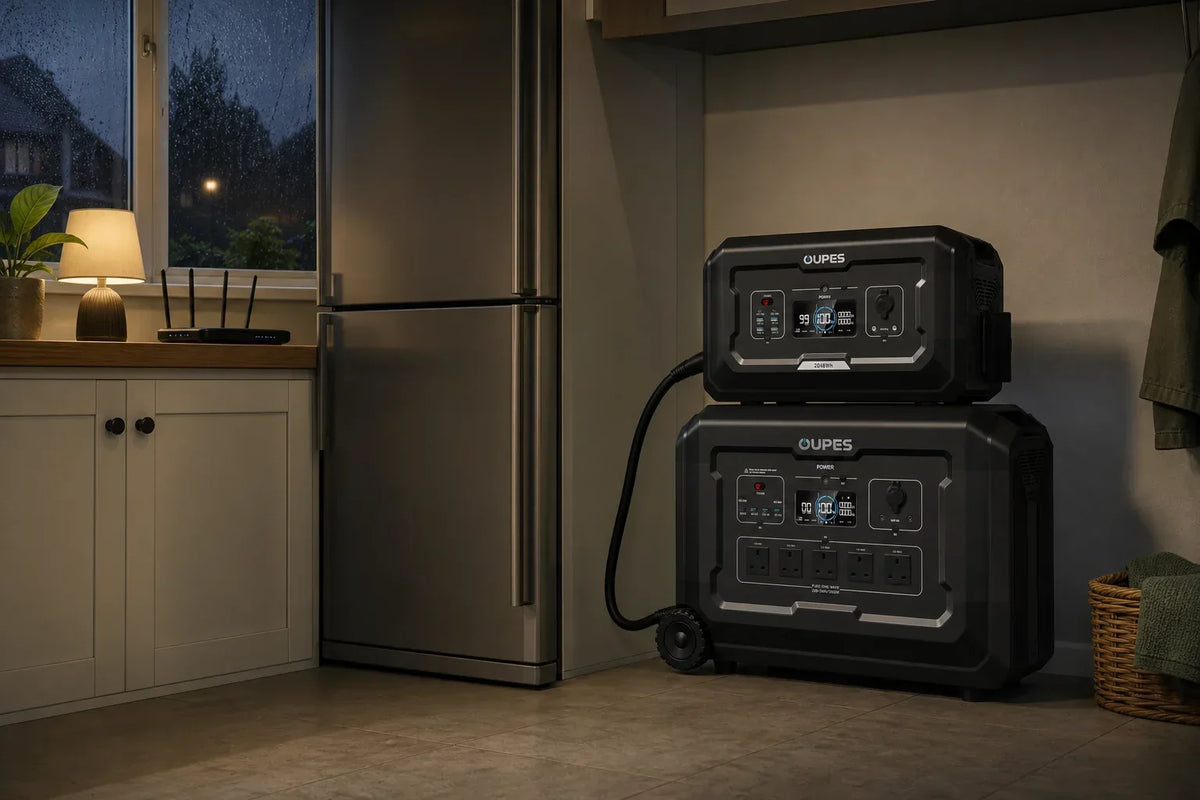
| OUPES B2 Extra Battery | 2,048Wh | USB and 12V DC outputs | Up to 2,100W independent solar input | Expanding compatible Mega 1 or Mega 3 systems |
Before ordering from the UK store, confirm the current supplied model’s AC voltage, socket format, cables and appliance compatibility on the product page. Do not infer compatibility from wattage alone.
Practical Checklist
When reading a battery label:
- Record both Ah and nominal volts.
- Convert to Wh for cross-voltage comparison.
- Find the allowed depth of discharge.
- Check maximum continuous current.
- Allow for inverter and converter losses.
- Follow the specified charger and temperature limits.
Safety and Limitations
Do not short-circuit a battery or size cables from Ah alone. Fault current can be extremely high; protection, conductor size and connectors require competent design.
Never combine batteries of different type, age, state of charge or specification unless the manufacturer explicitly permits the configuration.
Final Verdict
Ah describes charge capacity, not energy by itself. Pair it with nominal voltage, convert to Wh and then account for usable limits and losses before estimating runtime.
Frequently Asked Questions
1. What does 100Ah mean?
It is a charge-capacity rating; an idealised 1A load could run for 100 hours, but real conditions alter the result.
2. How many watt-hours is 100Ah?
Multiply by voltage: 100Ah at 12.8V is about 1,280Wh.
3. Is a higher Ah battery always better?
No. Voltage, chemistry, output, weight, life, protection and compatibility also matter.
4. What is the difference between amps and amp-hours?
Amps measure current at an instant; amp-hours measure current multiplied by time.
5. Can I estimate AC runtime from Ah?
First convert to Wh using nominal voltage, then allow for inverter loss and usable capacity.
6. Does connecting batteries in series add Ah?
No. Series normally adds voltage; parallel normally adds Ah, subject to manufacturer-approved design.


Leave a comment
This site is protected by hCaptcha and the hCaptcha Privacy Policy and Terms of Service apply.