




Quick Answer
To convert watt-hours to milliamp-hours, use mAh = Wh × 1,000 ÷ volts. Voltage is essential: 100Wh equals 20,000mAh at 5V, 8,333mAh at 12V and about 3,704mAh at 27V.
mAh alone is not an energy comparison unless the voltage is the same. Use Wh when comparing batteries with different nominal voltages, and use the manufacturer’s stated nominal voltage rather than a charger’s marketing label.
Key Facts
Watt-hours measure energy; milliamp-hours measure electric charge. Voltage connects the two quantities.
| Quantity | Unit | Meaning | Useful Relationship |
|---|---|---|---|
| Energy | Wh | Power delivered over time | Wh = V × Ah |
| Charge capacity | Ah | Current multiplied by time | Ah = Wh ÷ V |
| Small charge capacity | mAh | One-thousandth of an Ah | mAh = Ah × 1,000 |
| Voltage | V | Electrical potential difference | Required for Wh/mAh conversion |
How It Works
A 10,000mAh power bank usually quotes capacity at the internal cell voltage, not necessarily at the 5V USB output. Conversion losses and voltage conversion mean the delivered USB energy is lower than a simple mAh label may imply.
Large battery systems normally use Wh or kWh because these units make different system voltages easier to compare. Amp-hours remain useful for a known nominal battery voltage, particularly in 12V vehicle and marine systems.
Capacity does not guarantee runtime. Output limits, device efficiency, cable loss, temperature, battery age and standby consumption all affect delivered energy.
Wh to mAh Formula and Examples
Use the nominal battery voltage: mAh = Wh × 1,000 ÷ V. For the reverse conversion, Wh = mAh × V ÷ 1,000.
Keep voltage and capacity from the same side of the conversion. Do not combine internal-cell mAh with output-port voltage unless the goal is an explicitly theoretical conversion.
| Energy | Voltage | Calculation | Charge Capacity |
|---|---|---|---|
| 50Wh | 5V | 50 × 1,000 ÷ 5 | 10,000mAh |
| 100Wh | 5V | 100 × 1,000 ÷ 5 | 20,000mAh |
| 100Wh | 12V | 100 × 1,000 ÷ 12 | 8,333mAh |
| 1kWh | 12.8V | 1,000 × 1,000 ÷ 12.8 | 78,125mAh |
Compare the Main Options
The same Wh becomes a different mAh figure at every voltage, even though the energy remains unchanged.
| Battery Label | Comparable Directly? | Better Comparison | Reason |
|---|---|---|---|
| 10,000mAh at 3.7V vs 10,000mAh at 3.7V | Broadly, subject to losses | Wh and delivered test | Voltage is equal |
| 10,000mAh at 3.7V vs 10,000mAh at 12V | No | Convert both to Wh | Energy differs greatly |
| 1,024Wh station vs 20,000mAh bank | Not from labels alone | Convert bank with nominal voltage | Different units and systems |
| Two 100Wh batteries | Energy is similar | Also compare output and usable energy | Runtime still depends on system |
UK Planning Considerations
Airline battery limits and transport rules are normally expressed in Wh, reinforcing why energy is the clearer cross-voltage unit. Check the carrier’s current rules before travel.
The ampere is an SI base unit. NIST’s SI explanation provides the measurement context; product capacity remains subject to the manufacturer’s test conditions.
For the underlying UK guidance or current figures, check NIST SI guidance on electric current. Published tariffs, standards and safety advice can change, so verify the source again before acting.
Relevant OUPES UK Options
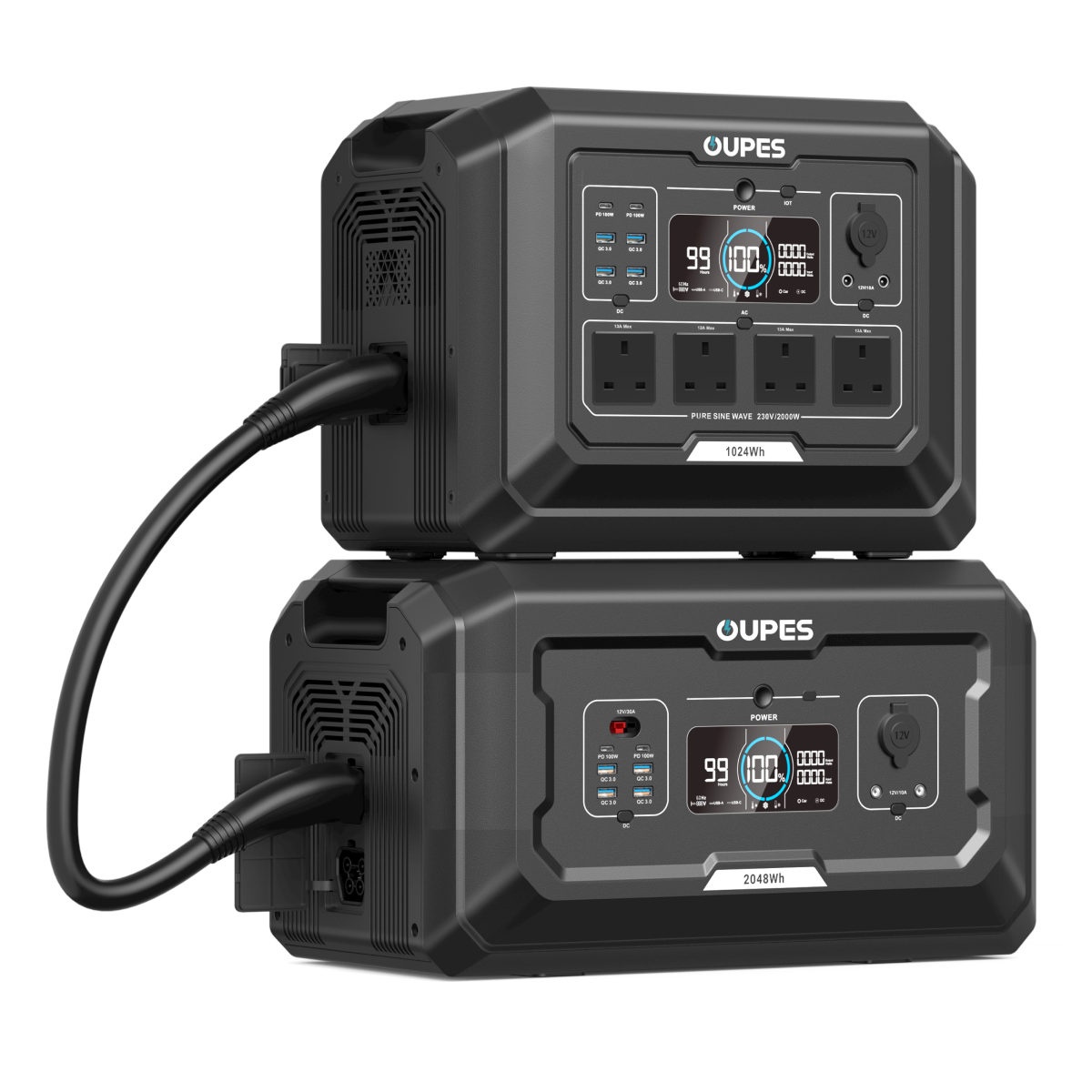
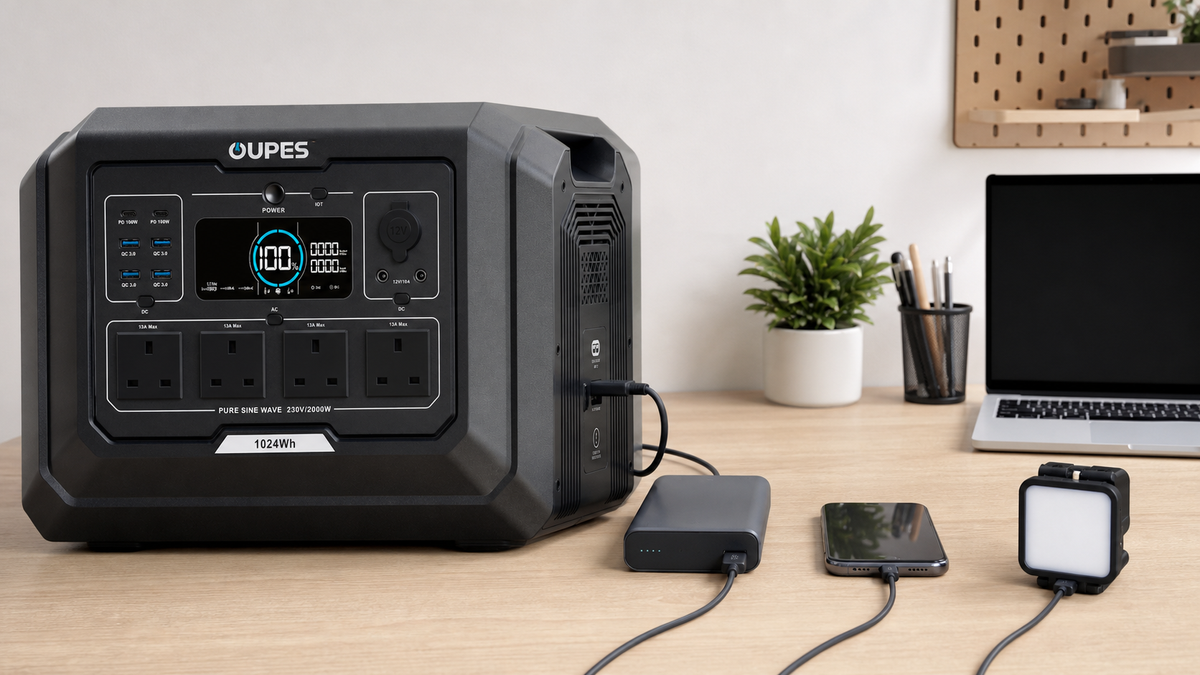
OUPES station capacity is published in Wh, which is the right starting point for runtime across AC and DC loads. Converting those figures to mAh is meaningful only after selecting a nominal voltage.
| UK-Site Product | Capacity | Rated Output | Solar | Planning Role |
|---|---|---|---|---|
| OUPES Mega 1 | 1,024Wh | 2,000W | Up to 800W | Portable everyday loads and shorter backup sessions |
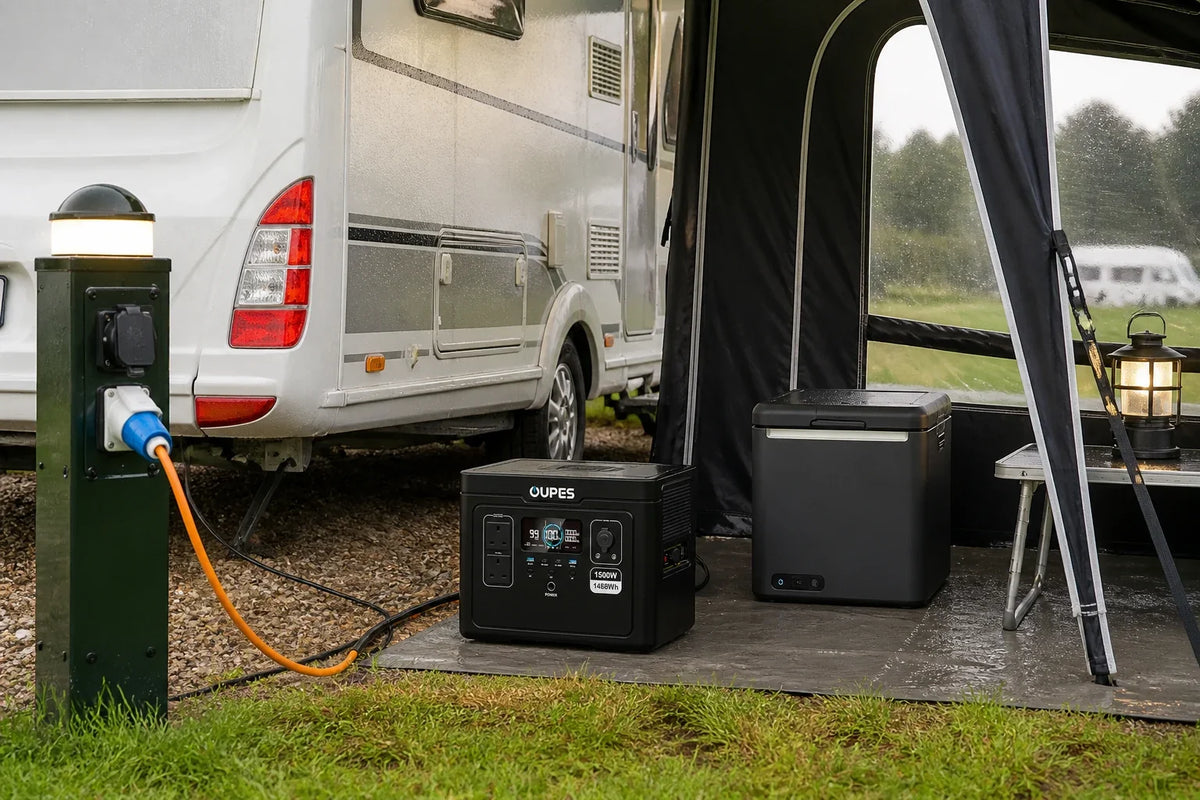
| OUPES Exodus 1500 | 1,488Wh | 1,500W | Up to 480W | Longer low-to-medium-load use where portability matters |
| OUPES Exodus 2400 | 2,232Wh | 2,400W | Up to 800W | Higher energy budgets and compatible higher-power appliances |
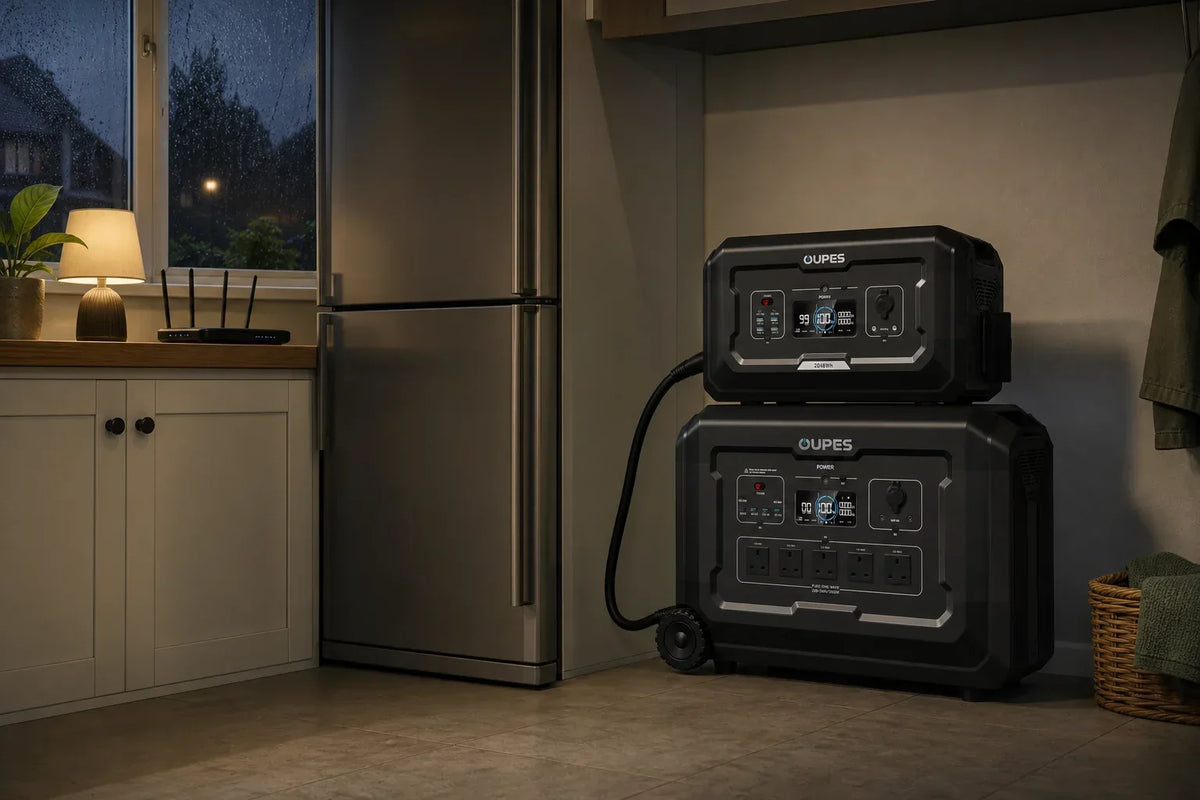
| OUPES Mega 3 | 3,072Wh | 3,600W | Up to 2,100W | Large loads, longer backup plans and expandable storage |
| OUPES B2 Extra Battery | 2,048Wh | USB and 12V DC outputs | Up to 2,100W independent solar input | Expanding compatible Mega 1 or Mega 3 systems |
Before ordering from the UK store, confirm the current supplied model’s AC voltage, socket format, cables and appliance compatibility on the product page. Do not infer compatibility from wattage alone.
Practical Checklist
Before converting battery capacity:
- Find the nominal battery voltage.
- Confirm whether the label is Wh, Ah or mAh.
- Use internal voltage for stored-energy conversion.
- Allow for converter and inverter losses.
- Check output power and protocol separately.
- Treat runtime as an estimate until measured.
Safety and Limitations
A mathematical conversion does not establish charger compatibility. Battery chemistry, maximum charge voltage, current, polarity and protection must all match.
Do not open battery packs to measure individual cells. Use published specifications and approved accessories.
Final Verdict
Multiply Wh by 1,000 and divide by nominal volts to obtain mAh. Use Wh for comparisons across different voltages and keep output capability, losses and battery protection separate from the capacity calculation.
Frequently Asked Questions
1. How many mAh is 100Wh?
20,000mAh at 5V, 8,333mAh at 12V or another value at a different voltage.
2. Can I convert Wh to mAh without voltage?
No. Voltage is required because Wh measures energy and mAh measures charge.
3. Is 10,000mAh always 10Wh?
No. Wh equals Ah multiplied by voltage.
4. Why do power stations use Wh?
Wh allows energy comparison without hiding the battery voltage.
5. Does the converted mAh equal usable output?
Not necessarily; conversion losses, limits and overhead reduce delivered energy.
6. How do I convert mAh back to Wh?
Multiply mAh by volts, then divide by 1,000.


Leave a comment
This site is protected by hCaptcha and the hCaptcha Privacy Policy and Terms of Service apply.