




Quick Answer
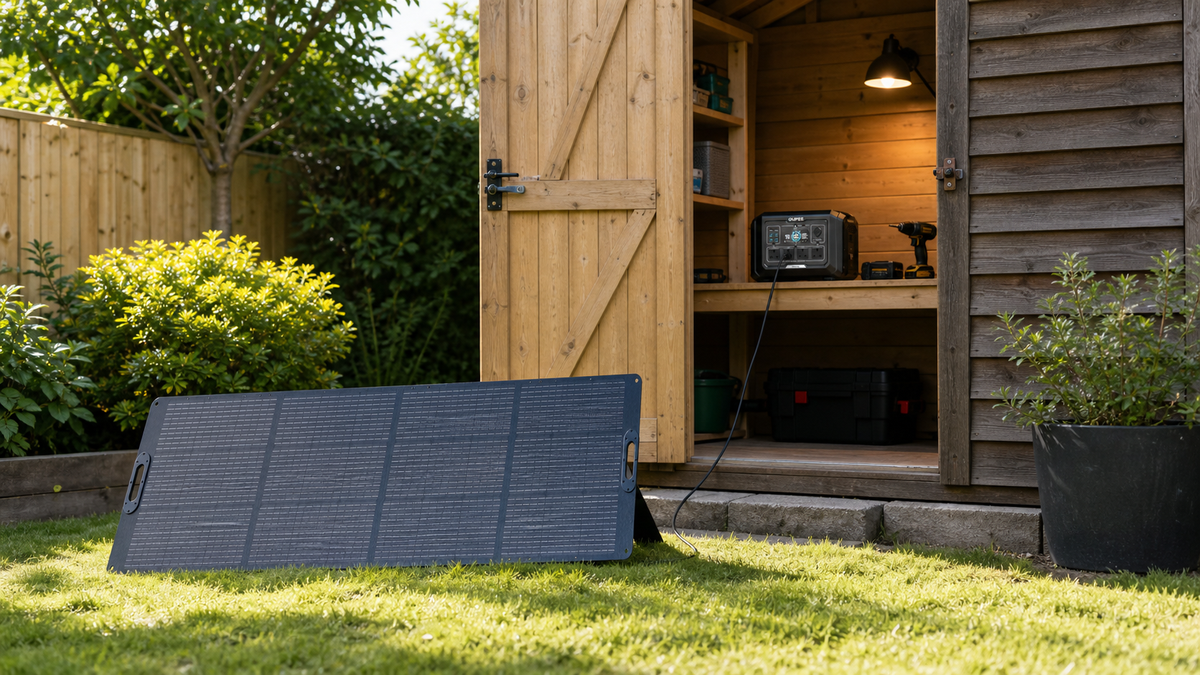
A small shed can often use a portable panel and battery for lighting, charging and occasional low-power tools. Heating, kettles and large workshop machinery require much more output and energy and may justify a professionally installed grid connection instead.
Start with daily Wh, simultaneous watts, startup surge and winter solar recovery. Decide whether the system is portable, standalone fixed DC, or connected to fixed AC wiring before buying components.
Key Facts
The word “shed” covers everything from a storage building with one lamp to a workshop with heavy equipment.
| Shed Use | Example Loads | System Starting Point | Main Constraint |
|---|---|---|---|
| Lighting and phone charging | LED lights, USB devices | Small solar and battery | Winter daylight |
| Garden office | Laptop, monitor, router | Larger battery and reliable recharge | Daily energy |
| Occasional tools | Drill chargers, small tools | Check surge and output | Peak watts |
| Heated workshop | Heater, kettle, machinery | Professional supply assessment | Very high energy and current |
How It Works
Solar panels generate DC electricity. A controller manages battery charging, and an inverter is required for standard AC appliances. A portable power station integrates these functions but remains a portable appliance, not fixed building wiring.
The battery bridges evening use and cloudy periods. A system that works in June may be inadequate in December, so critical winter loads need conservative solar assumptions or another charging source.
Long cable runs create voltage drop. Fixed wiring, buried cables and distribution equipment should be designed for the environment and protected from moisture and physical damage.
How to Size Shed Solar
Multiply each load’s average watts by daily hours. Add all energy, include a loss reserve and choose storage for the required autonomy. Separately add simultaneous watts and verify startup demand.
Example: four 5W lights for four hours use 80Wh; a 65W laptop for four hours uses 260Wh; a 20W router for eight hours uses 160Wh. Total is 500Wh before losses.
| Load | Power | Daily Time | Daily Energy |
|---|---|---|---|
| Four LED lights | 20W total | 4 hours | 80Wh |
| Laptop | 65W | 4 hours | 260Wh |
| Router | 20W | 8 hours | 160Wh |
| Example total | — | — | 500Wh before losses |
Compare the Main Options
Choose the architecture before sizing hardware.
| Approach | Best For | Advantages | Limitations |
|---|---|---|---|
| Portable panel and station | Temporary, removable power | Simple and flexible | Not fixed wiring |
| Fixed standalone DC system | Lighting and DC loads | Avoids AC conversion | Design and protection required |
| Fixed solar plus inverter | Regular off-grid workspace | Broader appliance support | Installation complexity |
| Grid cable to outbuilding | High-power workshop | Reliable capacity | Professional trenching and electrical work |
UK Planning Considerations
Planning permission and building requirements depend on panel placement, property status and location. Fixed electrical work must be suitable for an outdoor outbuilding environment.
Energy Saving Trust guidance recommends assessing direction and shading. A shed roof may be small or shaded by trees, so measure the actual site rather than assuming the full roof is usable.
For the underlying UK guidance or current figures, check Energy Saving Trust solar installation guidance. Published tariffs, standards and safety advice can change, so verify the source again before acting.
Relevant OUPES UK Options
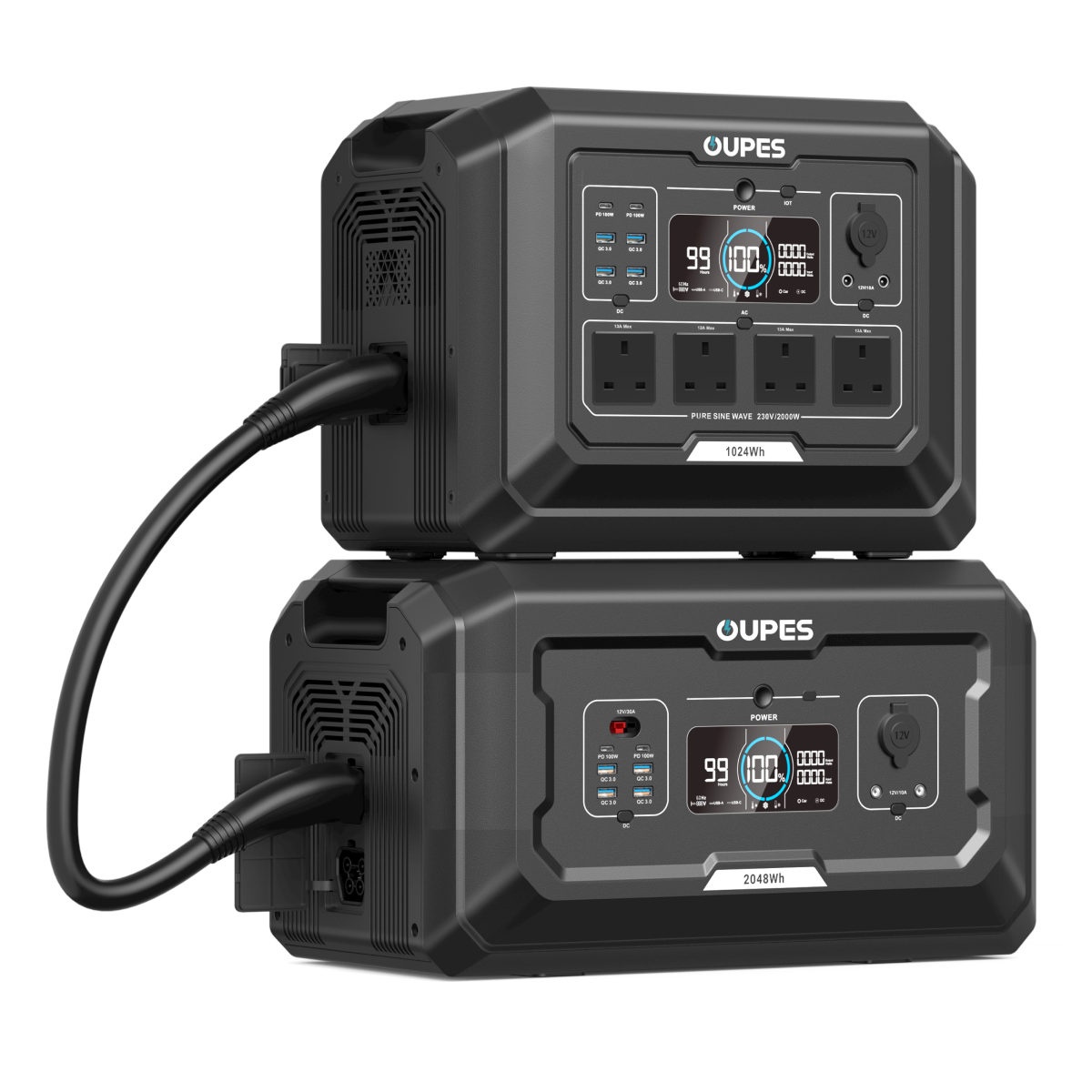
Mega 1 with the 240W portable panel is a practical starting point for lights and electronics. Exodus 1500 or 2400 adds stored energy, while Mega 3 is relevant only when higher compatible loads and longer runtime justify its size.
| UK-Site Product | Capacity | Rated Output | Solar | Planning Role |
|---|---|---|---|---|
| OUPES Mega 1 | 1,024Wh | 2,000W | Up to 800W | Portable everyday loads and shorter backup sessions |
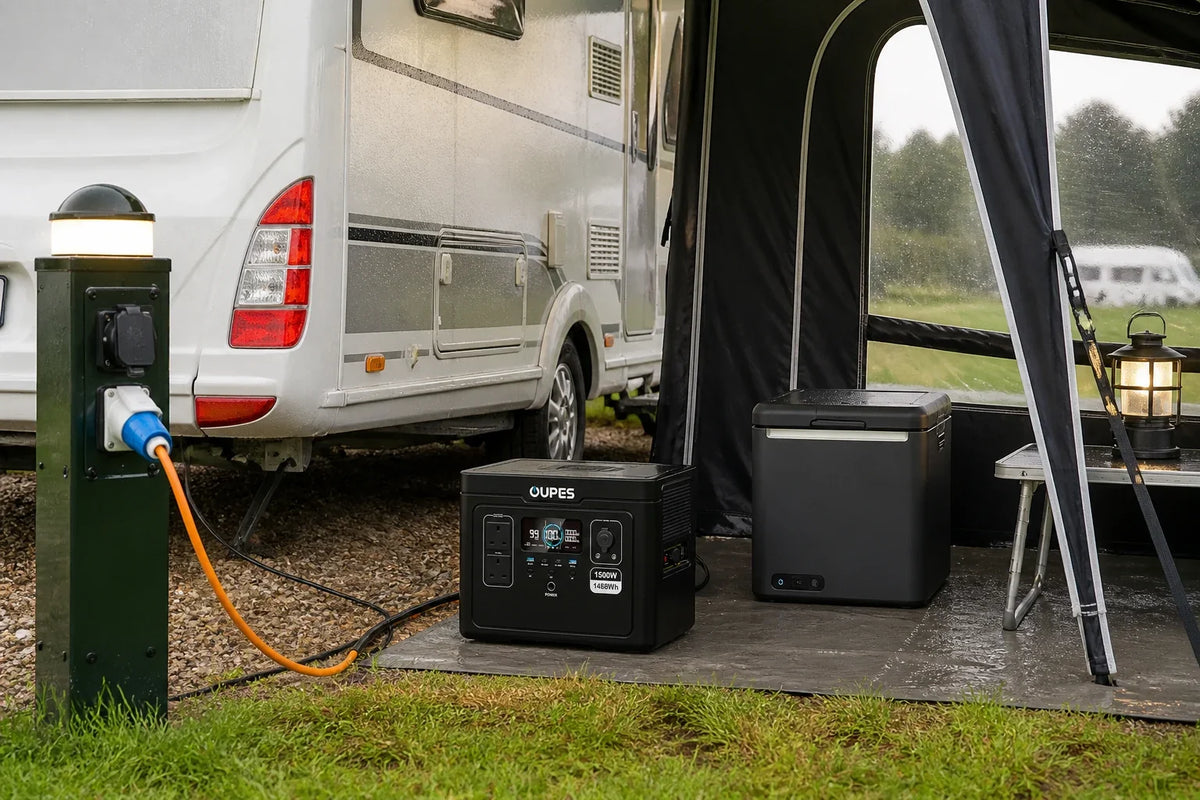
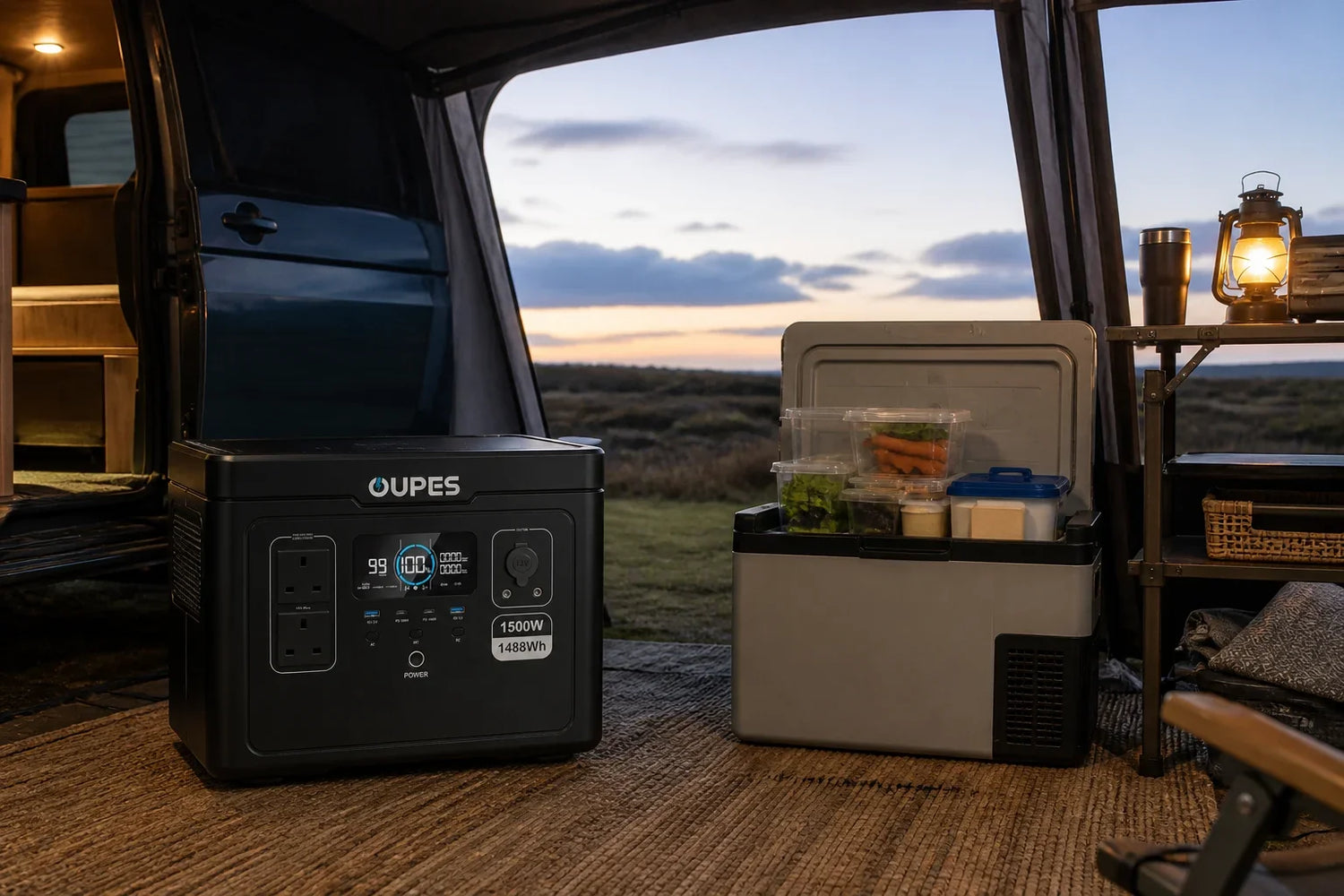
| OUPES Exodus 1500 | 1,488Wh | 1,500W | Up to 480W | Longer low-to-medium-load use where portability matters |
| OUPES Exodus 2400 | 2,232Wh | 2,400W | Up to 800W | Higher energy budgets and compatible higher-power appliances |
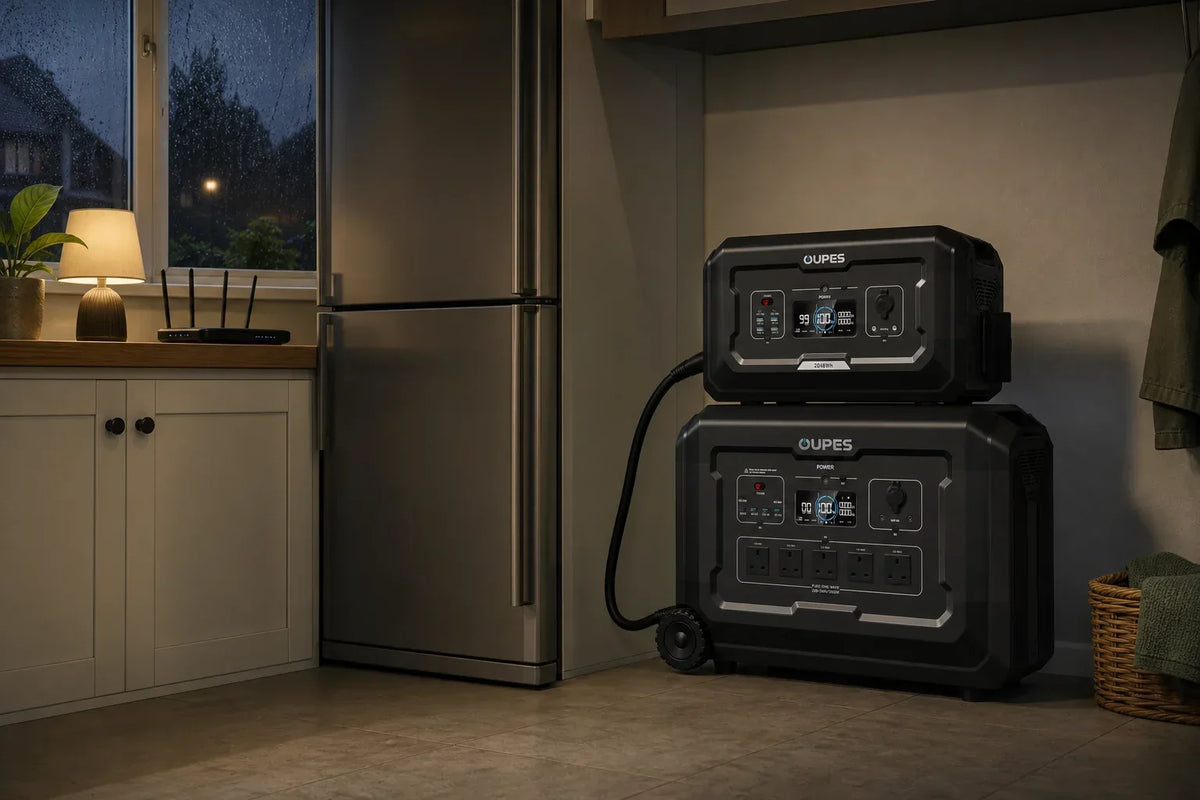
| OUPES Mega 3 | 3,072Wh | 3,600W | Up to 2,100W | Large loads, longer backup plans and expandable storage |
| OUPES 240W Portable Solar Panel | 240W panel | MC4 connector | ≥23% stated cell efficiency | Portable solar charging within the station’s input limits |
Before ordering from the UK store, confirm the current supplied model’s AC voltage, socket format, cables and appliance compatibility on the product page. Do not infer compatibility from wattage alone.
Practical Checklist
Shed solar design checklist:
- List every load and its daily Wh.
- Check motor and tool startup power.
- Inspect shade across the day and season.
- Plan battery storage and theft protection.
- Use weather-appropriate enclosures and cable routes.
- Decide whether portability or fixed installation is required.
Safety and Limitations
Do not install fixed mains wiring from a portable station as a substitute for an outbuilding circuit. Use a qualified electrician for fixed AC wiring, earthing and protection.
Keep batteries and stations dry, ventilated and within temperature limits. Protect cables from tools, rodents and garden equipment.
Final Verdict
Portable solar works well for modest shed loads when daily energy is measured. Large heaters and machinery change the project into an electrical installation problem; compare a properly designed grid supply with a much larger off-grid system.
Frequently Asked Questions
1. Can one solar panel power a shed?
It can cover modest loads if its daily solar yield matches consumption and the battery stores enough energy.
2. What size battery is needed?
Add daily Wh, allow for losses and choose the required number of low-sun days.
3. Can I run tools?
Only when output and surge fit the exact tool and enough energy is available.
4. Will it work in winter?
Output is lower and daylight shorter, so winter use needs conservative sizing.
5. Do I need an electrician?
Use one for fixed AC wiring, buried cables or work beyond your competence.
6. Can a portable station power fixed shed sockets?
Do not improvise fixed wiring; use the station’s approved outlets or a professionally designed system.

Leave a comment
This site is protected by hCaptcha and the hCaptcha Privacy Policy and Terms of Service apply.