




Quick Answer
Residential rigid solar modules vary by manufacturer, but many modern panels are roughly 1.7–2.0 metres long and about 1.0–1.2 metres wide. Higher-wattage modules can be larger, so plan from the exact datasheet rather than a generic size.
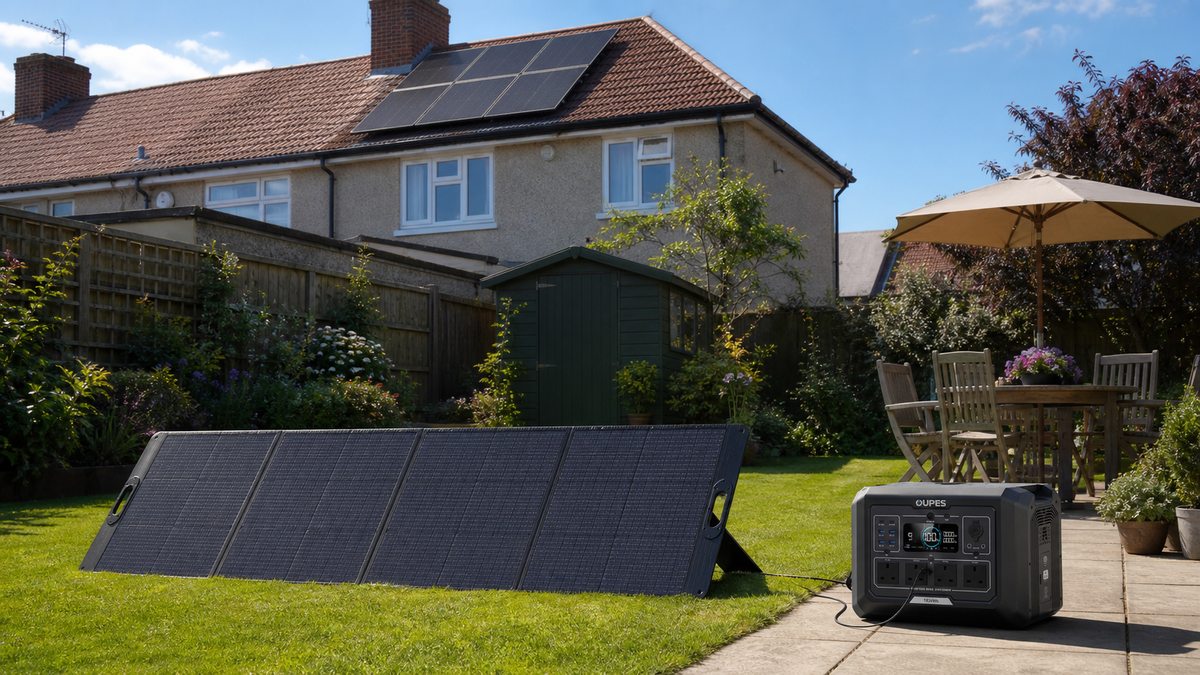
Portable folding panels trade roof-mount rigidity for transportability. The OUPES 240W panel is listed as approximately 2,529 × 590 × 35mm unfolded, 665 × 590 × 60mm folded and 8.4kg.
Key Facts
Panel wattage, dimensions and efficiency are related but not interchangeable. Two panels with the same watts can have different areas, cell technologies and electrical characteristics.
| Panel Category | Planning Size | Planning Weight | Typical Use |
|---|---|---|---|
| Compact rigid panel | Varies; often below a full residential module | Datasheet required | Small roofs and outbuildings |
| Residential rigid module | Often about 1.7–2.0m × 1.0–1.2m | Often around 18–25kg | Home rooftop arrays |
| Large high-wattage module | Can exceed 2m in length | Can exceed standard residential weight | Commercial or space-efficient layouts |
| Portable folding panel | Large unfolded; compact folded | Designed to carry | Camping and portable charging |
How It Works
Watts describe rated peak output under standard test conditions. Physical area determines how many modules fit, while efficiency describes how much incident solar energy is converted into electricity under test conditions.
Roof planning needs setbacks, access, shade, orientation and structural checks. Dividing total roof area by panel area will overstate the number that can actually be installed.
Portable panels need ground footprint, cable reach and wind stability. Folded dimensions matter for storage, while unfolded dimensions matter at the campsite or garden.
How to Estimate Panel Area
Obtain the exact module length and width, convert to metres and multiply for area per panel. Multiply by panel count, then add layout gaps and required clearances. A qualified installer should confirm the final arrangement.
For energy planning, do not multiply panel watts by 24 hours. Use location-specific solar yield, system losses and the receiving station or inverter’s input limits.
| Example Array | Module Size | Panel Area Only | Why Roof Area Must Be Larger |
|---|---|---|---|
| 6 panels | 1.75m × 1.13m | About 11.9m² | Gaps, edges and access |
| 10 panels | 1.75m × 1.13m | About 19.8m² | Roof shape and obstructions |
| 12 panels | 1.90m × 1.13m | About 25.8m² | Larger module footprint |
| Portable 240W | 2.529m × 0.590m unfolded | About 1.49m² | Needs clear ground and cable route |
Compare the Main Options
Choose a module by the whole design rather than by maximum watts or smallest advertised size.
| Design Priority | Useful Metric | Reason | Trade-Off |
|---|---|---|---|
| Limited roof area | W/m² and exact dimensions | Maximises capacity in the usable area | Higher-efficiency modules may cost more |
| Structural constraint | kg/m² and mounting loads | Protects roof integrity | May limit module choice |
| Portable use | Folded size and weight | Affects transport | Larger panels collect more energy |
| Fast charging | Electrical match and accepted input | Determines power received | More panel watts may be clipped |
UK Planning Considerations
UK rooftop installations require a site-specific assessment of roof condition, structure, orientation, shading and electrical connection. Planning and building requirements depend on the property and location.
The Energy Saving Trust recommends considering roof direction and shading and using a suitable installer. Exact module specifications should be included in the quotation and design.
For the underlying UK guidance or current figures, check Energy Saving Trust solar installation guidance. Published tariffs, standards and safety advice can change, so verify the source again before acting.
Relevant OUPES UK Options
The OUPES 240W folding panel provides a concrete portable-size reference. Station selection should consider its supported solar input, while panel series or parallel connections must remain within voltage and current limits.
| UK-Site Product | Capacity | Rated Output | Solar | Planning Role |
|---|---|---|---|---|
| OUPES 240W Portable Solar Panel | 240W panel | MC4 connector | ≥23% stated cell efficiency | Portable solar charging within the station’s input limits |
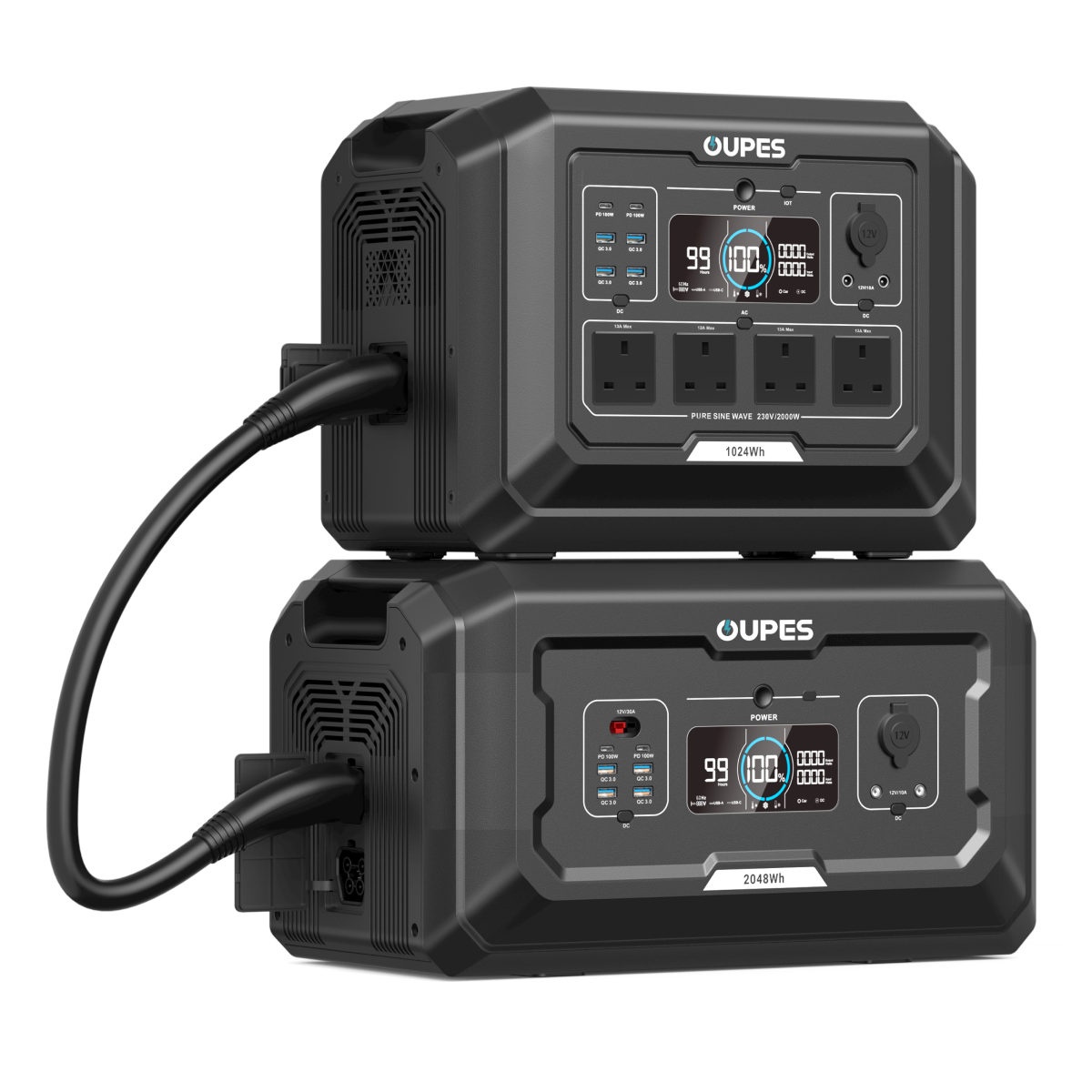
| OUPES Mega 1 | 1,024Wh | 2,000W | Up to 800W | Portable everyday loads and shorter backup sessions |
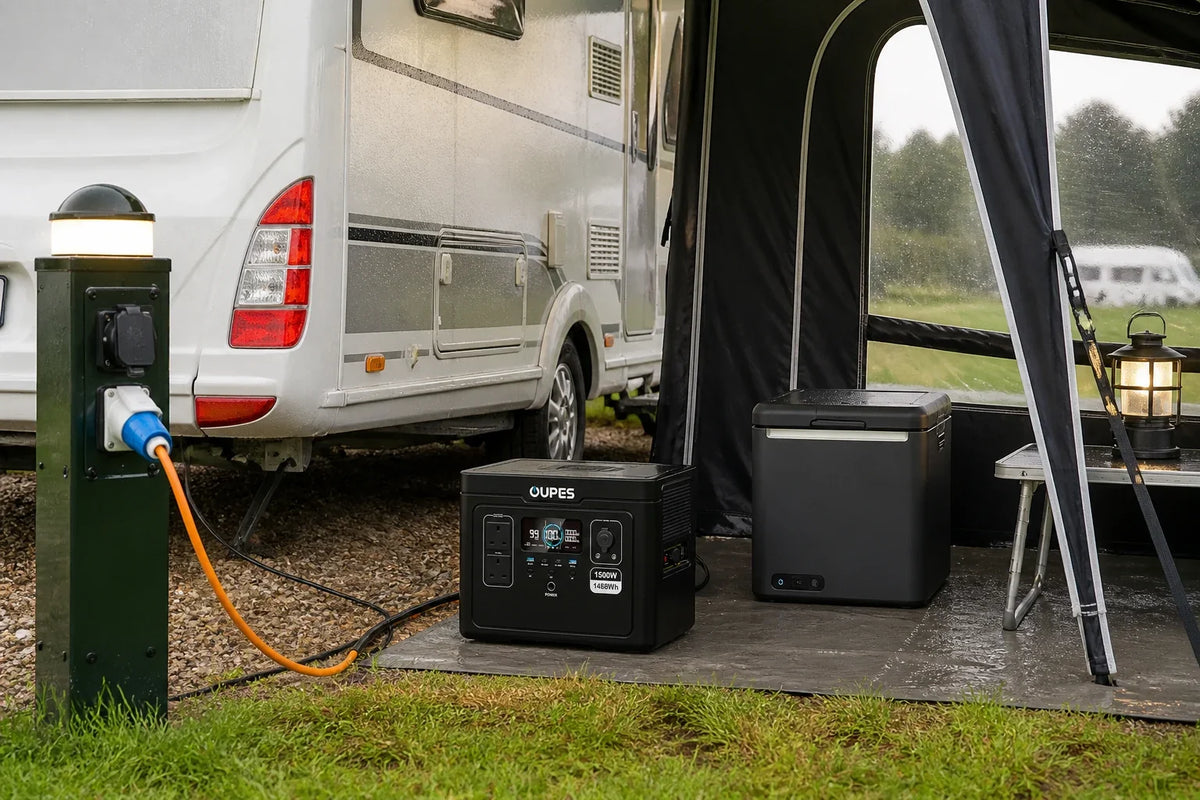
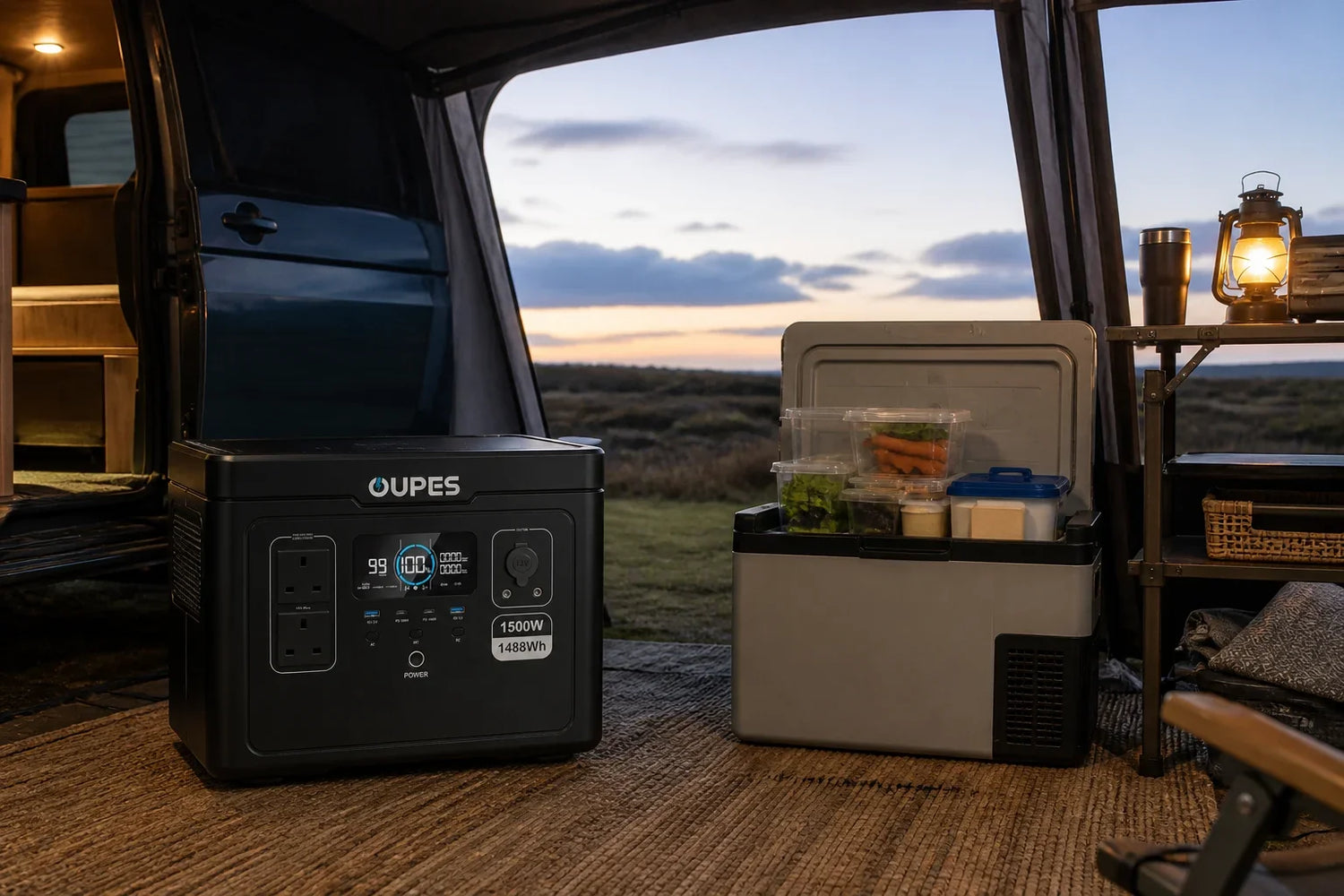
| OUPES Exodus 1500 | 1,488Wh | 1,500W | Up to 480W | Longer low-to-medium-load use where portability matters |
| OUPES Exodus 2400 | 2,232Wh | 2,400W | Up to 800W | Higher energy budgets and compatible higher-power appliances |
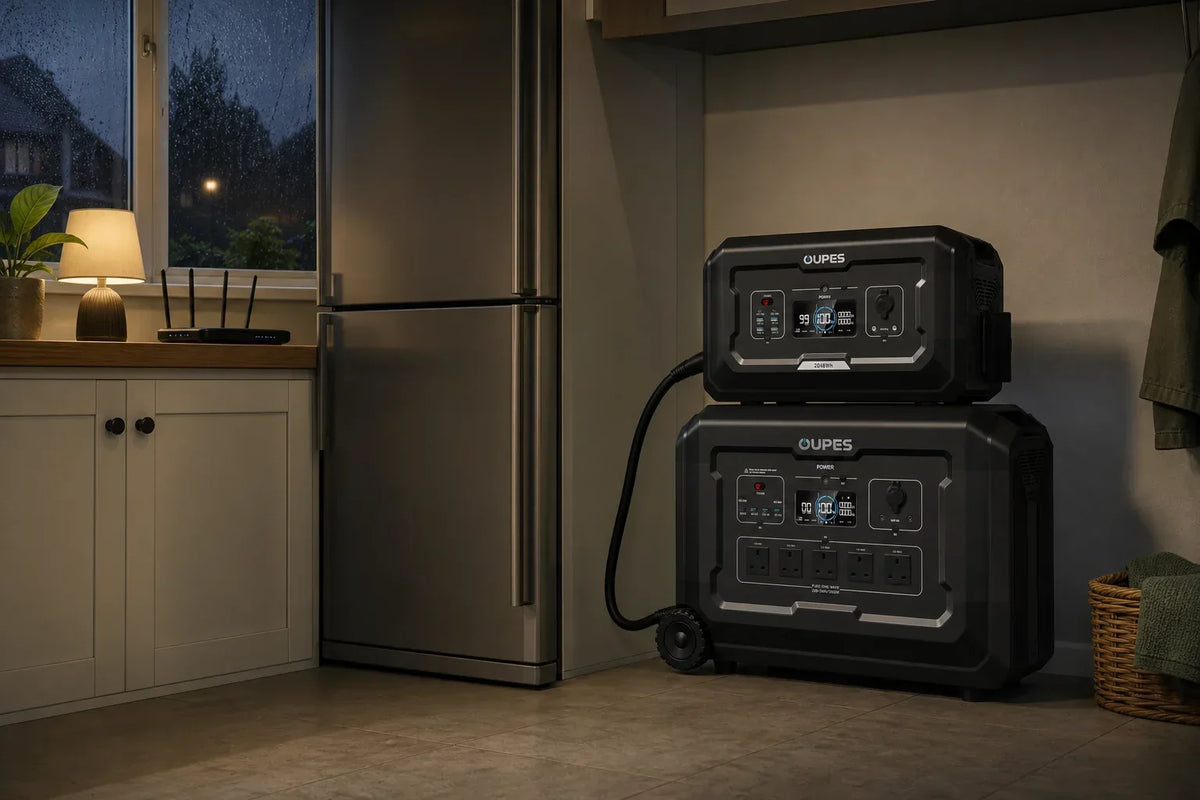
| OUPES Mega 3 | 3,072Wh | 3,600W | Up to 2,100W | Large loads, longer backup plans and expandable storage |
Before ordering from the UK store, confirm the current supplied model’s AC voltage, socket format, cables and appliance compatibility on the product page. Do not infer compatibility from wattage alone.
Practical Checklist
Record these dimensions before choosing panels:
- Usable roof or ground area, not total area.
- Exact panel length, width, thickness and weight.
- Obstructions, shade and required access paths.
- Mounting and wind-load requirements.
- Open-circuit voltage and operating current.
- Folded size and transport weight for portable panels.
Safety and Limitations
Rooftop panel installation involves work at height, structural loading and DC electrical hazards. Use competent installers and suitable access systems.
Do not connect panels merely because the plugs fit. Verify open-circuit voltage in cold conditions, current, polarity, connector type and controller limits.
Final Verdict
There is no universal UK solar-panel size. Use exact datasheets and a physical layout for rigid arrays; use folded size, unfolded footprint and weight for portable panels. Electrical compatibility remains as important as dimensions.
Frequently Asked Questions
1. What is a typical residential solar panel size?
Many are around 1.7–2.0m long and 1.0–1.2m wide, but exact products vary.
2. How much does a solar panel weigh?
Many rigid residential modules are around 18–25kg, while the OUPES portable 240W panel is listed at 8.4kg.
3. Are higher-wattage panels larger?
Often, although higher efficiency can also increase watts without proportionally increasing area.
4. How much roof space do I need?
Multiply exact panel area by count, then allow for edges, access, obstructions and the actual roof shape.
5. Can a portable panel stay outside permanently?
Use it only within its manual and environmental limits; portable construction is not automatically suitable for permanent exposure.
6. Does a 240W panel always produce 240W?
No. That is a test-condition rating; weather, angle, temperature, losses and input limits affect real power.

Leave a comment
This site is protected by hCaptcha and the hCaptcha Privacy Policy and Terms of Service apply.