




Quick Answer
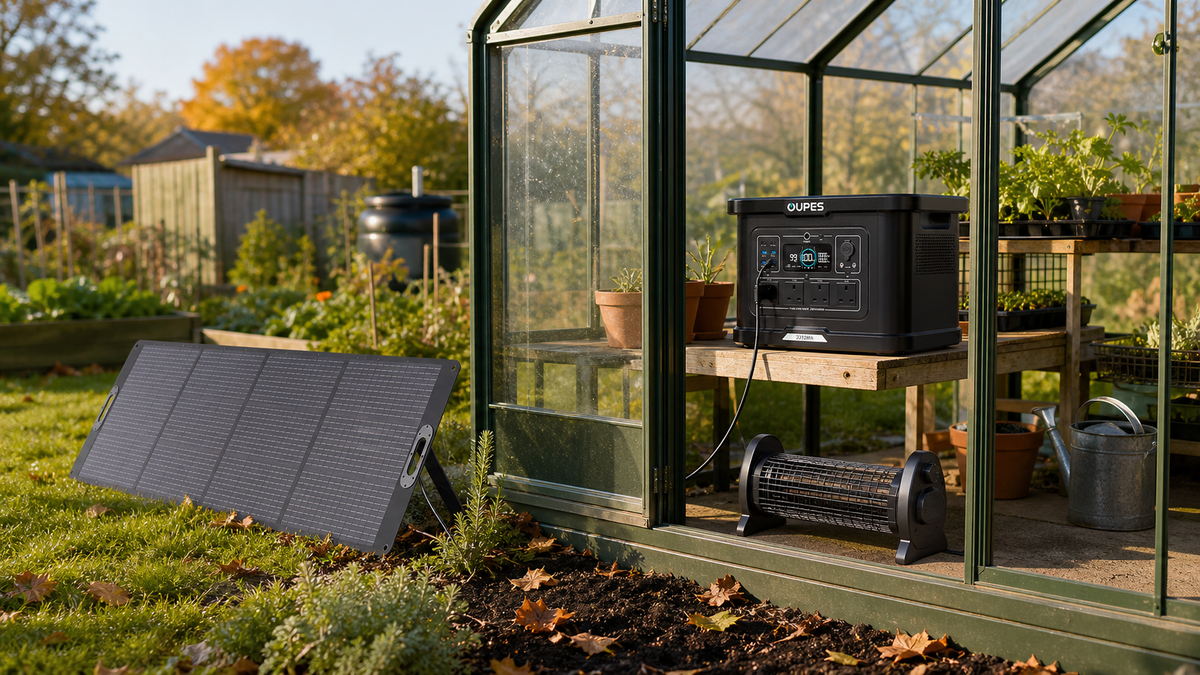
Solar greenhouse heating works best when heat loss is reduced first. Seal draughts, add horticultural insulation, use thermal mass and heat only the protected zone before sizing panels, batteries and an electric heater.
Direct electric resistance heating requires substantial energy. A 500W heater operating for eight hours needs 4kWh before losses—far more than one small portable battery. Solar input must replace that energy during limited winter daylight, so a modest frost-protection target is more realistic than maintaining summer temperatures.
Key Facts
The heating load depends on greenhouse area, glazing, wind, outdoor temperature and the chosen indoor setpoint. A thermostat reduces runtime but does not remove the need for an energy budget.
| Measure | Low-Energy Action | Effect |
|---|---|---|
| Air leakage | Seal gaps while preserving intentional ventilation | Reduces uncontrolled heat loss |
| Glazing loss | Add suitable bubble insulation or internal lining | Improves thermal resistance |
| Heated volume | Create a smaller propagation enclosure | Cuts the space being heated |
| Thermal mass | Use water containers or masonry where practical | Stores daytime warmth and moderates swings |
How It Works
Photovoltaic panels produce electricity; they do not directly make heat. A complete active system needs panels, charge control, battery storage if heating continues after sunset, and a compatible heater or heat-pump system.
Passive solar methods capture and retain sunlight without converting it to electricity. South-facing exposure, clean glazing, thermal mass and insulated night screens can reduce the active heating requirement at much lower cost.
Winter is the hardest design case because heat demand is highest when daylight is shortest. Panel nameplate power is not daily energy: a 240W panel does not provide 240W continuously, and shade or cloud can reduce output sharply.
Solar Greenhouse Heating Energy Budget
Start with the heater’s measured average watts under thermostat control. Multiply by equivalent running hours to obtain daily Wh. Add fans, controllers and lighting, then divide by an assumed usable-system factor for battery sizing.
Compare this daily demand with conservative seasonal solar production. If the battery loses more energy overnight than the panels restore the next day, the system is not energy-balanced.
| Heater Scenario | Equivalent Runtime | Daily Energy Before Losses | Implication |
|---|---|---|---|
| 100W propagation mat | 8 hours | 800Wh | Small protected zone may be practical |
| 250W tubular heater | 8 hours | 2,000Wh | Needs larger storage and solar recovery |
| 500W heater | 8 hours | 4,000Wh | Substantial battery requirement |
| 1,000W heater | 8 hours | 8,000Wh | Usually impractical for a small portable setup |
Compare the Main Options
Combine methods rather than expecting one solar-powered heater to solve every condition.
| Method | Energy Use | Best Role | Limitation |
|---|---|---|---|
| Passive solar and insulation | Very low | First-line heat retention | Cannot guarantee frost protection |
| Heat mat or cable | Low to moderate | Root-zone and propagation heat | Does not warm the whole structure |
| Tubular heater | Moderate | Frost protection in a small space | Slow heat output |
| Fan heater | High | Rapid temperature lift | Large battery and inverter demand |
UK Planning Considerations
Use local minimum temperatures and winter solar conditions, not annual averages. Choose the minimum safe plant temperature rather than a comfort target designed for people.
Electrical equipment in a greenhouse faces condensation and water exposure. Use equipment rated for the environment, appropriate RCD protection and professionally installed fixed wiring where required.
For the underlying UK guidance or current figures, check Royal Horticultural Society greenhouse-heating guidance. Published tariffs, standards and safety advice can change, so verify the source again before acting.
Relevant OUPES UK Options
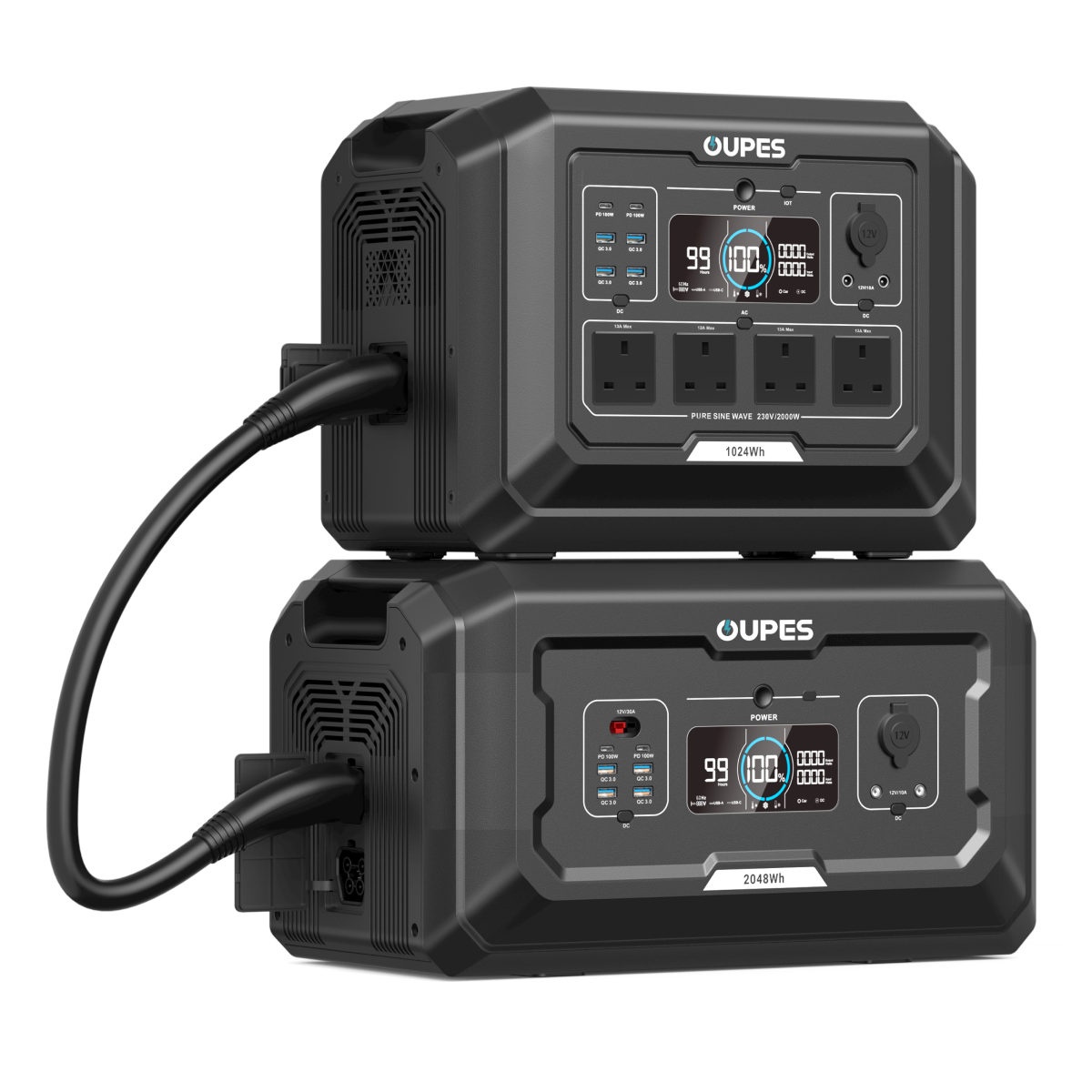
For small heat mats, fans and controls, Mega 1 may cover a managed short-duration plan. Larger heater loads can justify Exodus 2400 or Mega 3, while B2 expands compatible Mega systems. Runtime must be calculated from actual thermostat cycling.
| UK-Site Product | Capacity | Rated Output | Solar | Planning Role |
|---|---|---|---|---|
| OUPES Mega 1 | 1,024Wh | 2,000W | Up to 800W | Portable everyday loads and shorter backup sessions |
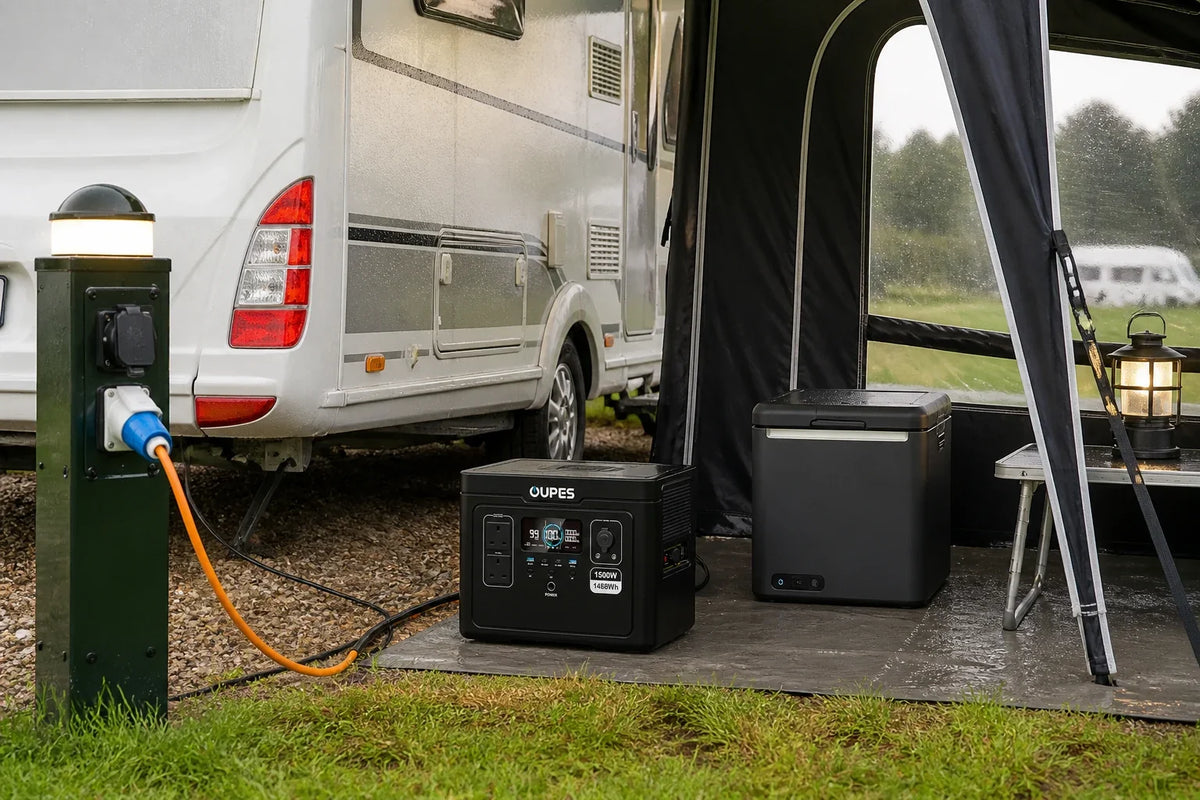
| OUPES Exodus 2400 | 2,232Wh | 2,400W | Up to 800W | Higher energy budgets and compatible higher-power appliances |
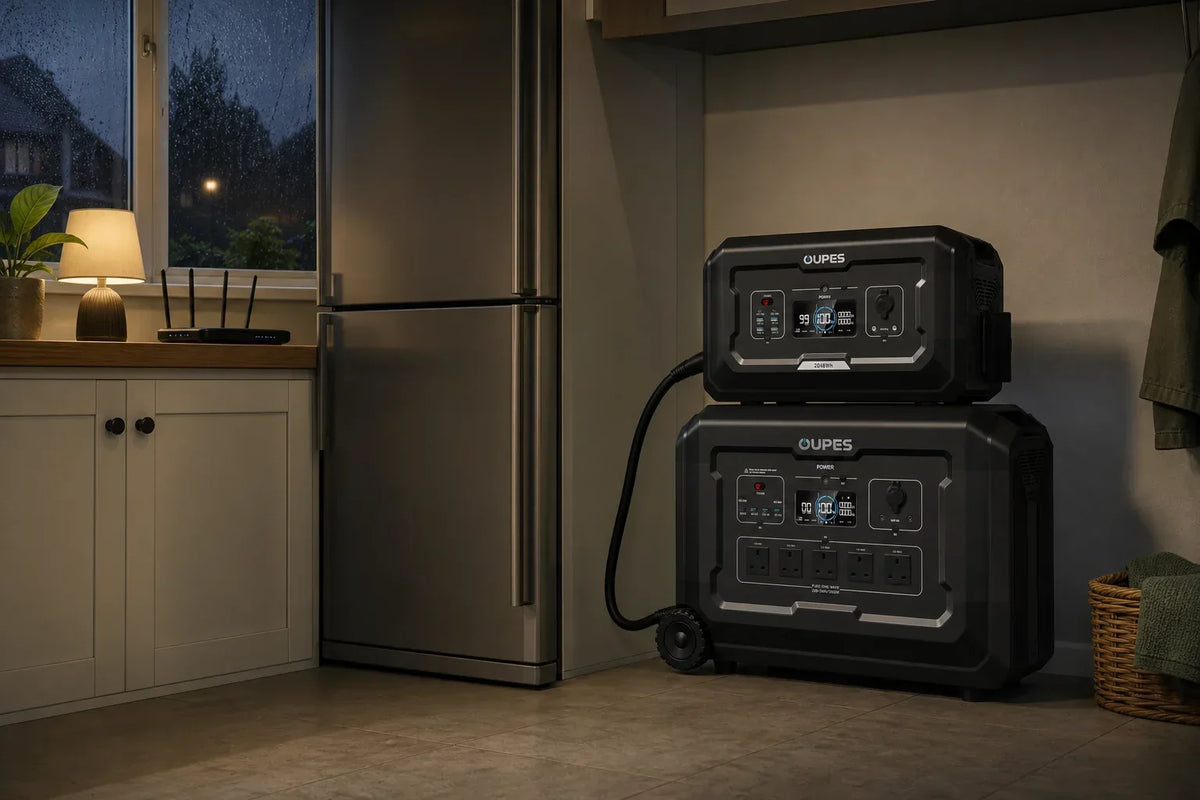
| OUPES Mega 3 | 3,072Wh | 3,600W | Up to 2,100W | Large loads, longer backup plans and expandable storage |
| OUPES B2 Extra Battery | 2,048Wh | USB and 12V DC outputs | Up to 2,100W independent solar input | Expanding compatible Mega 1 or Mega 3 systems |
| OUPES 240W Portable Solar Panel | 240W panel | MC4 connector | ≥23% stated cell efficiency | Portable solar charging within the station’s input limits |
Before ordering from the UK store, confirm the current supplied model’s AC voltage, socket format, cables and appliance compatibility on the product page. Do not infer compatibility from wattage alone.
Practical Checklist
Before purchasing solar or storage:
- Set a realistic minimum temperature for the plants.
- Measure or estimate the overnight heating load.
- Insulate and reduce the heated volume first.
- Check heater startup and continuous watts.
- Model poor-weather solar recovery over several days.
- Keep electrical equipment dry and correctly protected.
Safety and Limitations
Do not place household heaters in damp greenhouse conditions unless their manufacturer permits it. Keep combustibles clear, maintain airflow around equipment and never bypass thermostats or over-temperature protection.
Battery stations are not weatherproof merely because a connected panel has an IP rating. Keep the station within its stated operating environment and route cables to prevent water ingress and trip hazards.
Final Verdict
The most credible solar greenhouse heater is a system, not a single appliance. Reduce heat loss, target roots or a small enclosure, calculate nightly Wh and size solar for winter recovery. Whole-greenhouse resistance heating can exceed portable battery capacity very quickly.
Frequently Asked Questions
1. Can solar panels heat a greenhouse at night?
Only indirectly when daytime energy is stored in a battery or thermal mass.
2. How many solar panels are needed?
Divide the daily heating energy by conservative daily solar yield while respecting controller and station input limits.
3. Is a 500W heater suitable for solar power?
It may be, but eight equivalent hours uses 4kWh before losses, requiring substantial storage and recharge.
4. What is the cheapest way to retain heat?
Draught control, suitable insulation, thermal mass and reducing the heated zone are usually the first steps.
5. Can I use a household fan heater?
Only if it is rated for the damp environment and the circuit, inverter and safety clearances are suitable.
6. Which OUPES model should I use?
Choose from measured heater watts, daily Wh, startup demand and recharge plan; do not choose from greenhouse size alone.

Leave a comment
This site is protected by hCaptcha and the hCaptcha Privacy Policy and Terms of Service apply.