




Quick Answer
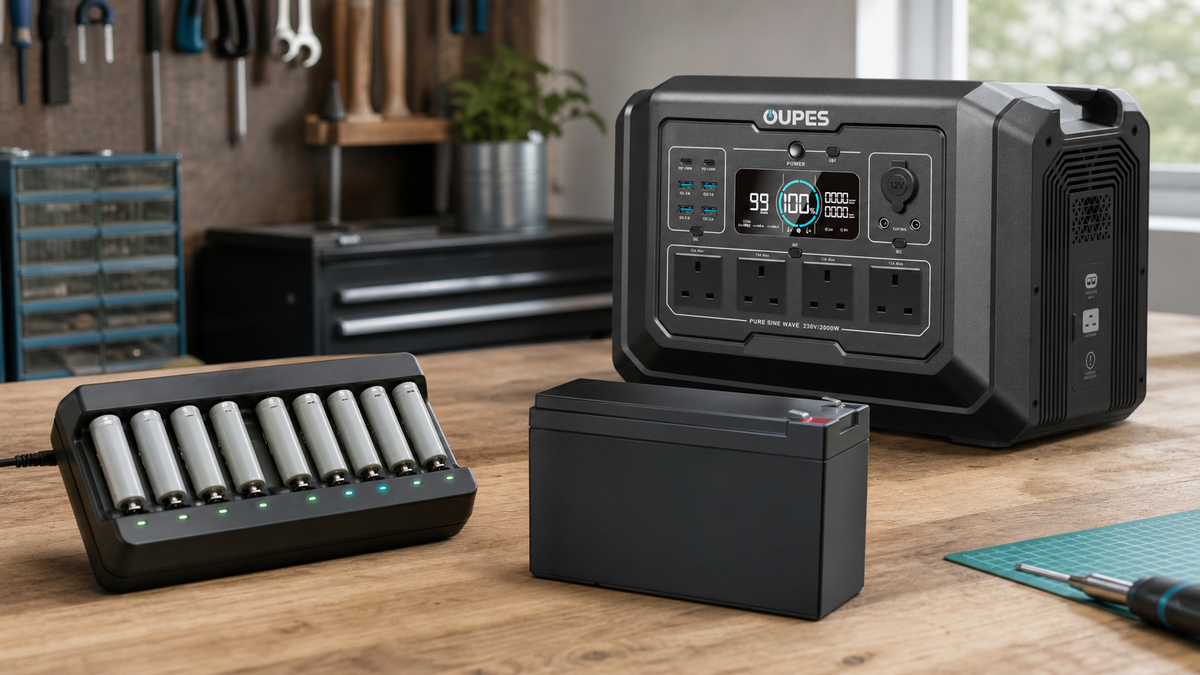
NiMH batteries remain useful for rechargeable AA and AAA devices, while lithium-ion batteries generally offer higher cell voltage and energy density for phones, laptops, tools and larger battery systems. Neither chemistry is a drop-in replacement for the other.
Choose the battery specified by the device manufacturer. Voltage, charging algorithm, cell format, protection circuitry and thermal design must all match; capacity alone does not establish compatibility.
Key Facts
The label “lithium-ion” covers several related chemistries. LiFePO4, used in OUPES power stations, has different voltage and thermal characteristics from common nickel-rich lithium-ion cells.
| Feature | NiMH | Lithium-Ion | Why It Matters |
|---|---|---|---|
| Nominal cell voltage | About 1.2V | Often about 3.6–3.7V; LiFePO4 about 3.2V | Cells cannot be substituted by size alone |
| Energy density | Lower | Generally higher | Affects weight and volume |
| Self-discharge | Higher, although low-self-discharge types improve this | Generally lower | Affects stored readiness |
| Protection | Correct charger still required | Protection and battery management are critical | Controls overcharge, discharge and temperature |
How It Works
A rechargeable cell stores energy through reversible chemical reactions. NiMH uses a nickel oxyhydroxide positive electrode and a hydrogen-absorbing alloy negative electrode. Lithium-ion moves lithium ions between electrode materials and uses a non-aqueous electrolyte.
Higher lithium-ion cell voltage means fewer cells may be required for a given pack voltage. Higher energy density can reduce weight, but the pack needs appropriate monitoring and protection. NiMH is robust for many consumer cells but can heat during charging and should use a charger designed for its termination behaviour.
Cycle-life numbers are only comparable when test depth, temperature, charge rate and end-of-life definition are the same. Calendar ageing also matters, so a headline cycle count is not a complete service-life promise.
How to Choose the Correct Chemistry
Start with the device manual and original battery specification. Record nominal voltage, maximum charge voltage, cell format, polarity, capacity, discharge requirement and whether the pack includes protection or communication electronics.
If the original chemistry is unavailable, contact the manufacturer rather than improvising. A physically fitting lithium cell can supply a materially different voltage from a NiMH cell and may damage the device or create a charging hazard.
| Question | NiMH May Fit When | Lithium-Ion May Fit When |
|---|---|---|
| What does the manufacturer specify? | The device is designed for NiMH AA/AAA or a NiMH pack | The device is designed for a protected lithium pack |
| Is compact energy important? | Moderate energy is acceptable | Low weight and high energy density are priorities |
| How will it charge? | A NiMH-aware charger is available | Correct lithium CC/CV charging and protection are built in |
| Will it sit unused? | Use low-self-discharge NiMH and maintain it | Lower self-discharge may be advantageous |
Compare the Main Options
The correct answer changes with application. A camera flash and a portable power station have very different current, energy and protection requirements.
| Application | Common Choice | Reason | Caution |
|---|---|---|---|
| AA/AAA household devices | Low-self-discharge NiMH | Standard sizes and reusable cells | Use a compatible charger |
| Phones and laptops | Lithium-ion | High energy density | Do not replace built-in packs casually |
| Hybrid vehicles | NiMH or lithium-ion by design | Pack engineered with the vehicle | No chemistry substitution |
| Portable power stations | Often LiFePO4 | Cycle life and system-level battery management | Treat as an integrated product |
UK Planning Considerations
UK battery users should follow the product manufacturer’s charging, transport and disposal instructions. Damaged, swollen, leaking or overheated batteries should be isolated from combustible materials and handled through an appropriate waste or retailer route.
Battery comparisons should separate small removable cells from engineered battery packs. A finished power station includes an inverter, battery-management system, charging electronics and enclosure; its behaviour cannot be inferred from chemistry alone.
For the underlying UK guidance or current figures, check UK government batteries and waste-batteries guidance. Published tariffs, standards and safety advice can change, so verify the source again before acting.
Relevant OUPES UK Options
The current OUPES UK station pages specify LiFePO4 batteries and more than 3,500 cycles to 80% capacity. Compare those figures with warranty, operating limits, charging methods and the complete system rather than with a loose NiMH cell.
| UK-Site Product | Capacity | Rated Output | Solar | Planning Role |
|---|---|---|---|---|
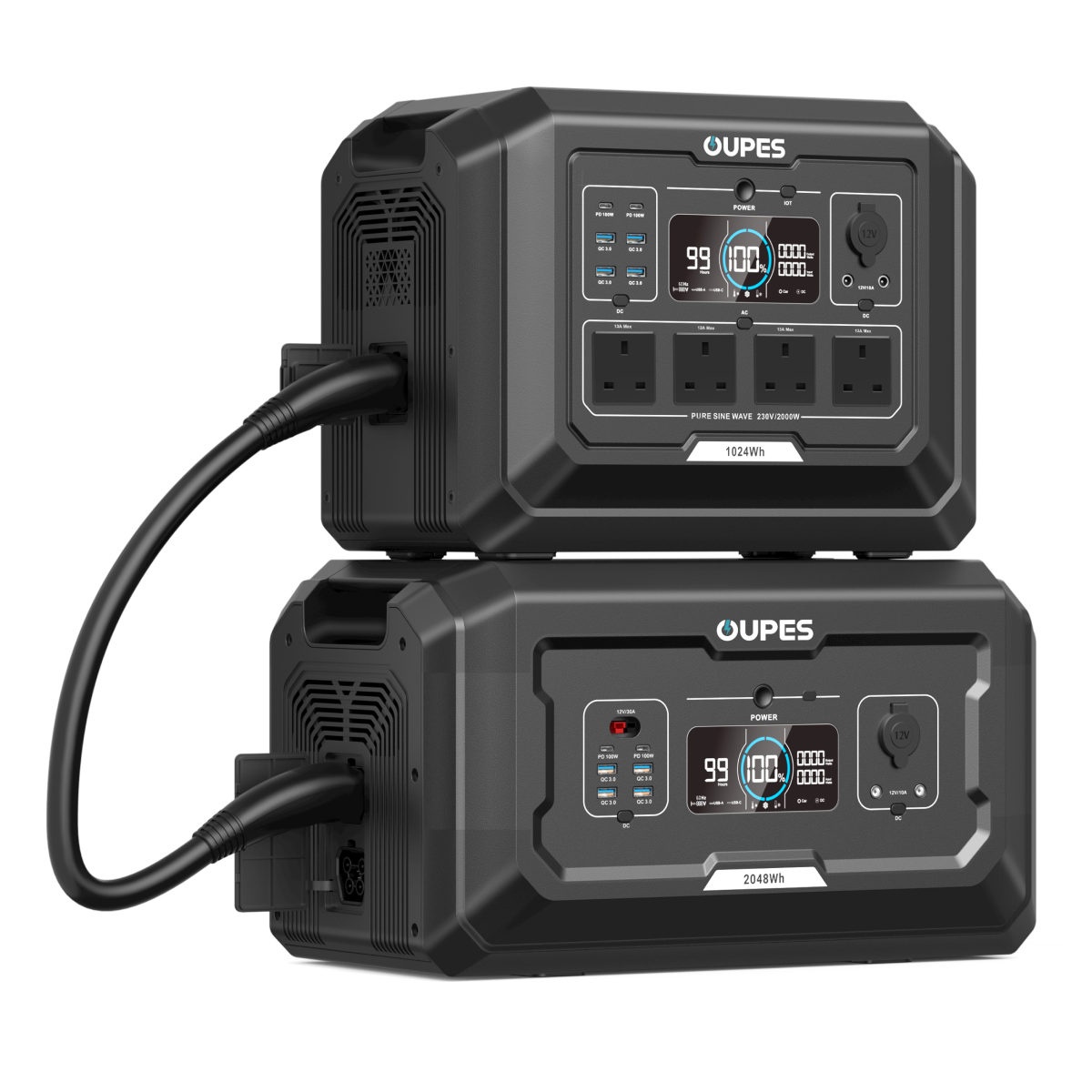
| OUPES Mega 1 | 1,024Wh | 2,000W | Up to 800W | Portable everyday loads and shorter backup sessions |
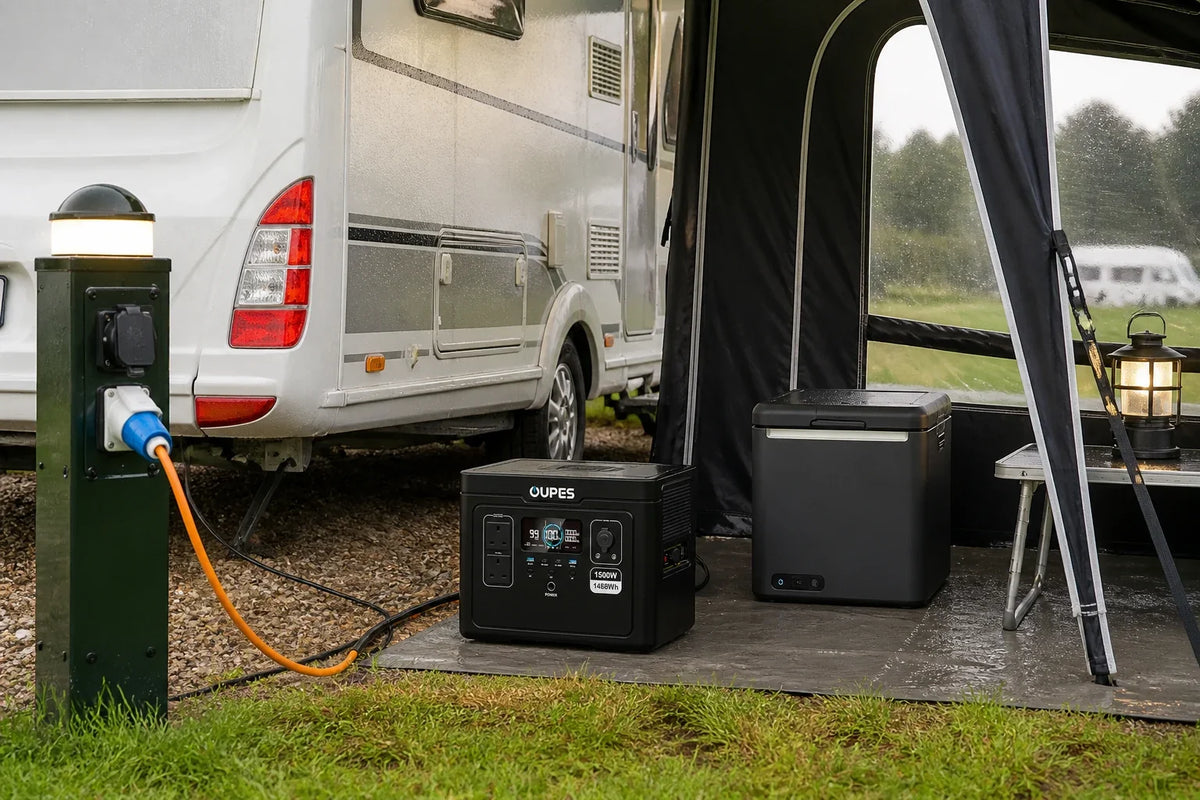
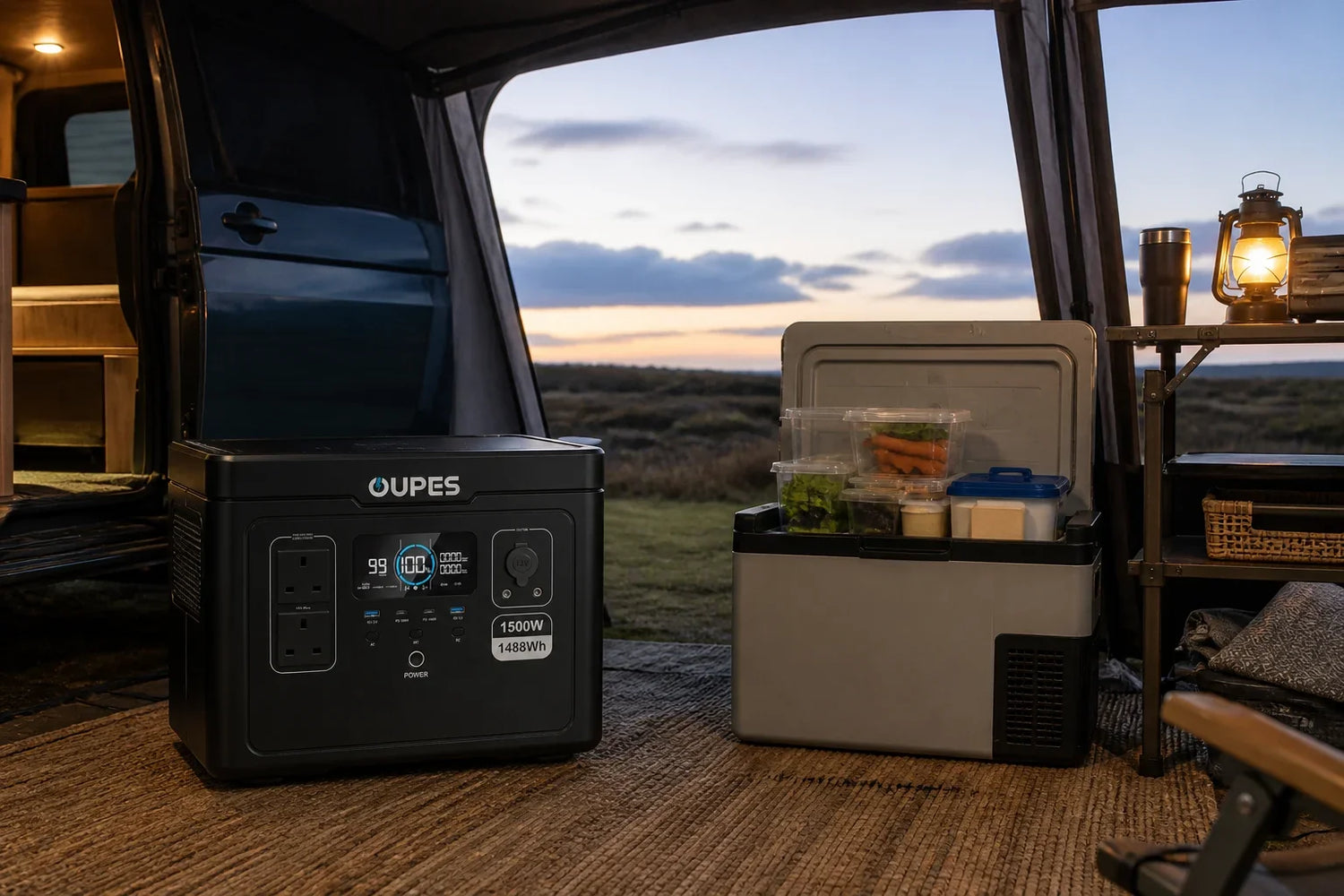
| OUPES Exodus 1500 | 1,488Wh | 1,500W | Up to 480W | Longer low-to-medium-load use where portability matters |
| OUPES Exodus 2400 | 2,232Wh | 2,400W | Up to 800W | Higher energy budgets and compatible higher-power appliances |
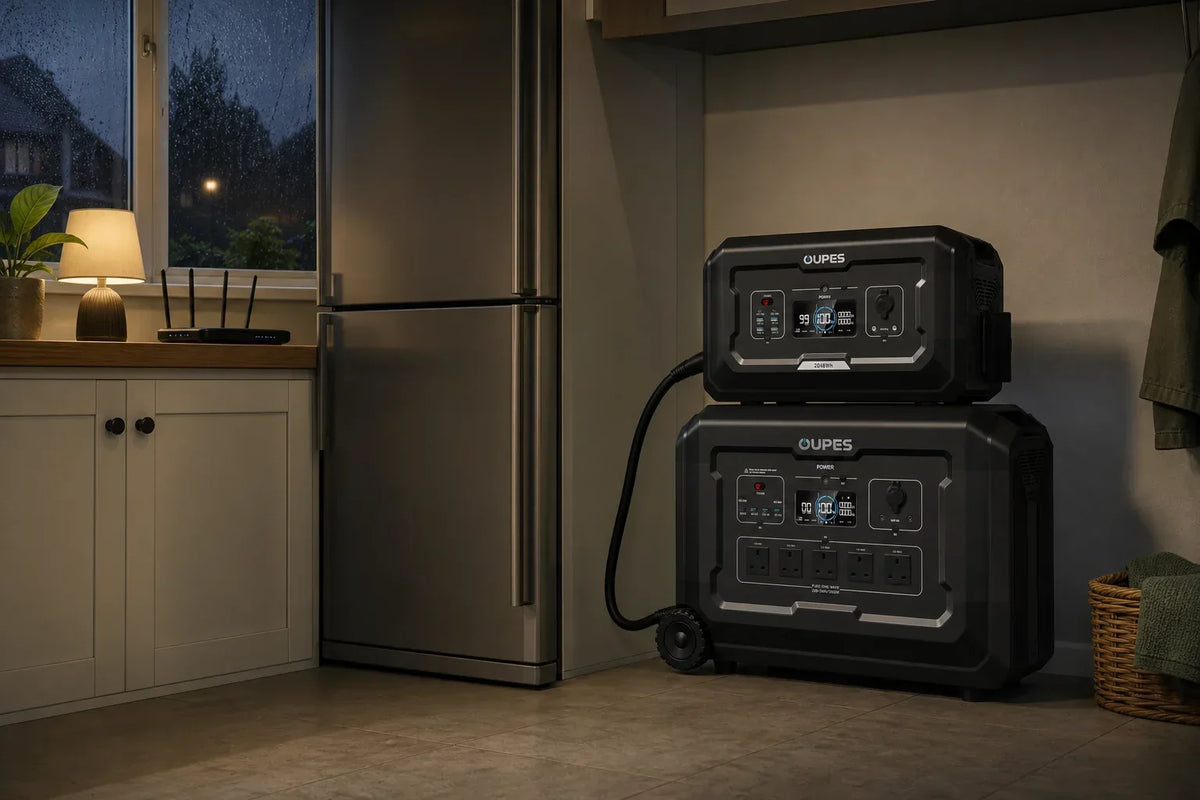
| OUPES Mega 3 | 3,072Wh | 3,600W | Up to 2,100W | Large loads, longer backup plans and expandable storage |
Before ordering from the UK store, confirm the current supplied model’s AC voltage, socket format, cables and appliance compatibility on the product page. Do not infer compatibility from wattage alone.
Practical Checklist
Before buying or replacing a rechargeable battery:
- Match chemistry, voltage, format and polarity.
- Use the correct charger and charging profile.
- Confirm required continuous and peak current.
- Check pack protection and communication requirements.
- Avoid mixing old and new cells or different capacities.
- Plan safe storage and end-of-life recycling.
Safety and Limitations
Never charge a battery with a charger designed for another chemistry. Stop using a cell or pack that swells, leaks, becomes unusually hot, smells abnormal or has suffered serious physical damage.
Do not dismantle a portable power station battery pack. Follow the manufacturer’s manual for storage state, temperature, ventilation and service.
Final Verdict
NiMH is still a sensible rechargeable choice for many standard consumer cells. Lithium-ion is favoured where compact energy and higher voltage matter, while LiFePO4 is common in modern power stations. The device design—not a generic chemistry ranking—should make the final decision.
Frequently Asked Questions
1. Is lithium-ion better than NiMH?
It has higher energy density and cell voltage, but NiMH can be practical for standard rechargeable AA and AAA applications.
2. Can I replace NiMH with lithium-ion?
Not unless the device and charger are expressly designed for the alternative voltage, chemistry and protection requirements.
3. Which battery has lower self-discharge?
Lithium-ion generally does, although modern low-self-discharge NiMH cells perform better than older NiMH designs.
4. Is LiFePO4 the same as lithium-ion?
LiFePO4 is part of the lithium-ion family but uses a different cathode chemistry and nominal cell voltage.
5. Which lasts more cycles?
It depends on the exact cells, test conditions, depth of discharge and end-of-life definition.
6. Why do power stations use battery management systems?
They monitor and control pack voltage, current and temperature to keep the integrated battery within designed limits.

Leave a comment
This site is protected by hCaptcha and the hCaptcha Privacy Policy and Terms of Service apply.