




Quick Answer
A microwave’s advertised cooking output is not its electrical input. A model sold as “800W” may draw roughly 1,200–1,500W from the socket; read the rating plate or manual for the actual input.
Microwaves run for short periods, so each use may consume modest kWh despite high power. Backup compatibility still depends on continuous input, startup behaviour, waveform, voltage and socket format.
Key Facts
Use input watts for circuits, cost and power-station sizing; use cooking output watts for recipe timings.
| Term | Meaning | Where Found | Use It For |
|---|---|---|---|
| Cooking output | Microwave energy delivered to food | Front badge or manual | Recipe time |
| Rated input | Electrical draw from supply | Rating plate or manual | Power compatibility |
| Standby power | Clock and control consumption | Energy meter | Annual energy |
| Energy per use | Input kW × hours | Calculation or meter | Running cost |
How It Works
The magnetron and power electronics are not perfectly efficient, so input power exceeds cooking output. Grill and combination models can draw still more when heating elements operate.
Power-level settings may cycle full power rather than reducing instantaneous draw. A 50% setting therefore does not guarantee the supply sees half the rated watts at every moment.
A microwave may tolerate some electrical sources poorly even when headline watts fit. Stable voltage, appropriate waveform and enough surge margin matter.
Calculate Microwave Energy and Cost
Energy = input watts ÷ 1,000 × minutes ÷ 60. Cost = energy kWh × your tariff. Use the input rating, not the cooking wattage printed prominently on the door.
For worked examples, this guide uses 26.11p/kWh, the Great Britain average Direct Debit electricity unit rate published by Ofgem for 1 July to 30 September 2026. Your tariff may differ, so replace it with the unit rate on your bill.
| Input | Run Time | Energy | Cost at 26.11p/kWh |
|---|---|---|---|
| 1,200W | 5 minutes | 0.10kWh | 2.61p |
| 1,500W | 5 minutes | 0.125kWh | 3.26p |
| 1,500W | 10 minutes | 0.25kWh | 6.53p |
| 2,000W combination mode | 15 minutes | 0.50kWh | 13.06p |
Compare the Main Options
Lower cooking wattage can mean slower heating, but it does not directly reveal electrical efficiency.
| Microwave Type | Likely Demand Pattern | Advantage | Check Carefully |
|---|---|---|---|
| Compact solo | Moderate, short bursts | Portable and simple | Actual input rating |
| Standard solo | High, short bursts | Fast routine reheating | Input versus output |
| Grill microwave | Microwave plus resistive heat | Browning | Combination input |
| Combination oven | Potentially highest and longest | Versatile cooking | Circuit and station limits |
UK Planning Considerations
For worked examples, this guide uses 26.11p/kWh, the Great Britain average Direct Debit electricity unit rate published by Ofgem for 1 July to 30 September 2026. Your tariff may differ, so replace it with the unit rate on your bill.
Use Ofgem’s current unit-rate information for an illustrative national benchmark, then calculate with the actual tariff shown on the household bill.
For the underlying UK guidance or current figures, check Ofgem energy unit-rate information. Published tariffs, standards and safety advice can change, so verify the source again before acting.
Relevant OUPES UK Options
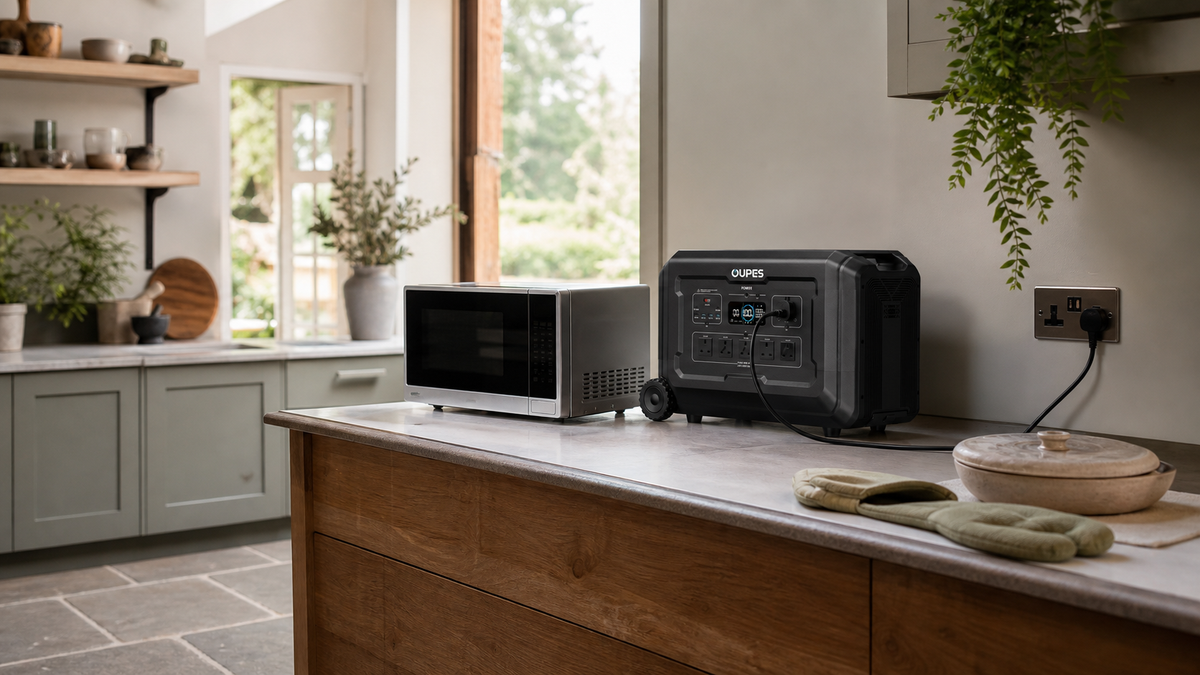
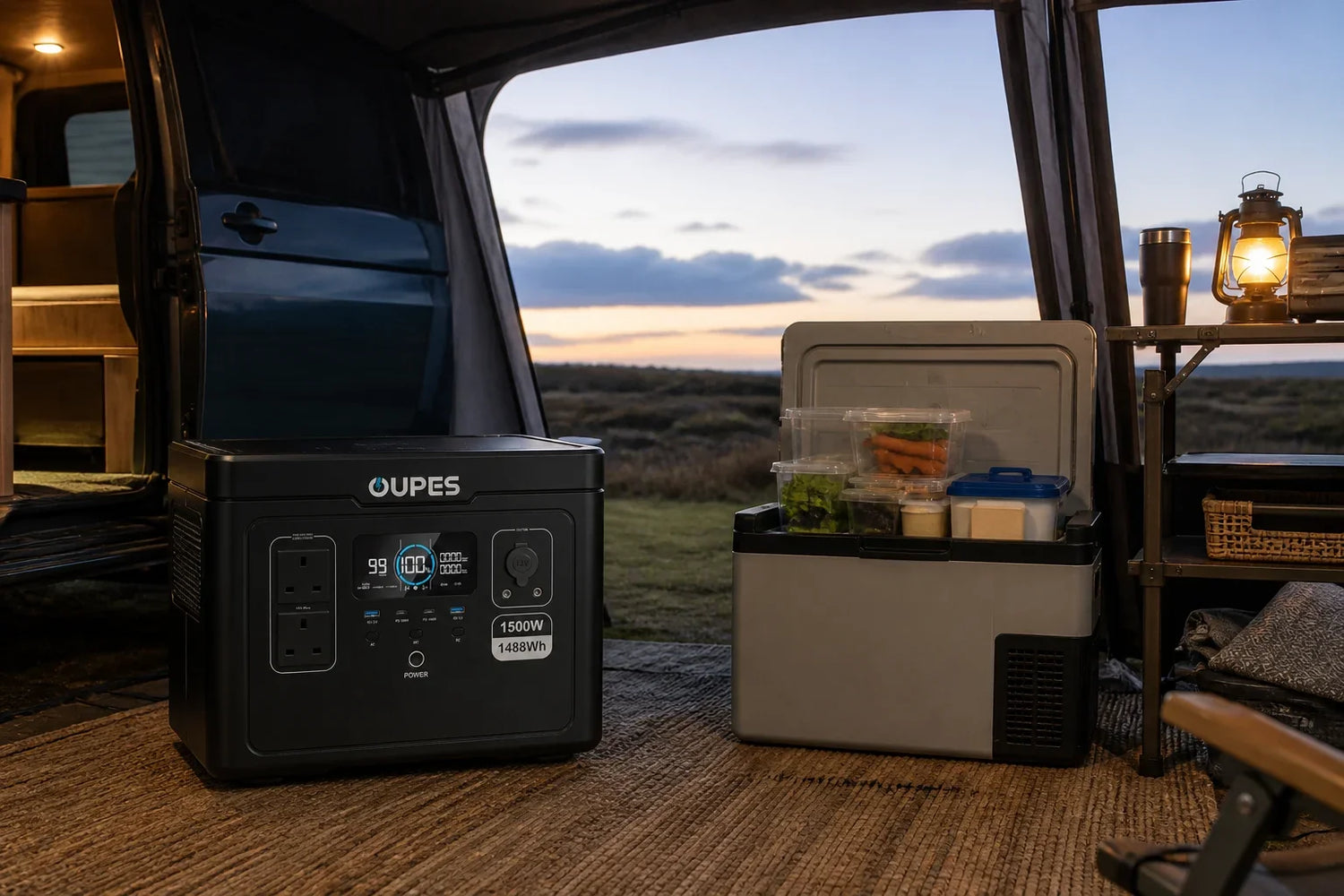
For an OUPES UK station, compare the microwave’s rated input—not advertised cooking watts—with continuous output, then allow margin and sufficient Wh for the planned number of cycles.
| UK-Site Product | Capacity | Rated Output | Solar | Planning Role |
|---|---|---|---|---|
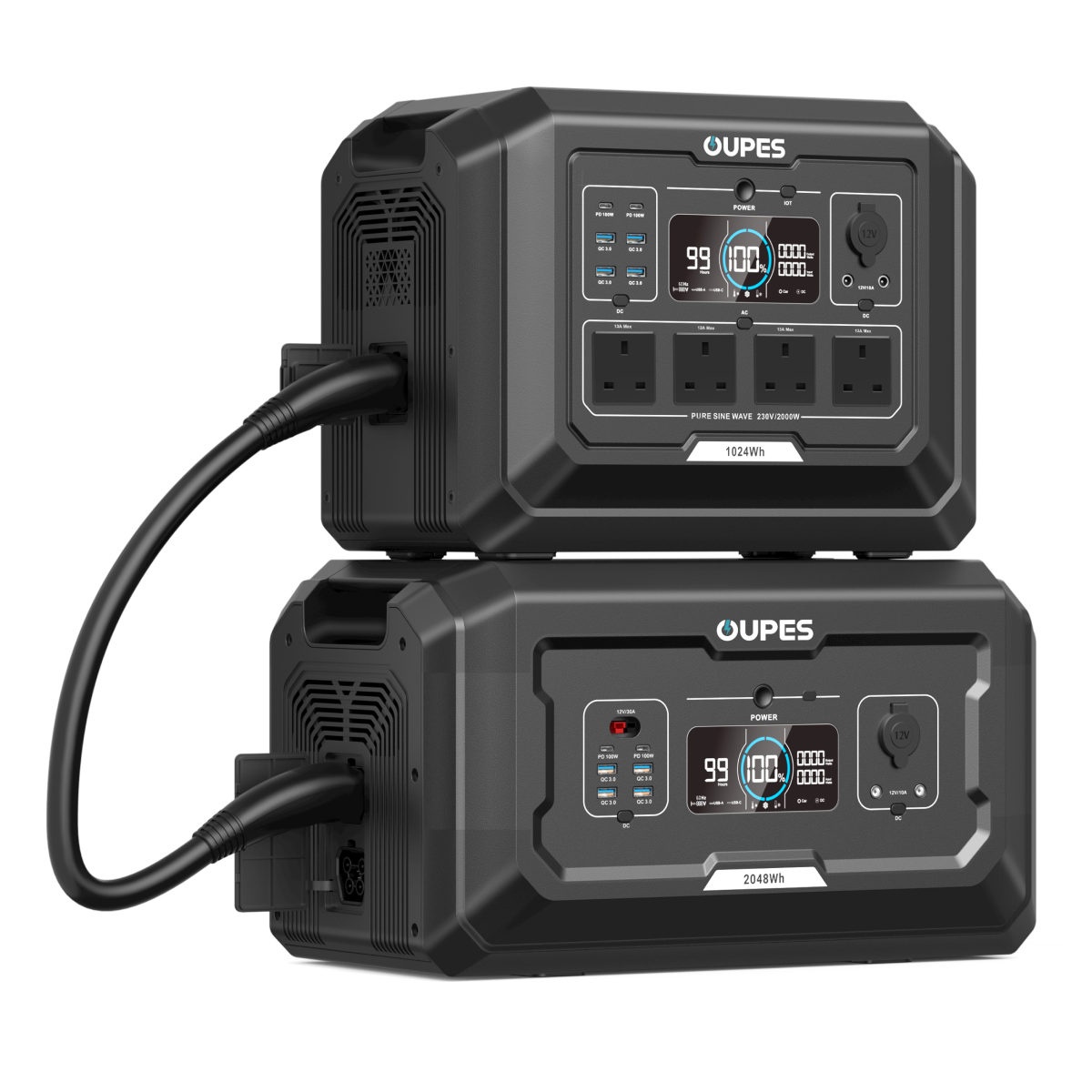
| OUPES Mega 1 | 1,024Wh | 2,000W | Up to 800W | Portable everyday loads and shorter backup sessions |
| OUPES Exodus 2400 | 2,232Wh | 2,400W | Up to 800W | Higher energy budgets and compatible higher-power appliances |
| OUPES Mega 3 | 3,072Wh | 3,600W | Up to 2,100W | Large loads, longer backup plans and expandable storage |
Before ordering from the UK store, confirm the current supplied model’s AC voltage, socket format, cables and appliance compatibility on the product page. Do not infer compatibility from wattage alone.
Practical Checklist
Before using a microwave on backup power:
- Read the appliance input rating.
- Include grill or combination mode demand.
- Confirm voltage, socket and waveform.
- Allow output headroom.
- Estimate Wh from real cooking time.
- Keep the station ventilated and dry.
Safety and Limitations
Never run a microwave with damaged doors, seals or cables. Do not open its enclosure; high-voltage components can remain dangerous even when unplugged.
Do not use an underrated extension lead or adaptor. Follow the appliance and power-source manuals.
Final Verdict
Size from rated electrical input, not cooking output. Short cycles limit energy cost, but the high instantaneous load means output compatibility is the decisive backup-power check.
Frequently Asked Questions
1. Does an 800W microwave use 800W from the socket?
Usually no. The 800W figure commonly describes cooking output; electrical input is higher.
2. How much does five minutes of microwaving cost?
A 1,500W input uses 0.125kWh, about 3.26p at 26.11p/kWh.
3. Can a 2,000W power station run a microwave?
Possibly, if the appliance’s actual input, startup, voltage, waveform and socket all fit with margin.
4. Does half power halve the instantaneous draw?
Not always. Many microwaves cycle full power on and off.
5. Where is microwave input wattage shown?
Look on the rating plate, usually at the rear or door frame, or in the manual.
6. Do combination microwaves use more electricity?
They can, especially when grill or convection heating elements operate.

Leave a comment
This site is protected by hCaptcha and the hCaptcha Privacy Policy and Terms of Service apply.