




Quick Answer
A LiFePO4 voltage chart can provide a rough state-of-charge estimate only after the battery has rested with no meaningful charge or load. The chemistry has a flat voltage plateau, so small measurement errors can imply large state-of-charge differences.
Use the battery-management system or a calibrated shunt for routine monitoring. Never use a generic chart to bypass low-voltage protection or set charger limits; follow the specific battery manufacturer’s values.
Key Facts
A nominal 12V LiFePO4 battery is commonly four cells in series, a 24V-class battery eight cells and a 48V-class battery sixteen cells.
| Pack Class | Typical Series Cells | Nominal Voltage | Rested-Voltage Use |
|---|---|---|---|
| 12V class | 4S | About 12.8V | Small off-grid and vehicle systems |
| 24V class | 8S | About 25.6V | Medium DC systems |
| 48V class | 16S | About 51.2V | Higher-power storage systems |
| Integrated power station | Manufacturer-specific | Internal pack design | Use display and BMS rather than terminals |
How It Works
Cell voltage rises during charging and sags under load because of internal resistance. Temperature, current and recent activity therefore change the reading even when stored charge has not changed much.
LiFePO4’s long flat discharge plateau is useful for stable output but makes voltage-only estimation imprecise through the middle of the range. Near the top and bottom, voltage changes more rapidly.
Pack voltage can hide cell imbalance. A total reading may look acceptable while one cell reaches a protection threshold, which is why cell-level BMS monitoring matters.
Illustrative Rested LiFePO4 Voltage Guide
The table is illustrative only, not a charging specification. Rest the battery, use a reliable meter and compare with the exact manufacturer chart.
For 24V and 48V classes, approximate values scale from the cell count, but product-specific BMS thresholds and charge profiles still control operation.
| Approximate SOC | 4S / 12V Class | 8S / 24V Class | 16S / 48V Class |
|---|---|---|---|
| 100% rested | About 13.4–13.6V | About 26.8–27.2V | About 53.6–54.4V |
| Around 75% | About 13.2–13.3V | About 26.4–26.6V | About 52.8–53.2V |
| Around 50% | About 13.1–13.2V | About 26.2–26.4V | About 52.4–52.8V |
| Around 20% | About 12.9–13.0V | About 25.8–26.0V | About 51.6–52.0V |
Compare the Main Options
Different monitoring methods serve different purposes.
| Method | Strength | Weakness | Best Use |
|---|---|---|---|
| Rested voltage | Simple | Imprecise on flat plateau | Occasional rough check |
| BMS estimate | Integrated cell and current data | Algorithm quality varies | Normal product operation |
| Shunt coulomb counter | Tracks current over time | Needs calibration and synchronisation | Standalone battery banks |
| Load test | Shows delivered capacity | Consumes a cycle and needs equipment | Commissioning and diagnosis |
UK Planning Considerations
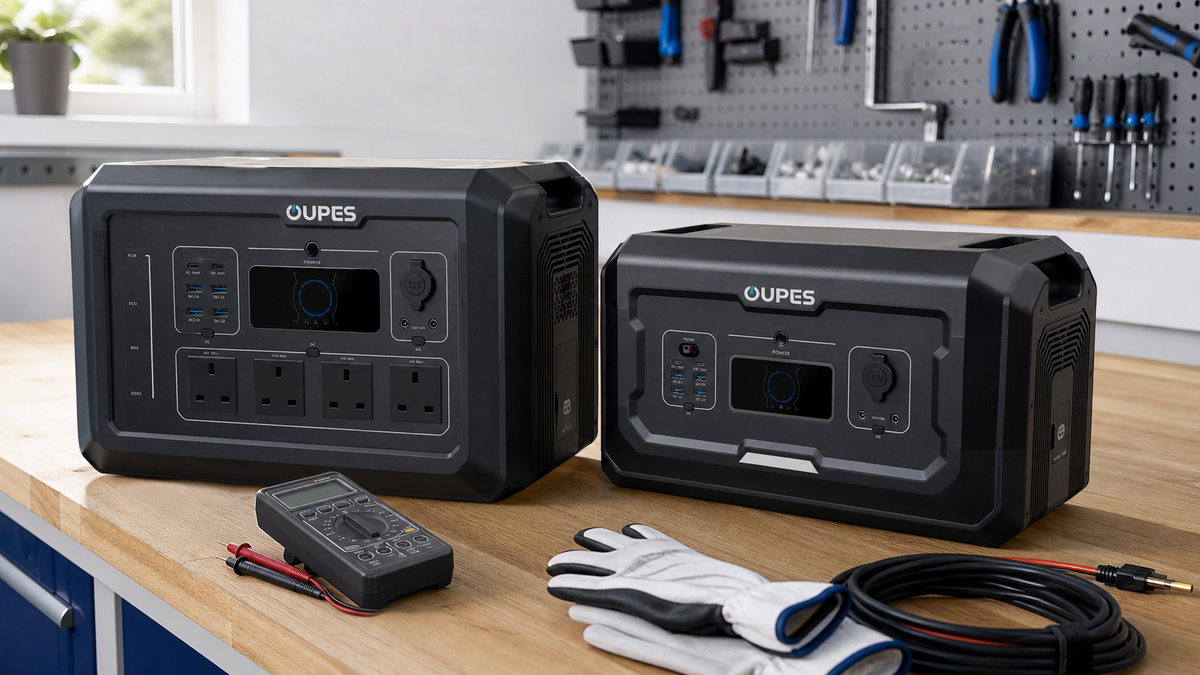
Use test equipment rated for the DC voltage and available fault current. Large battery banks can produce dangerous arcs even below mains voltage.
Charging LiFePO4 below the manufacturer’s minimum temperature can cause damage unless the pack has appropriate low-temperature protection or heating.
For the underlying UK guidance or current figures, check Sandia and Los Alamos battery thermal-stability research. Published tariffs, standards and safety advice can change, so verify the source again before acting.
Relevant OUPES UK Options
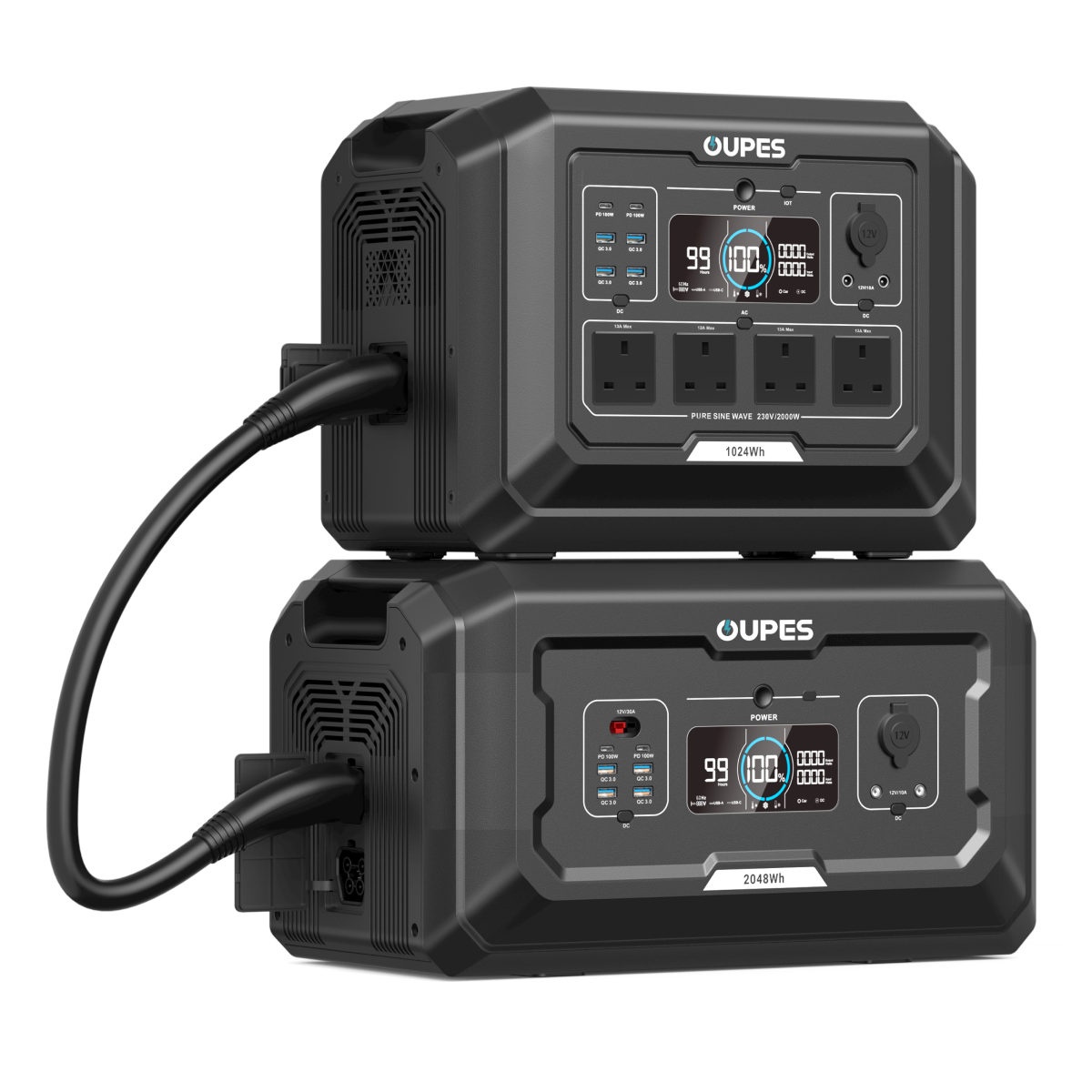
OUPES stations and B2 use integrated LiFePO4 packs with a BMS. Use their display, app and published operating limits rather than attempting to access internal pack voltage.
| UK-Site Product | Capacity | Rated Output | Solar | Planning Role |
|---|---|---|---|---|
| OUPES Mega 1 | 1,024Wh | 2,000W | Up to 800W | Portable everyday loads and shorter backup sessions |
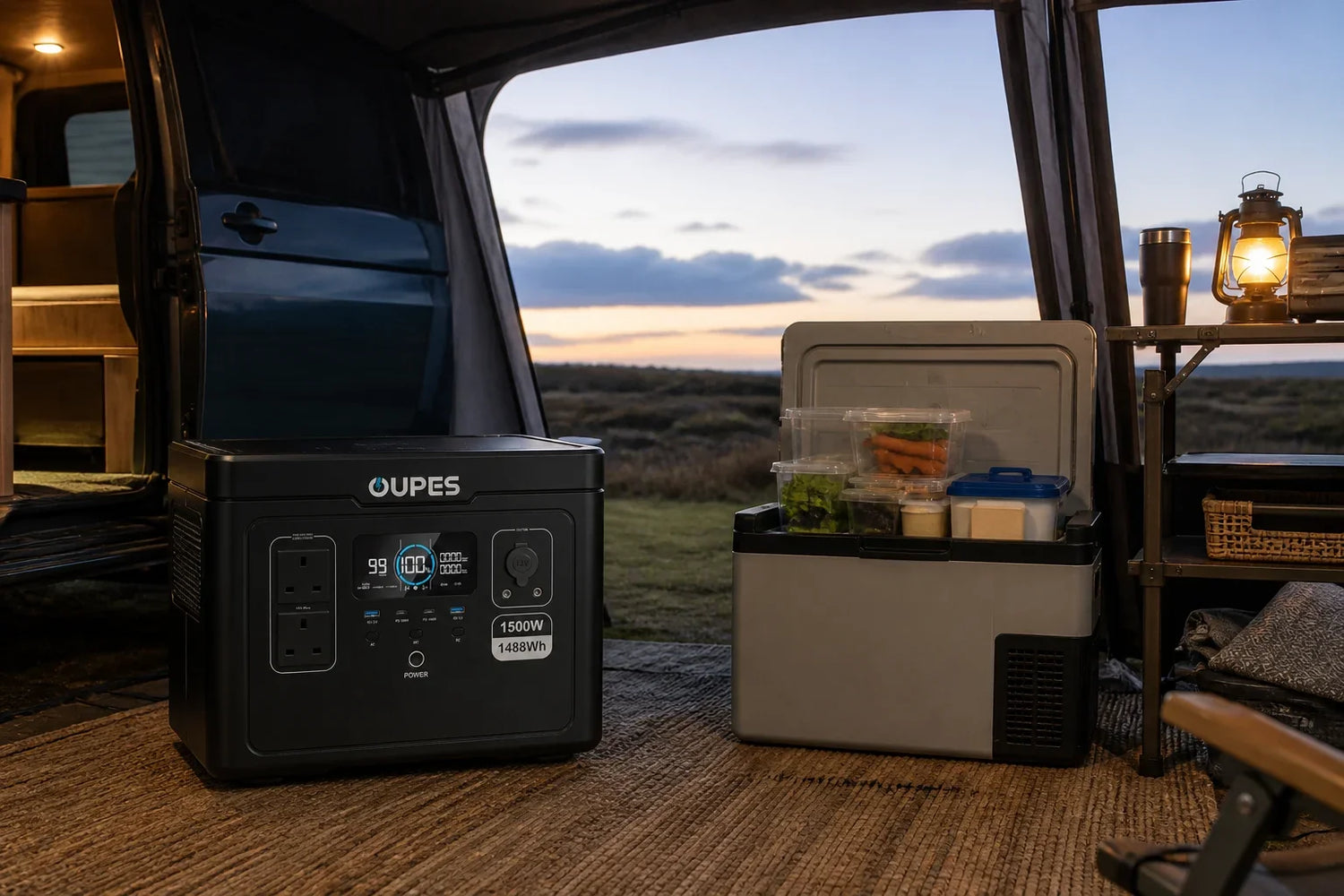
| OUPES Exodus 1500 | 1,488Wh | 1,500W | Up to 480W | Longer low-to-medium-load use where portability matters |
| OUPES Exodus 2400 | 2,232Wh | 2,400W | Up to 800W | Higher energy budgets and compatible higher-power appliances |
| OUPES Mega 3 | 3,072Wh | 3,600W | Up to 2,100W | Large loads, longer backup plans and expandable storage |
| OUPES B2 Extra Battery | 2,048Wh | USB and 12V DC outputs | Up to 2,100W independent solar input | Expanding compatible Mega 1 or Mega 3 systems |
Before ordering from the UK store, confirm the current supplied model’s AC voltage, socket format, cables and appliance compatibility on the product page. Do not infer compatibility from wattage alone.
Practical Checklist
For a meaningful voltage reading:
- Remove charge and significant load.
- Allow the battery to rest.
- Measure with a suitable calibrated meter.
- Account for ambient and battery temperature.
- Compare with the exact battery datasheet.
- Use BMS or shunt data for normal monitoring.
Safety and Limitations
Do not bypass the BMS or discharge below its cutoff. Generic chart values are not permission to change protection settings.
Wear appropriate protection and isolate the battery before fixed electrical work. Use insulated tools and correctly rated fuses.
Final Verdict
A voltage chart is a rough diagnostic aid, not an exact fuel gauge. Rest the battery, account for temperature and recent current, and rely on the product BMS or a calibrated shunt for routine state-of-charge decisions.
Frequently Asked Questions
1. What voltage is a full 12V LiFePO4 battery?
A rested 4S pack is often around 13.4–13.6V, but use the manufacturer’s chart.
2. Why does voltage drop under load?
Internal resistance causes temporary voltage sag proportional to current and conditions.
3. Can voltage show exact state of charge?
Not reliably through LiFePO4’s flat middle plateau.
4. Can I multiply 12V chart values for 24V and 48V?
Only as a rough series-cell comparison; product thresholds remain manufacturer-specific.
5. Is charging voltage the same as rested voltage?
No. Voltage is higher while charging and settles afterwards.
6. Should I open a power station to measure the pack?
No. Use its built-in monitoring and approved service procedures.

Leave a comment
This site is protected by hCaptcha and the hCaptcha Privacy Policy and Terms of Service apply.