




Quick Answer
Most full-size UK kettles use roughly 2,000–3,000W while heating. They run for only a few minutes, so energy per boil is much smaller than the wattage may suggest. A 3,000W kettle running for three minutes uses about 0.15kWh.
At 26.11p/kWh, that three-minute example costs about 3.92p. The real cost depends on wattage, volume, starting water temperature, boil time, limescale and tariff.
Key Facts
Cooking power and energy are different. A high-wattage kettle may boil faster, while a lower-wattage travel kettle draws less instant power but can run longer.
| Kettle Type | Planning Wattage | Typical Trade-Off | Power-Station Check |
|---|---|---|---|
| Travel kettle | 600–1,000W | Slower and smaller | Easier output requirement |
| Compact kettle | 1,500–2,000W | Moderate boil speed | Confirm continuous output |
| Standard UK kettle | 2,000–3,000W | Fast boiling | May exceed many portable inverters |
| Temperature-control kettle | Often 1,500–3,000W | Multiple settings | Check heating and keep-warm modes |
How It Works
A kettle converts electrical energy into heat through a resistive element. The label wattage is the instantaneous power demand when the element is energised. Thermostat control switches it off when the target temperature is reached.
The theoretical energy to heat water depends on water mass, temperature rise and water’s specific heat capacity. Real kettles also lose heat to the body and surrounding air, so measured energy will be higher.
Boiling only the required amount is usually the simplest saving. Reboiling cooled water, overfilling and heavy limescale can increase the energy used for the drink actually prepared.
How to Calculate Kettle Cost
Use energy = kettle kW × boil time in hours. Then multiply kWh by the tariff. Time the real kettle from switch-on to automatic cut-off for a practical result.
Example: 3kW × 3/60 hours = 0.15kWh. At 26.11p/kWh, 0.15 × 26.11p = 3.92p.
| Kettle | Boil Time | Energy | Cost at 26.11p/kWh |
|---|---|---|---|
| 800W travel kettle | 6 minutes | 0.08kWh | 2.09p |
| 1,500W kettle | 4 minutes | 0.10kWh | 2.61p |
| 2,200W kettle | 3 minutes | 0.11kWh | 2.87p |
| 3,000W kettle | 3 minutes | 0.15kWh | 3.92p |
Compare the Main Options
Lower wattage does not automatically mean lower energy per litre because the kettle may need to run longer.
| Decision | Better Choice | Reason | Caution |
|---|---|---|---|
| Fast home boiling | Higher-wattage kettle | Shorter heat-up time | High instantaneous demand |
| Camping or portable battery | Low-wattage travel kettle | Lower inverter requirement | Longer boil and small capacity |
| One drink | Boil only one measured cup | Less water to heat | Stay above the element minimum |
| Speciality drinks | Temperature control | Avoid unnecessary full boil | Keep-warm mode uses extra energy |
UK Planning Considerations
The cost examples use Ofgem’s average electricity unit rate of 26.11p/kWh for Direct Debit customers in England, Scotland and Wales from 1 July to 30 September 2026. Use the current tariff on the bill for a personal calculation.
A kettle can approach the limit of a UK household socket and will often exceed the output of smaller battery inverters. Never use an underrated adaptor, extension lead or portable station.
For the underlying UK guidance or current figures, check Ofgem energy price cap unit-rate page. Published tariffs, standards and safety advice can change, so verify the source again before acting.
Relevant OUPES UK Options
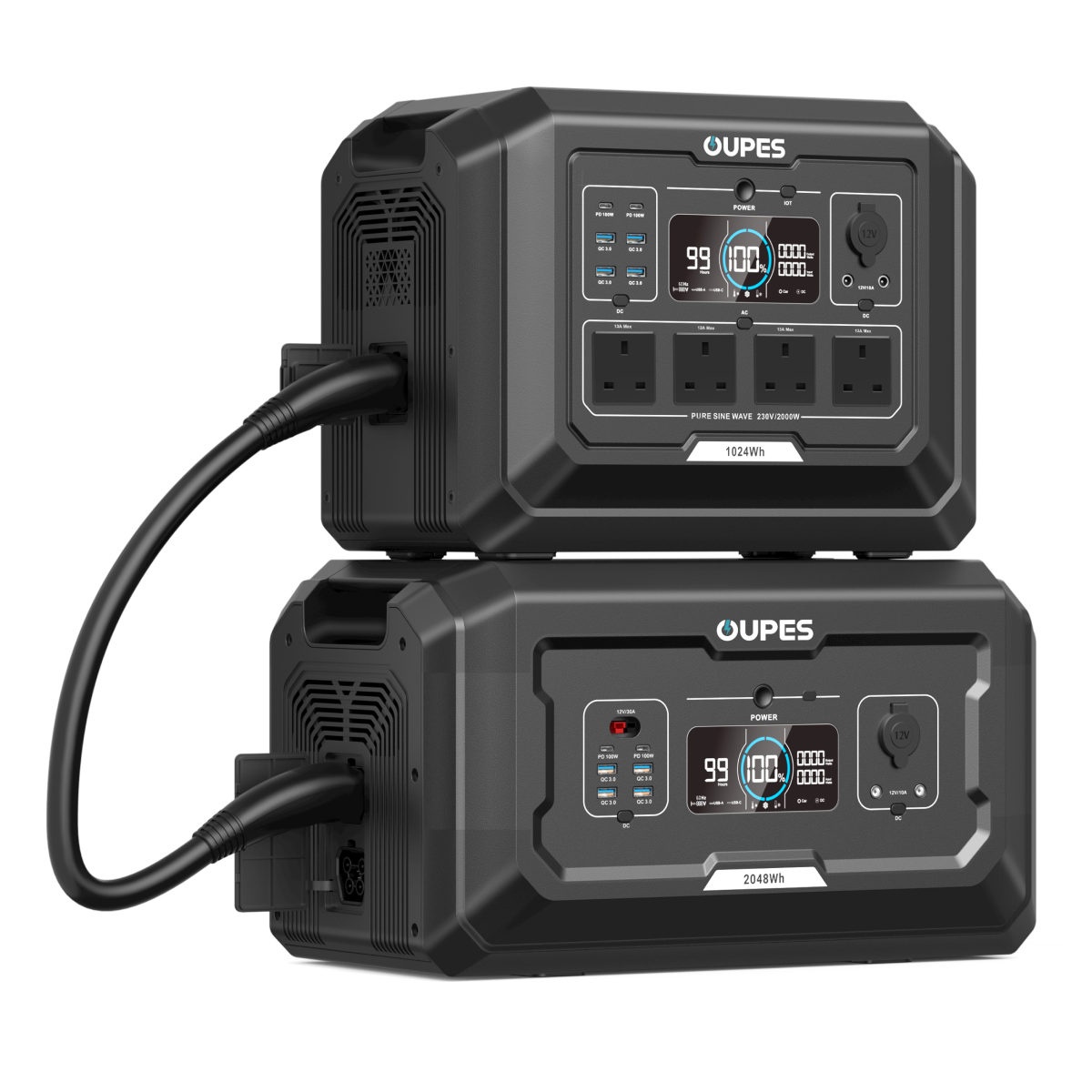
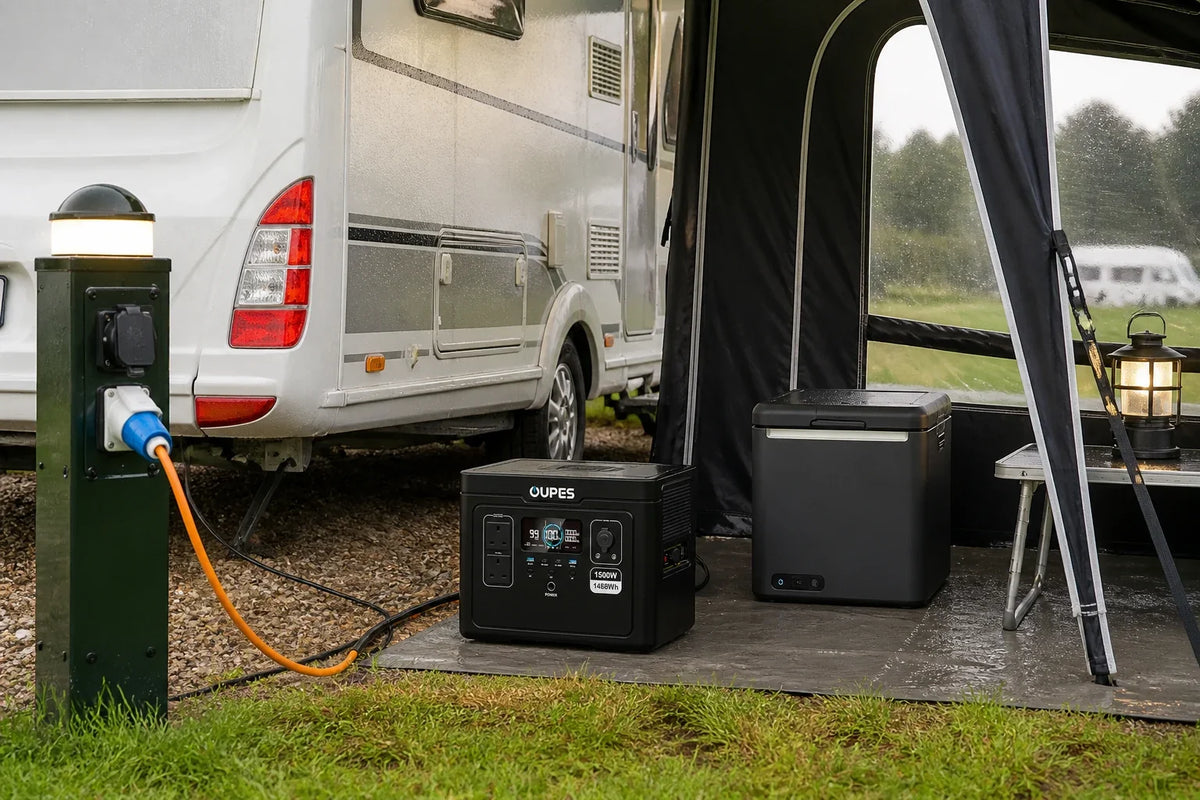
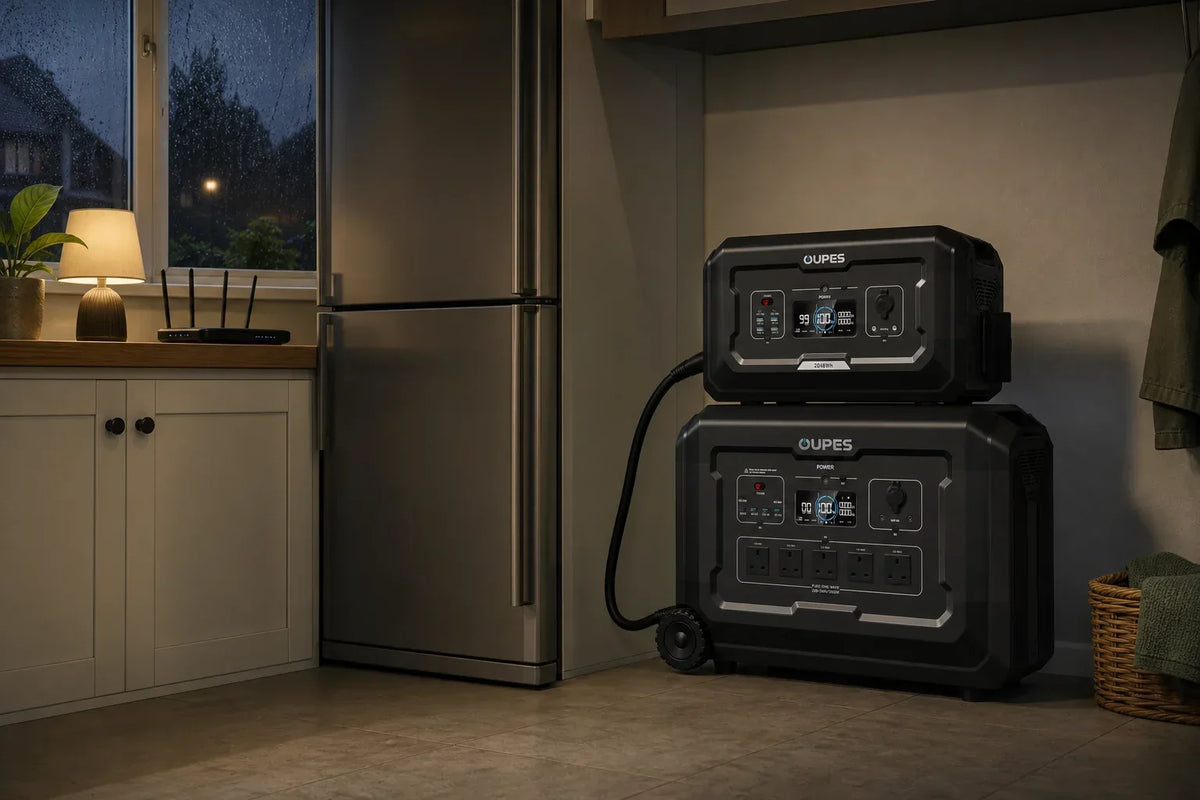
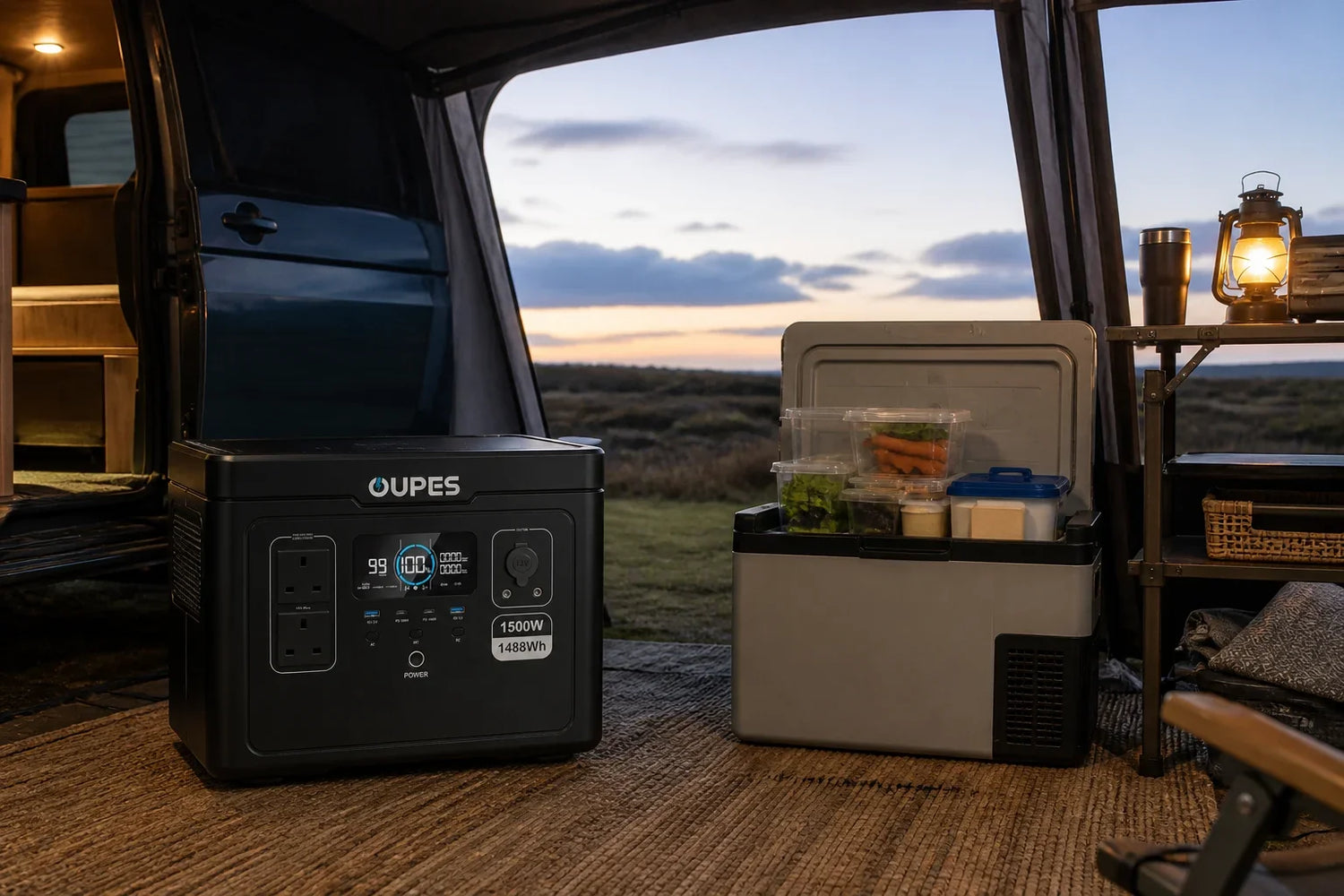
For portable boiling, select the kettle and power source together. Exodus 1500 suits only a compatible lower-wattage kettle within its rating; Mega 1 and Exodus 2400 cover higher compatible loads; a 3,000W kettle may require Mega 3. Verify the supplied AC configuration before use.
| UK-Site Product | Capacity | Rated Output | Solar | Planning Role |
|---|---|---|---|---|
| OUPES Mega 1 | 1,024Wh | 2,000W | Up to 800W | Portable everyday loads and shorter backup sessions |
| OUPES Exodus 1500 | 1,488Wh | 1,500W | Up to 480W | Longer low-to-medium-load use where portability matters |
| OUPES Exodus 2400 | 2,232Wh | 2,400W | Up to 800W | Higher energy budgets and compatible higher-power appliances |
| OUPES Mega 3 | 3,072Wh | 3,600W | Up to 2,100W | Large loads, longer backup plans and expandable storage |
Before ordering from the UK store, confirm the current supplied model’s AC voltage, socket format, cables and appliance compatibility on the product page. Do not infer compatibility from wattage alone.
Practical Checklist
For lower kettle energy use:
- Boil only the water required.
- Use the cup markings or measure with the mug.
- Descale according to the manufacturer’s instructions.
- Avoid repeated reboiling where safe and practical.
- Check the kettle wattage before portable operation.
- Keep the base, plug and connectors dry.
Safety and Limitations
Kettles combine mains electricity, high power and boiling water. Use a stable surface, keep the base dry and replace damaged leads or cracked appliances.
Do not rely on boost or surge marketing to run a resistive kettle above continuous output. Confirm voltage, socket, continuous wattage and cable ratings.
Final Verdict
Kettle wattage is high, but each boil is brief. Calculate with real boil time and current tariff, boil only the needed water and choose a low-wattage travel kettle when portable inverter output is limited.
Frequently Asked Questions
1. How many watts does a UK kettle use?
Many full-size models are rated between 2,000W and 3,000W; check the label.
2. How much does it cost to boil a kettle?
A 3kW kettle running three minutes costs about 3.92p at 26.11p/kWh.
3. Does a lower-wattage kettle use less energy?
Not necessarily, because it may run longer to heat the same amount of water.
4. Can a power station run a kettle?
Only if voltage, continuous output, socket and battery energy match the exact kettle.
5. Why should I boil only one cup?
Heating less water reduces the energy and time needed, provided the kettle’s minimum fill is met.
6. Does limescale increase energy use?
Heavy scale can reduce heat transfer efficiency, so follow the kettle’s descaling instructions.

Leave a comment
This site is protected by hCaptcha and the hCaptcha Privacy Policy and Terms of Service apply.