




Quick Answer
The safest ways to reduce generator noise are to increase distance, place it on a stable vibration-damping surface, direct exhaust away from people and use a manufacturer-approved acoustic solution that preserves cooling and exhaust clearance.
Never put a running generator in a shed, garage, tent, DIY box or enclosure that can trap carbon monoxide or heat. Noise reduction is not worth creating an invisible poisoning or fire hazard.
Key Facts
Generator noise comes from the engine, exhaust, cooling fan, alternator and vibration transferred into the ground or structure.
| Noise Source | Safe Mitigation | Avoid | Reason |
|---|---|---|---|
| Engine and exhaust | Distance and approved muffling | Unapproved exhaust modification | Can affect back pressure and safety |
| Vibration | Stable isolation mat rated for use | Soft unstable ground | Prevents movement and resonance |
| Direct sound path | Outdoor barrier with clear airflow | Sealed enclosure | Must not trap exhaust or heat |
| High engine speed | Efficient load planning | Overloading | Load changes noise and reliability |
How It Works
Sound level falls with distance in open conditions, making placement the first control. Barriers can interrupt line-of-sight sound, but exhaust must discharge freely and cooling air must not recirculate.
Maintenance affects noise. Loose fasteners, damaged mounts, dirty filters and incorrect engine condition can increase vibration and combustion noise. Follow the maintenance schedule rather than improvising repairs.
Inverter generators may reduce engine speed under light load, but they are still combustion machines. Battery power stations can serve quiet hours for compatible loads without engine noise.
Safe Noise-Reduction Sequence
Measure or observe noise at the nearest affected location, then move the generator farther away while maintaining cable safety and weather protection specified by the manufacturer.
Place it on a level surface, inspect mounts and position a non-combustible barrier only if airflow and exhaust clearances remain fully compliant.
| Step | Action | Expected Benefit | Safety Check |
|---|---|---|---|
| 1 | Increase distance | Broad noise reduction | Cable rating and trip hazards |
| 2 | Stabilise the base | Less transmitted vibration | Generator remains level |
| 3 | Use approved barrier | Reduces direct sound | Open airflow and exhaust |
| 4 | Maintain and manage load | Avoids unnecessary noise | No overloading |
Compare the Main Options
A mixed power plan can avoid running a generator for every small load.
| Option | Noise | Runtime | Best Use |
|---|---|---|---|
| Conventional generator | Highest | Continues with fuel | Remote high continuous loads |
| Inverter generator | Lower at light load | Continues with fuel | Variable outdoor loads |
| Battery power station | Very low apart from fans | Limited by Wh | Quiet hours and electronics |
| Hybrid plan | Generator only when needed | Flexible | Long outages with quiet periods |
UK Planning Considerations
Check campsite and local noise rules, especially at night. Long extension leads must be correctly rated, fully unwound where required and protected from vehicles and water.
The Health and Safety Executive warns that carbon monoxide is produced by incomplete combustion and cannot be seen or smelled. Outdoor placement away from openings is essential.
For the underlying UK guidance or current figures, check Health and Safety Executive carbon-monoxide guidance. Published tariffs, standards and safety advice can change, so verify the source again before acting.
Relevant OUPES UK Options
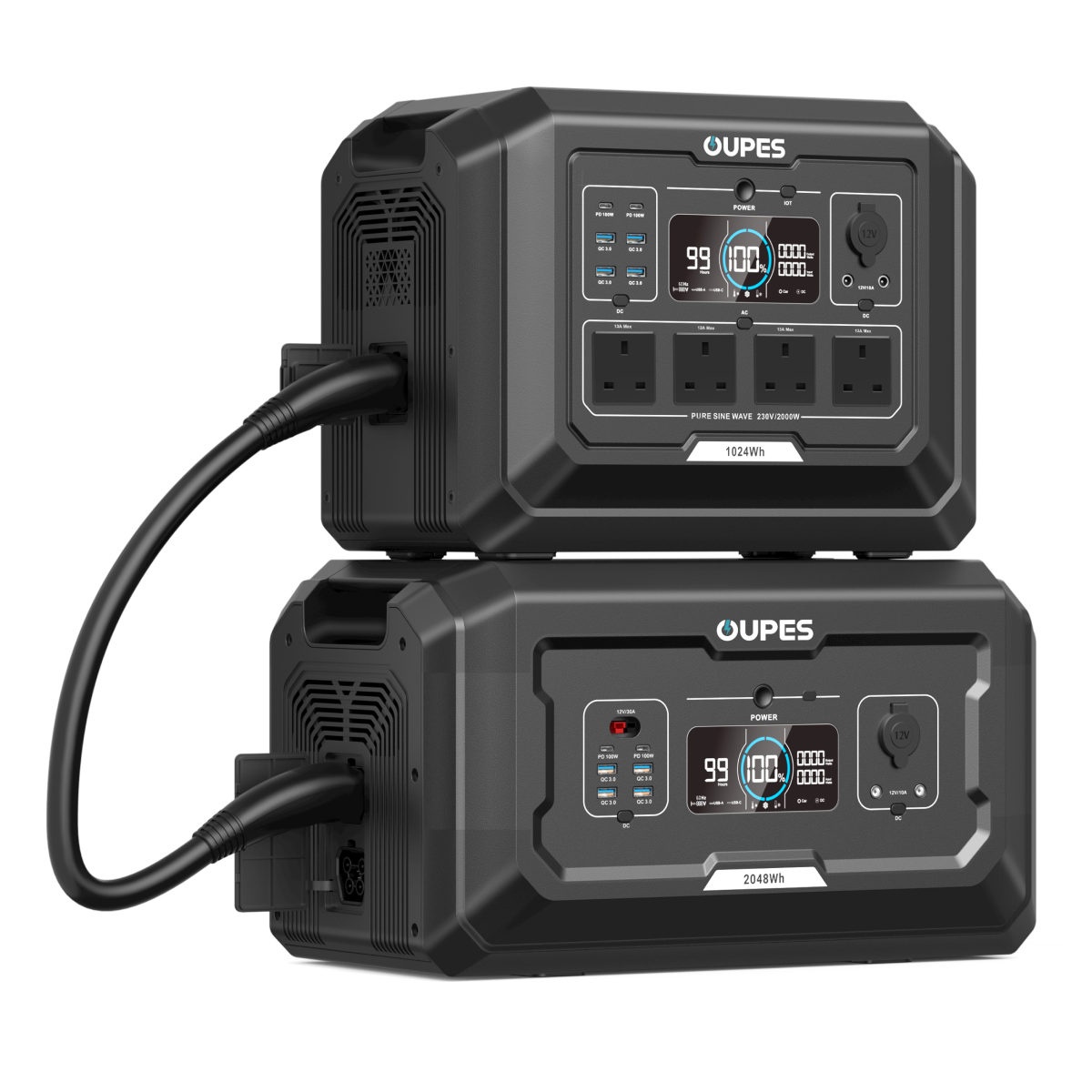
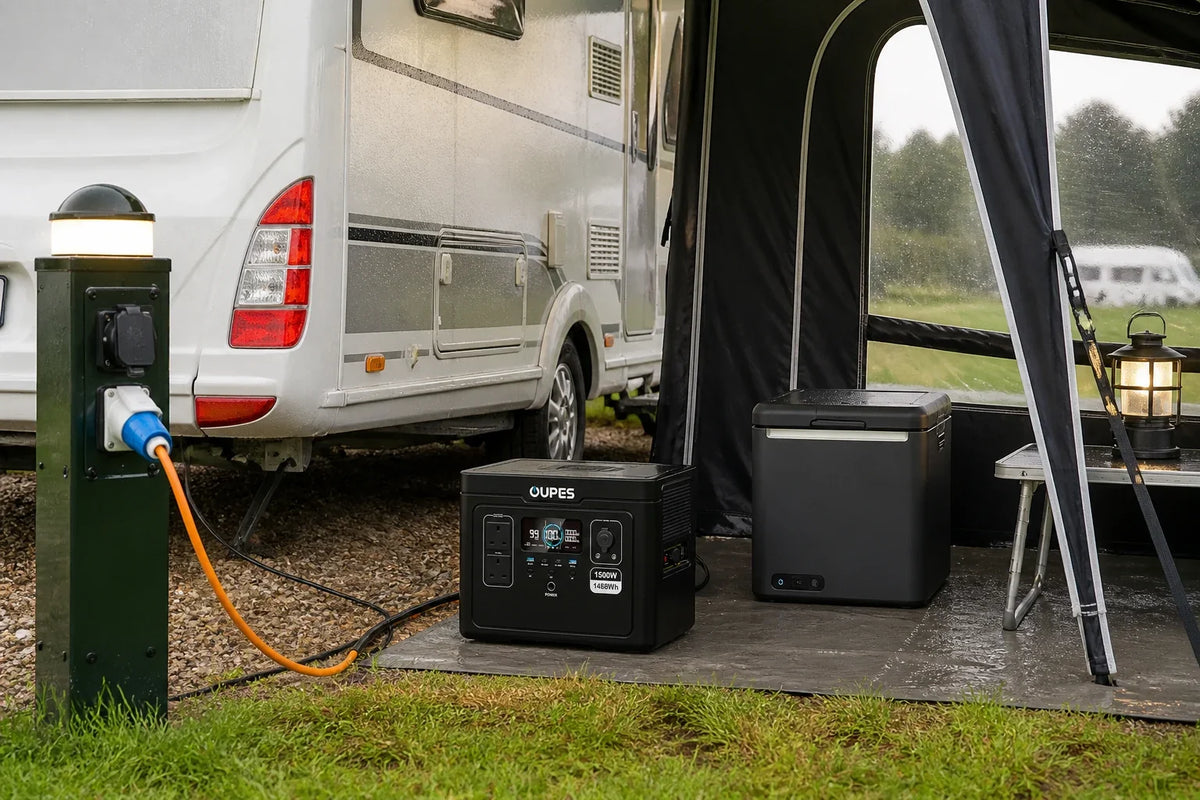
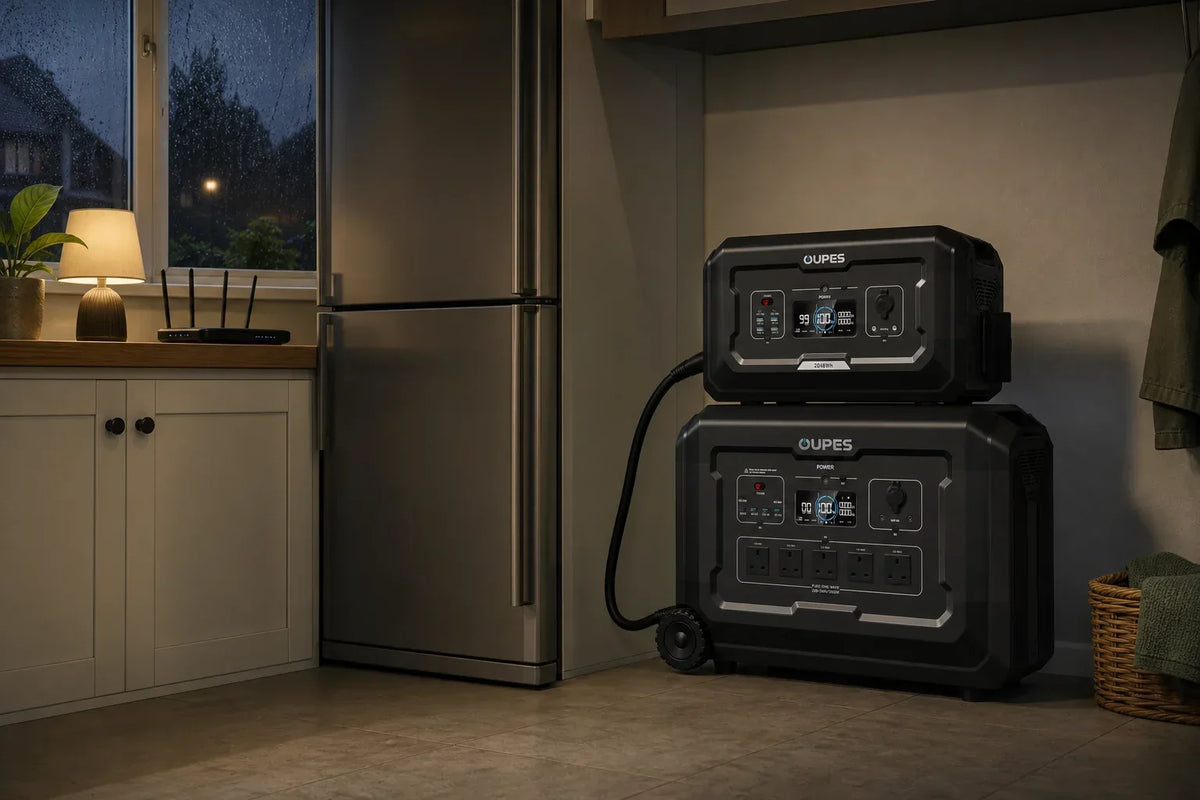
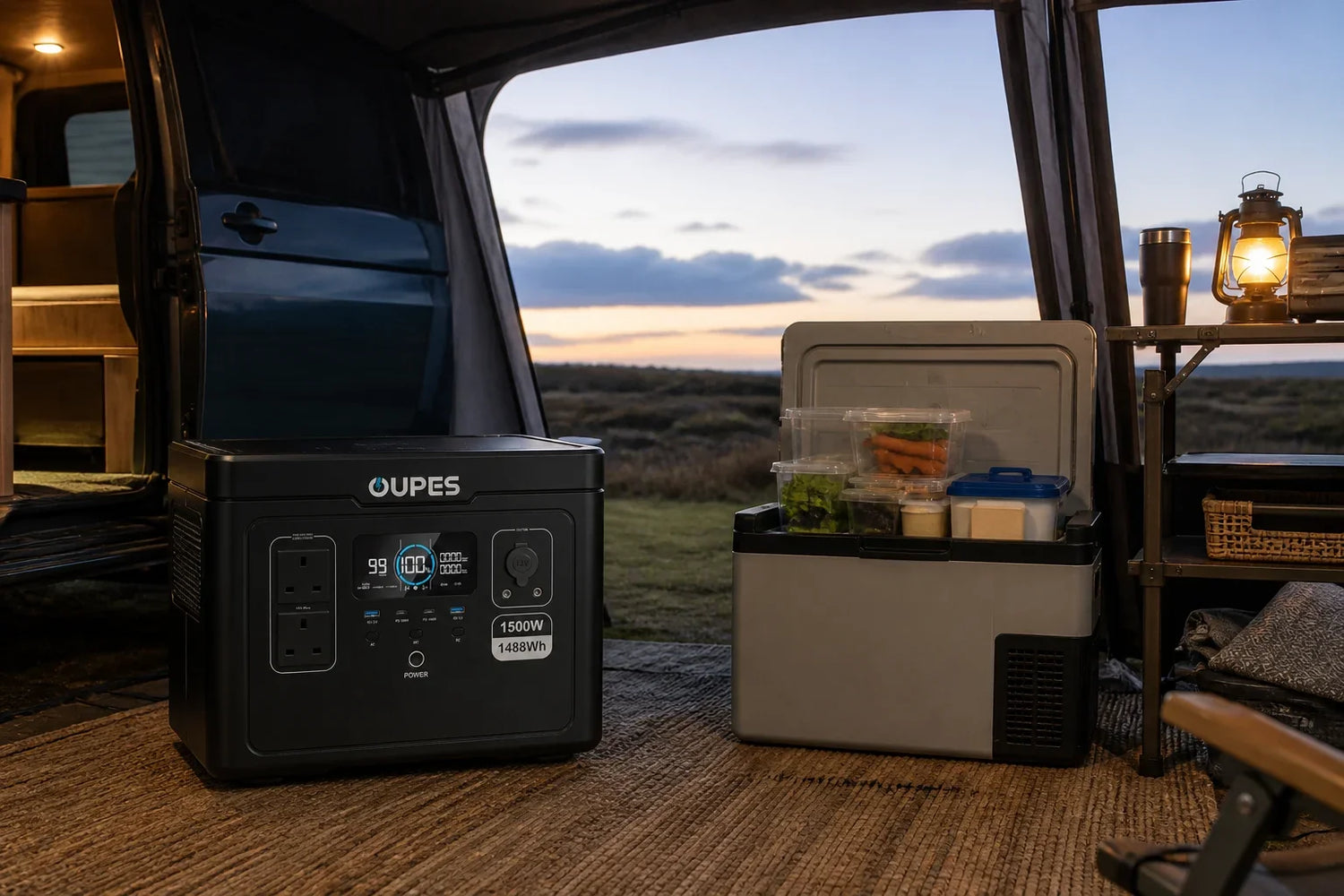
An OUPES battery station can take over compatible overnight or low-load use so the combustion generator can be shut down. Size stored energy from quiet-hour Wh and recharge during permitted daytime operation.
| UK-Site Product | Capacity | Rated Output | Solar | Planning Role |
|---|---|---|---|---|
| OUPES Mega 1 | 1,024Wh | 2,000W | Up to 800W | Portable everyday loads and shorter backup sessions |
| OUPES Exodus 1500 | 1,488Wh | 1,500W | Up to 480W | Longer low-to-medium-load use where portability matters |
| OUPES Exodus 2400 | 2,232Wh | 2,400W | Up to 800W | Higher energy budgets and compatible higher-power appliances |
| OUPES Mega 3 | 3,072Wh | 3,600W | Up to 2,100W | Large loads, longer backup plans and expandable storage |
Before ordering from the UK store, confirm the current supplied model’s AC voltage, socket format, cables and appliance compatibility on the product page. Do not infer compatibility from wattage alone.
Practical Checklist
Generator noise checklist:
- Move the unit farther from people and buildings.
- Keep exhaust away from openings and occupied areas.
- Use a stable, level, non-combustible surface.
- Maintain filters, mounts and fasteners.
- Use only approved acoustic accessories.
- Switch to stored battery power for quiet hours where practical.
Safety and Limitations
Never run a generator indoors or in a partly enclosed area. Never silence it with blankets, foam or a sealed box.
Keep fuel away from hot equipment, allow cooling before refuelling and follow fire and spill procedures.
Final Verdict
Distance, a stable base, sensible barriers and maintenance are the safe noise controls. If quiet operation is essential, use a battery station for compatible loads rather than compromising generator ventilation or exhaust safety.
Frequently Asked Questions
1. Can I put a generator in a soundproof box?
Only use a professionally designed or manufacturer-approved system that preserves cooling and exhaust safety; never use a sealed DIY box.
2. Does moving a generator farther away help?
Yes, distance is one of the simplest ways to reduce sound at the listener.
3. Can I extend the exhaust?
Do not modify exhaust systems without manufacturer approval and competent design.
4. Are inverter generators quieter?
Often at lighter loads, although they still produce engine and exhaust noise.
5. Can a battery station replace it at night?
For compatible loads and sufficient Wh, it can provide quiet stored power.
6. What is the biggest safety risk?
Carbon-monoxide poisoning from operation in or near enclosed occupied spaces.

Leave a comment
This site is protected by hCaptcha and the hCaptcha Privacy Policy and Terms of Service apply.