




Quick Answer
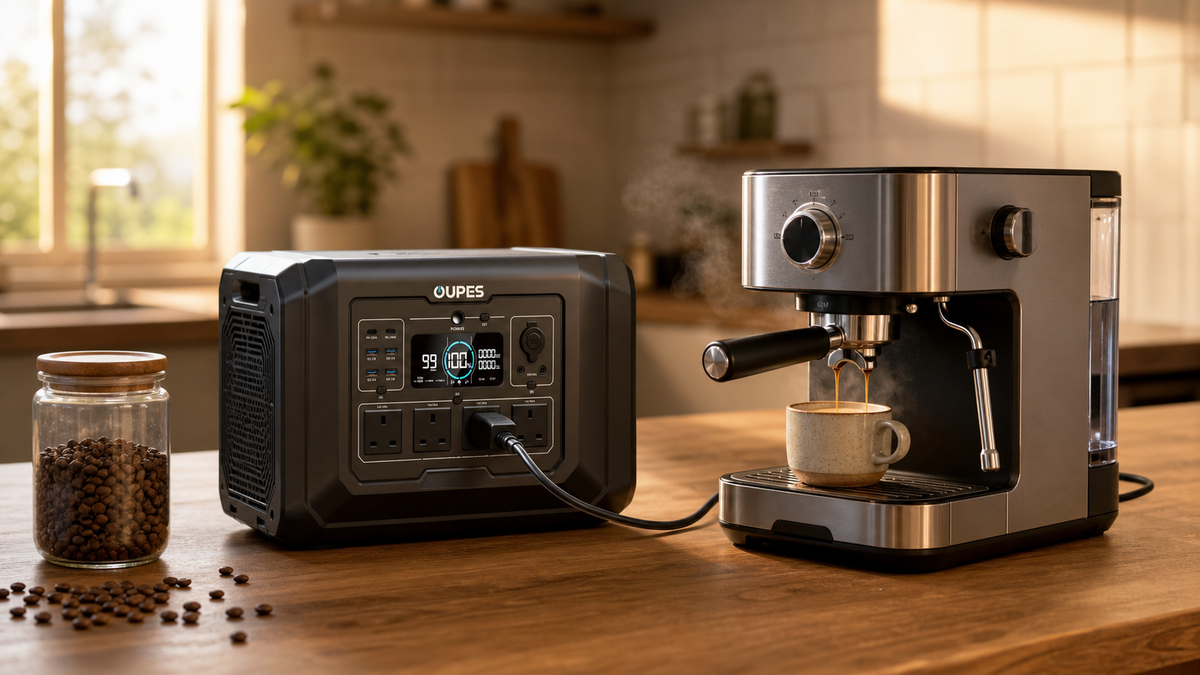
Coffee machines often draw 800–1,500W while heating water, but only for minutes. A 1,200W machine heating for five minutes uses about 0.10kWh, costing roughly 2.61p at 26.11p/kWh.
The largest avoidable use can come from leaving a hot plate, boiler or cup warmer on. A plug-in energy meter captures the complete heat-up, brew, standby and keep-warm cycle.
Key Facts
Machine type and behaviour matter more than headline watts alone.
| Machine | Power Pattern | Energy Driver | Saving Opportunity |
|---|---|---|---|
| Pod | Short heat and pump cycle | Repeated single cups | Switch off auto-idle where appropriate |
| Filter | Heater plus hot plate | Keep-warm duration | Use insulated carafe |
| Espresso | Boiler/thermoblock and pump | Warm-up and idle temperature | Schedule warm-up |
| Bean-to-cup | Heater, grinder and controls | Multiple functions and cleaning | Batch drinks where practical |
How It Works
Rated watts show maximum electrical demand, not the energy used per cup. Energy depends on how long the heating element is energised and whether the machine maintains temperature between drinks.
A grinder uses power briefly and usually contributes less energy than water heating. Steam production and large boilers can extend high-power operation.
Eco or auto-off settings can reduce idle energy. Descaling according to the manual supports correct operation, but claims about a specific energy saving require measurement.
Coffee Machine Cost Formula
Energy = input kW × operating hours. For a mixed cycle, a plug-in meter is easier and more accurate than timing every heater pulse. Multiply measured kWh by your tariff.
For worked examples, this guide uses 26.11p/kWh, the Great Britain average Direct Debit electricity unit rate published by Ofgem for 1 July to 30 September 2026. Your tariff may differ, so replace it with the unit rate on your bill.
| Cycle | Energy | Cost at 26.11p/kWh | Monthly at 30 Days |
|---|---|---|---|
| 1.2kW for 5 minutes | 0.10kWh | 2.61p | £0.78 |
| 1.5kW for 10 minutes | 0.25kWh | 6.53p | £1.96 |
| 50W keep-warm for 2h | 0.10kWh | 2.61p | £0.78 |
| Measured 0.3kWh/day | 0.30kWh | 7.83p | £2.35 |
Compare the Main Options
The best low-energy habit depends on whether the machine heats one cup or maintains a reservoir.
| Choice | Potential Benefit | Trade-Off | Measure |
|---|---|---|---|
| Boil only required water | Less water heating | May need another cycle | kWh per drink |
| Use auto-off | Less standby heat | Longer next warm-up | Daily kWh |
| Insulated carafe | Avoids hot plate | Different serving style | Keep-warm kWh |
| Batch drinks | One warm-up | Not always convenient | kWh per cup |
UK Planning Considerations
For worked examples, this guide uses 26.11p/kWh, the Great Britain average Direct Debit electricity unit rate published by Ofgem for 1 July to 30 September 2026. Your tariff may differ, so replace it with the unit rate on your bill.
Ofgem publishes current benchmark unit rates at its price-cap unit-rate page; the exact coffee cost should use the household tariff.
For the underlying UK guidance or current figures, check Ofgem energy unit-rate information. Published tariffs, standards and safety advice can change, so verify the source again before acting.
Relevant OUPES UK Options
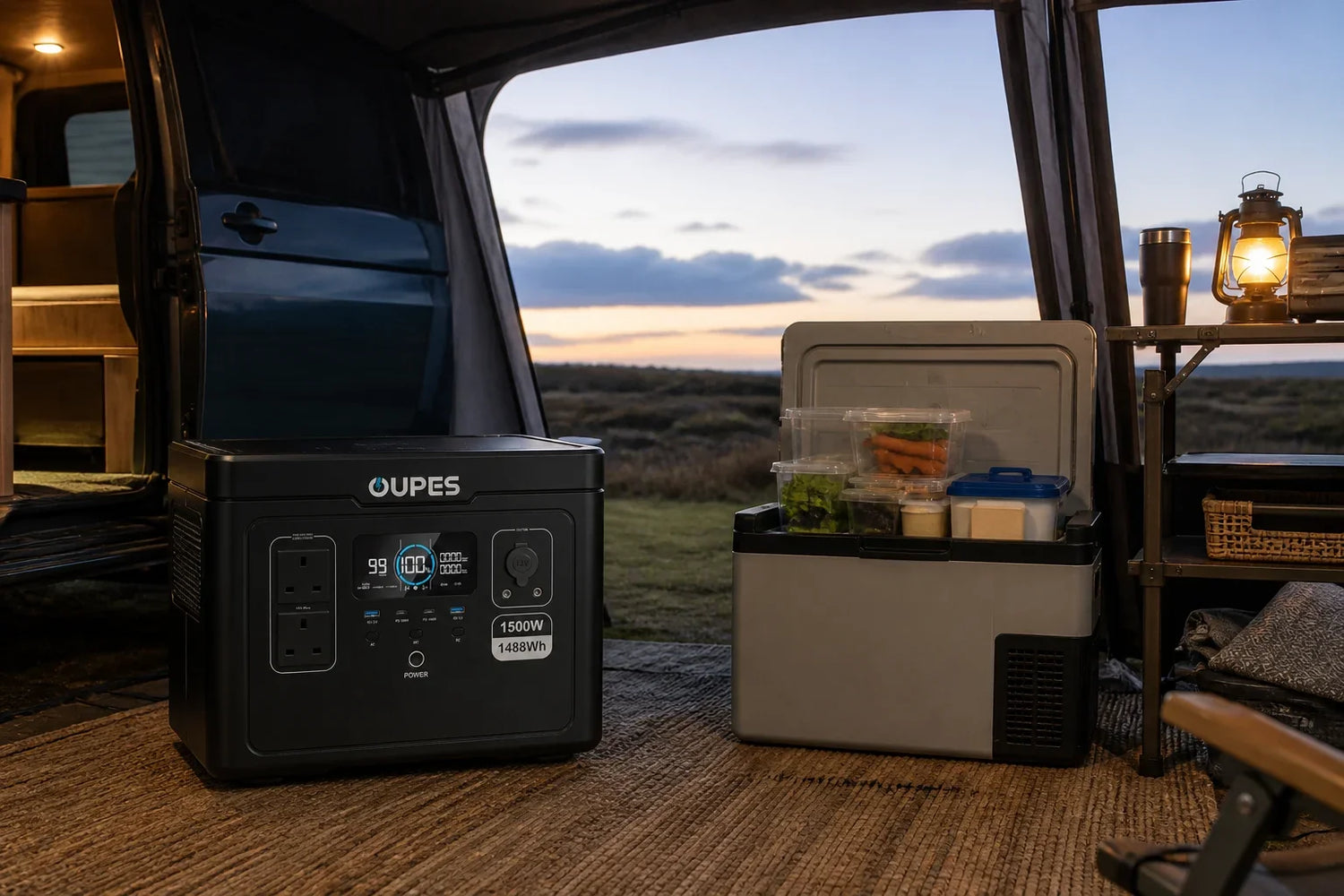
For off-grid coffee, compare the machine’s rated input with OUPES UK continuous output, then estimate Wh for each complete heat-and-brew cycle.
| UK-Site Product | Capacity | Rated Output | Solar | Planning Role |
|---|---|---|---|---|
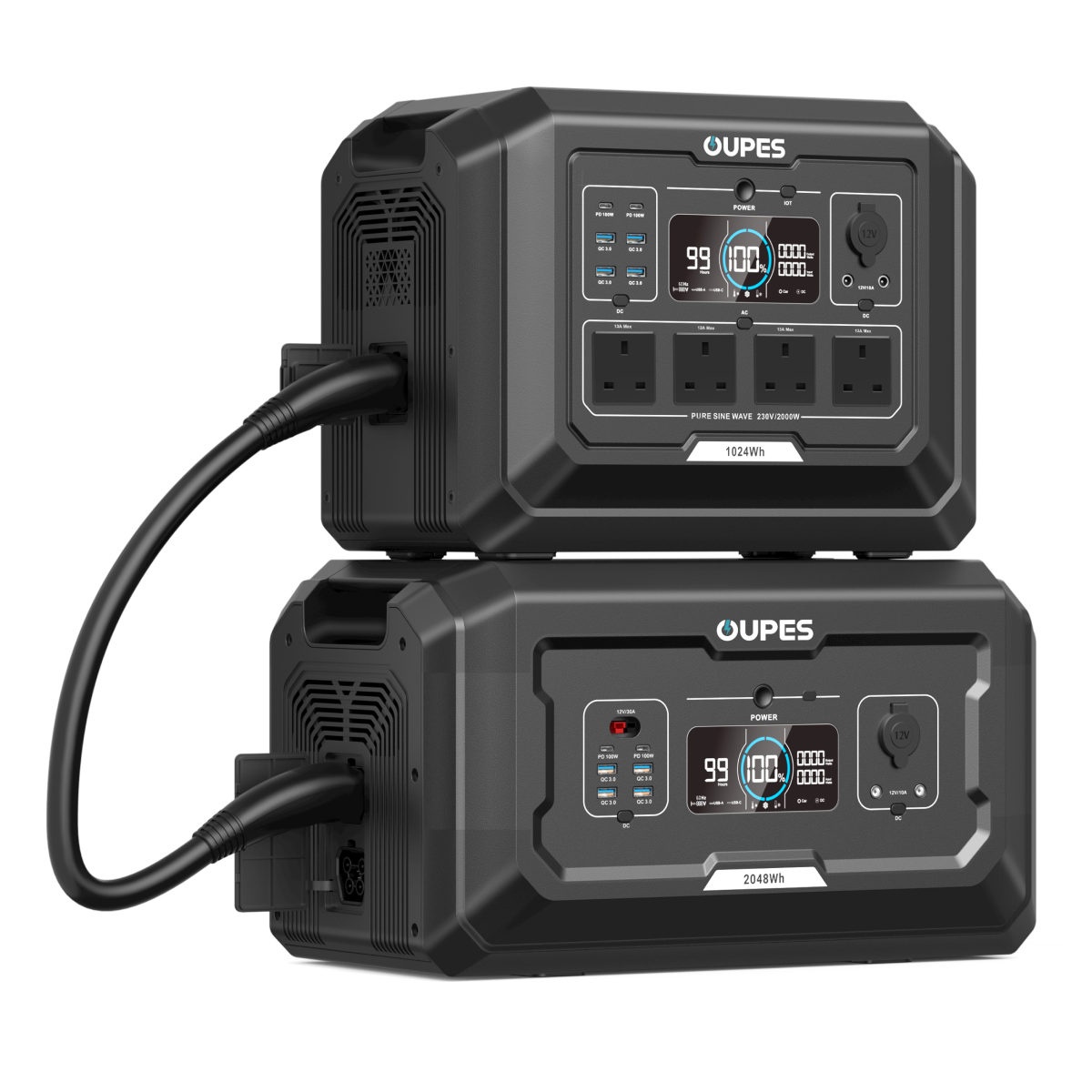
| OUPES Mega 1 | 1,024Wh | 2,000W | Up to 800W | Portable everyday loads and shorter backup sessions |
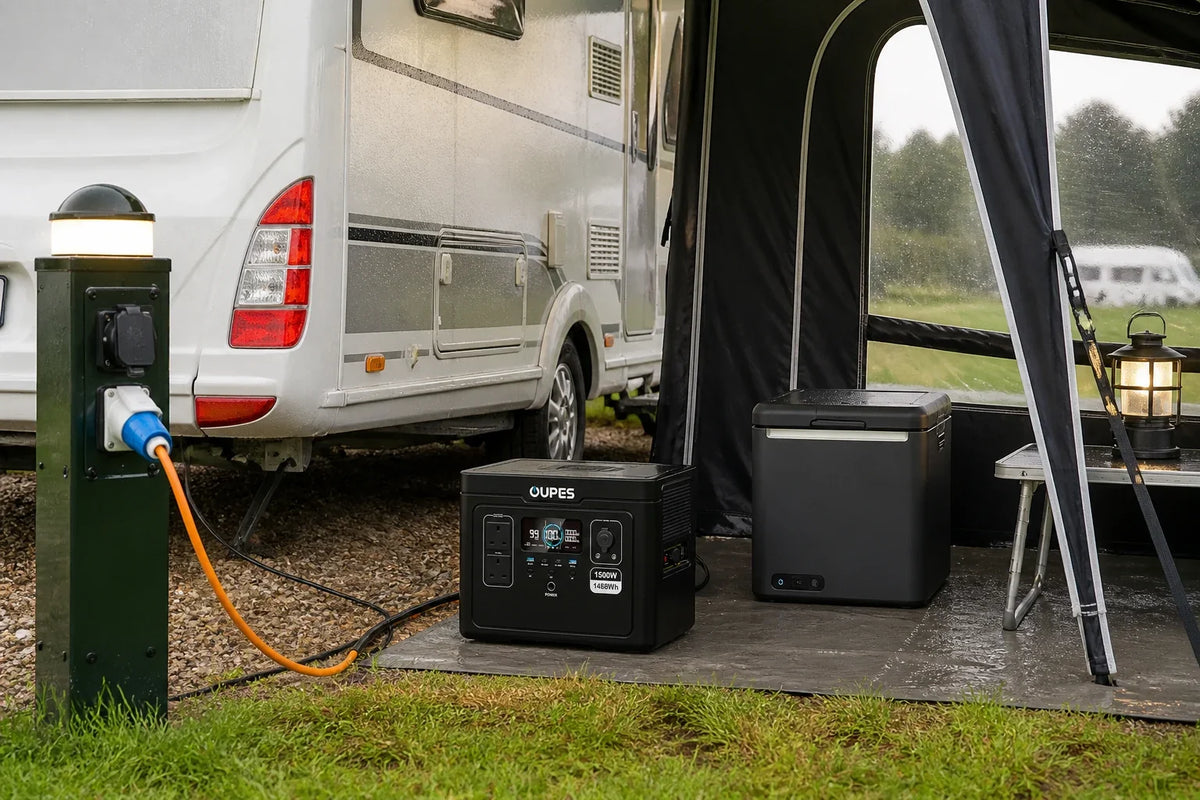
| OUPES Exodus 1500 | 1,488Wh | 1,500W | Up to 480W | Longer low-to-medium-load use where portability matters |
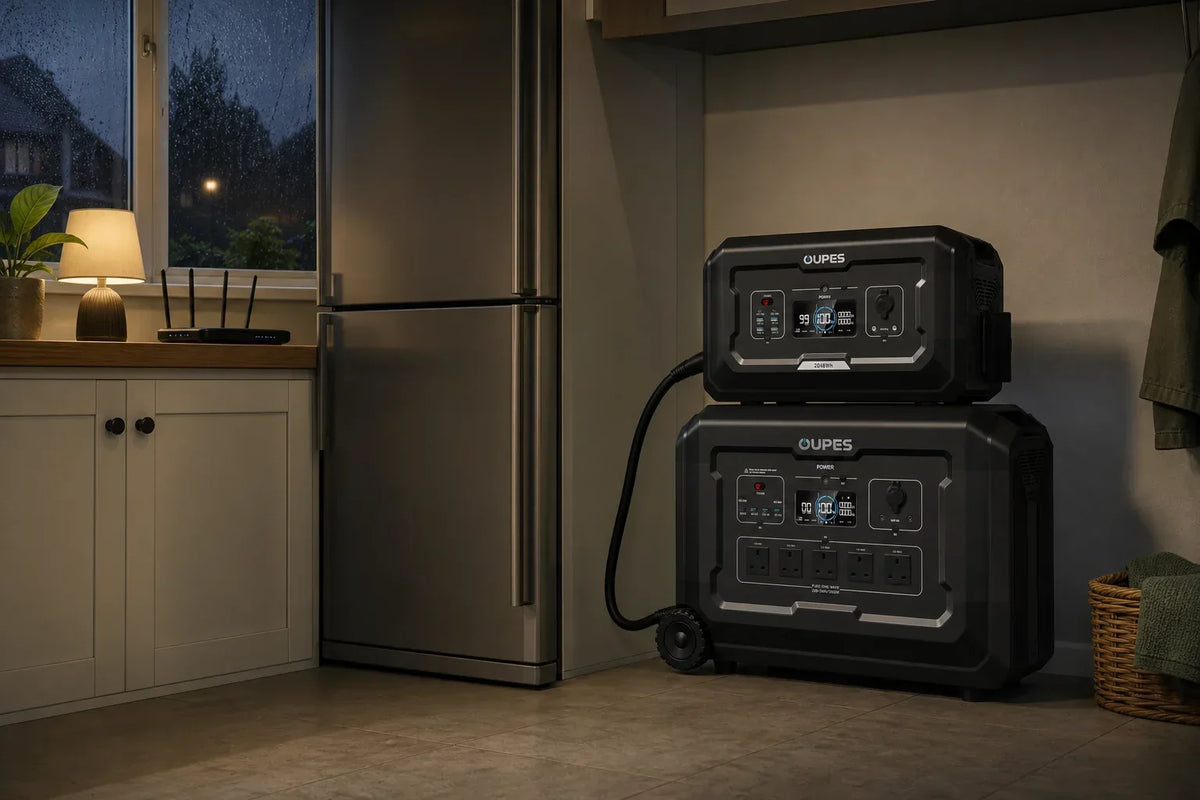
| OUPES Exodus 2400 | 2,232Wh | 2,400W | Up to 800W | Higher energy budgets and compatible higher-power appliances |
Before ordering from the UK store, confirm the current supplied model’s AC voltage, socket format, cables and appliance compatibility on the product page. Do not infer compatibility from wattage alone.
Practical Checklist
To measure and reduce use:
- Read rated input watts.
- Meter a full normal cycle.
- Include warm-up and auto-rinse.
- Limit unnecessary keep-warm time.
- Use the machine’s auto-off setting.
- Descale only as directed by the manufacturer.
Safety and Limitations
Water and electricity require care. Do not use a damaged machine, cable or power source, and keep portable stations away from spills and steam.
High-power coffee machines should use suitable outlets and leads. Confirm output and socket compatibility before off-grid use.
Final Verdict
Coffee machines have high short-term power but usually modest per-cup energy. Measure a full cycle and address prolonged keep-warm or idle heating for the most useful savings.
Frequently Asked Questions
1. How many watts does a coffee machine use?
Many use roughly 800–1,500W while heating, but check the exact rating plate.
2. How much does one brew cost?
A 1.2kW five-minute cycle uses 0.10kWh, about 2.61p at 26.11p/kWh.
3. Does leaving a coffee machine on use electricity?
Yes. Boilers, hot plates, displays and controls may continue consuming energy.
4. Is a pod machine cheaper to run than a filter machine?
Not always; measure energy per drink and include standby or keep-warm use.
5. Can a power station run a coffee machine?
Potentially, if input, startup, voltage and socket are compatible and enough Wh is available.
6. Does descaling reduce electricity use?
It supports proper operation, but quantify any saving with before-and-after energy measurements.

Leave a comment
This site is protected by hCaptcha and the hCaptcha Privacy Policy and Terms of Service apply.