




Quick Answer
A typical fan is inexpensive to run because its wattage is modest. At an illustrative electricity rate of 26.11p per kWh, a 50W fan costs about 1.31p per hour, 10.44p for eight hours and roughly £3.13 for eight hours a day over 30 days.
Your actual cost depends on the fan’s measured input, speed setting, timer use and tariff. Read the rating label or use a plug-in energy monitor, then multiply kilowatts by operating hours and your electricity price.
Key Facts
Fan labels give a maximum or rated input; a lower speed may draw less. The calculation should therefore be treated as an estimate until the fan is measured.
| Fan Input | Cost per Hour at 26.11p/kWh | 8 Hours | 30 Days at 8 Hours/Day |
|---|---|---|---|
| 25W | About 0.65p | About 5.22p | About £1.57 |
| 50W | About 1.31p | About 10.44p | About £3.13 |
| 75W | About 1.96p | About 15.67p | About £4.70 |
| 100W | About 2.61p | About 20.89p | About £6.27 |
How It Works
Watts describe the rate at which the fan uses power. Electricity bills charge for energy in kilowatt-hours. A 50W fan is 0.05kW, so running it for eight hours uses 0.4kWh.
Fans move air rather than lowering the room’s air temperature. They can improve comfort by increasing evaporation from skin, but leaving a fan operating in an empty room normally provides little benefit unless it serves a specific ventilation purpose.
Comparing a fan with an air conditioner only from wattage is incomplete because they do different jobs. A fan may be the economical choice for personal cooling, while an air conditioner actively removes heat and humidity at much higher energy use.
Fan Running Cost Formula
Use: cost = fan watts ÷ 1,000 × hours used × electricity price per kWh. If the tariff is in pence, the result is in pence. Add standing charges only when comparing complete household bills; the standing charge is not caused by switching the fan on.
For the most accurate answer, measure the fan at the speed normally used. Oscillation, ionisers, displays and smart functions may alter consumption slightly.
| Example | Calculation | Result |
|---|---|---|
| 50W for 1 hour | 0.05kW × 1 × 26.11p | 1.31p |
| 50W for 8 hours | 0.05kW × 8 × 26.11p | 10.44p |
| 75W for 10 hours | 0.075kW × 10 × 26.11p | 19.58p |
| 100W for 24 hours | 0.1kW × 24 × 26.11p | 62.66p |
Compare the Main Options
Do not assume that every fan of the same style uses the same power. Size, motor design and speed range matter more than the category name alone.
| Fan Type | Common Planning Range | Strength | Check Before Buying |
|---|---|---|---|
| USB desk fan | 5–20W | Personal cooling and low energy use | Airflow and USB power requirement |
| Desk or table fan | 20–50W | Compact and direct airflow | Noise at the intended speed |
| Tower fan | 30–70W | Slim footprint and broad controls | Measured airflow, not appearance |
| Pedestal fan | 40–100W | Strong adjustable airflow | Stability, guard and noise |
UK Planning Considerations
Ofgem’s published average Direct Debit electricity unit rate for 1 July to 30 September 2026 is 26.11p/kWh for England, Scotland and Wales, including VAT. Regional and individual tariff rates differ, so use the figure on your bill.
Running-cost examples become outdated when tariffs change. Keep the formula in the article and label the tariff date so readers can replace the example rate without changing the method.
For the underlying UK guidance or current figures, check Ofgem energy price cap unit-rate page. Published tariffs, standards and safety advice can change, so verify the source again before acting.
Relevant OUPES UK Options
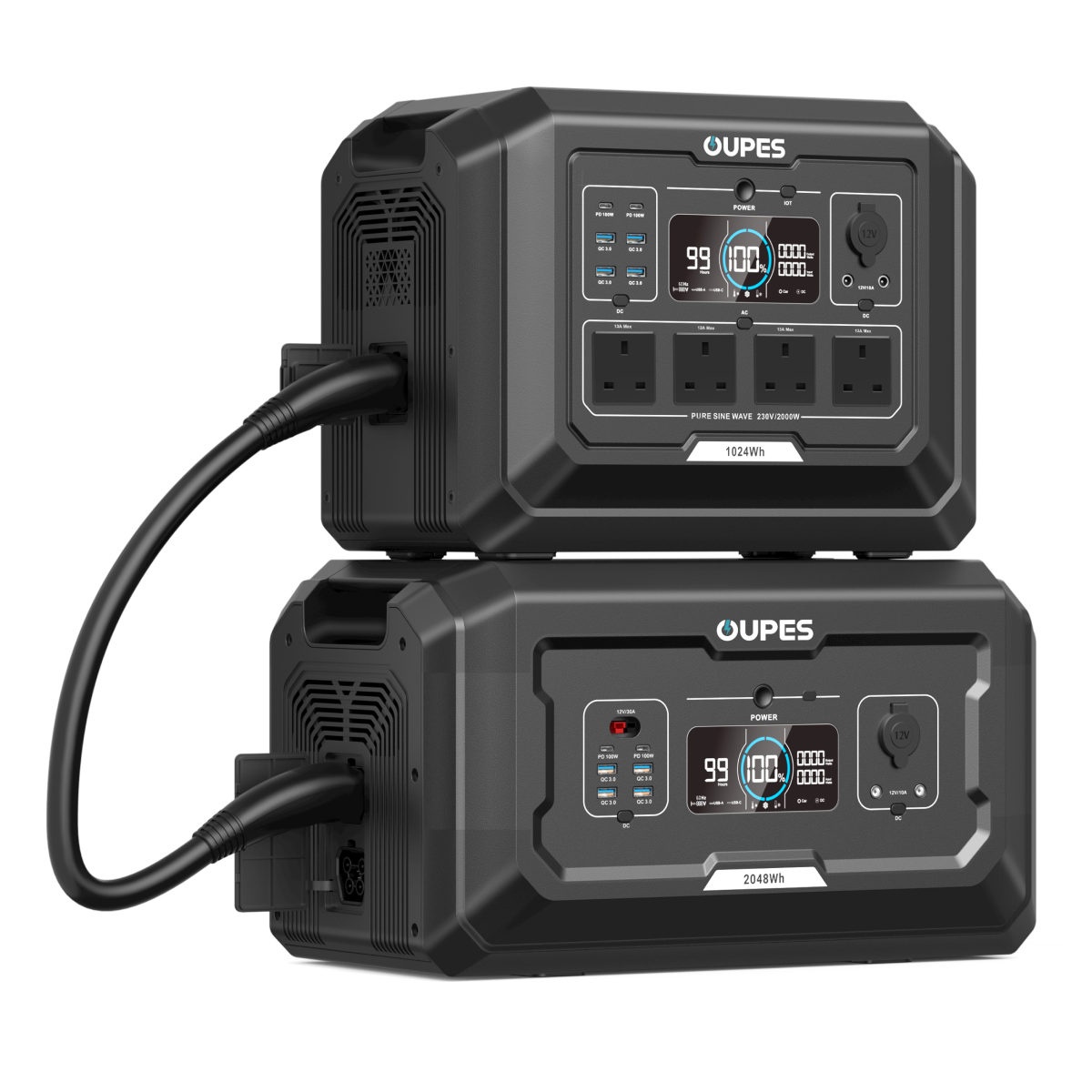
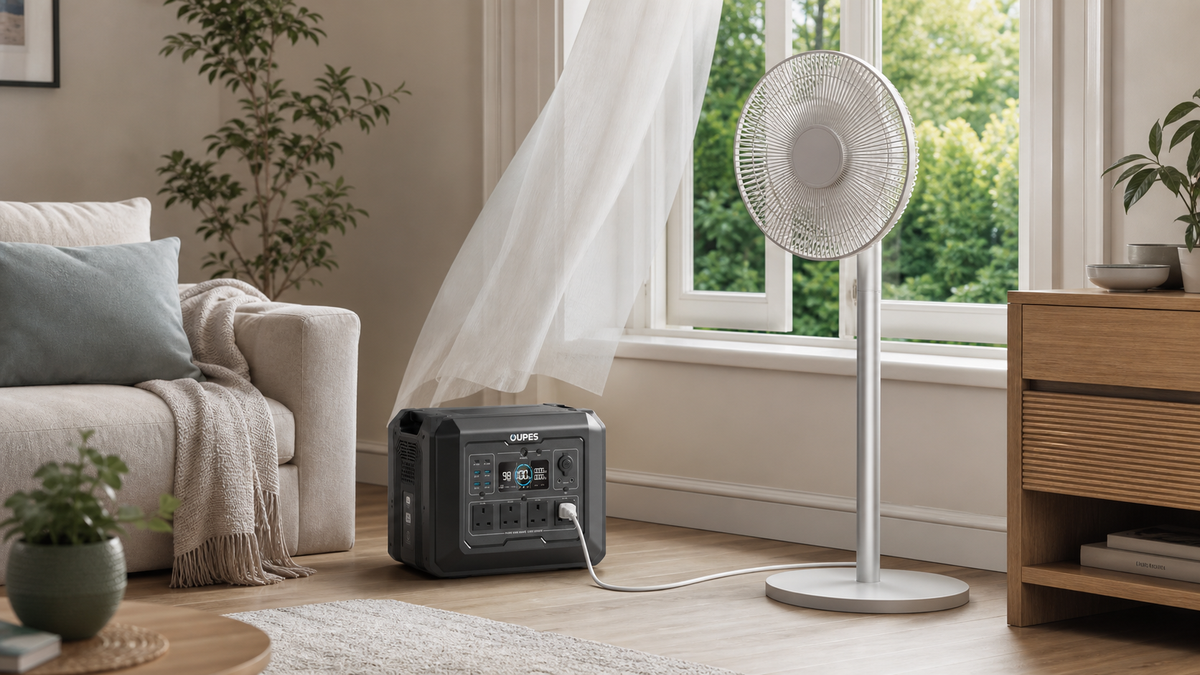
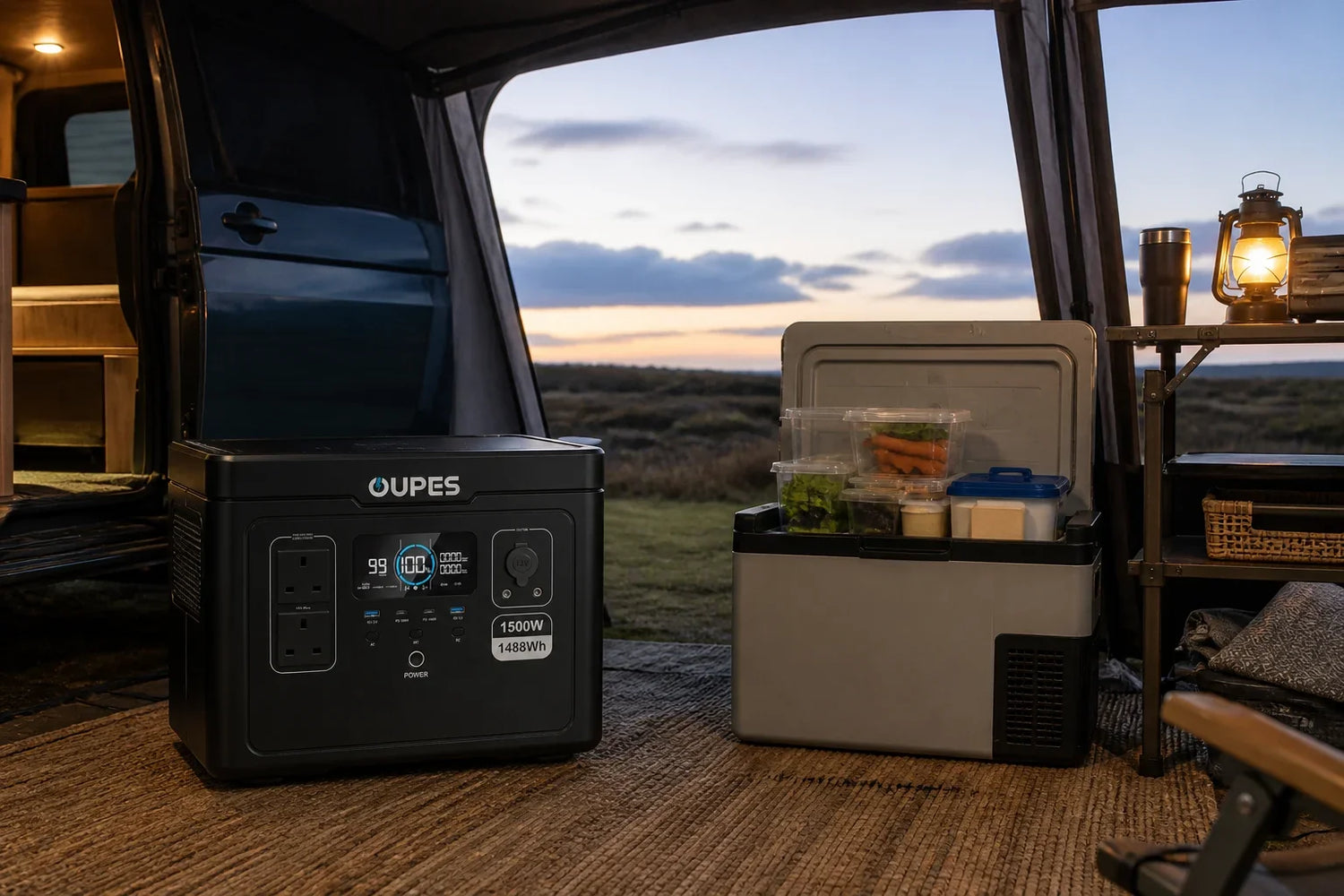
A fan is a relatively light load for a compatible power station. The practical sizing question is usually runtime, not peak output. At 50W, a planning estimate based on 85% usable AC energy is about 17 hours from 1,024Wh or 25 hours from 1,488Wh; real results vary.
| UK-Site Product | Capacity | Rated Output | Solar | Planning Role |
|---|---|---|---|---|
| OUPES Mega 1 | 1,024Wh | 2,000W | Up to 800W | Portable everyday loads and shorter backup sessions |
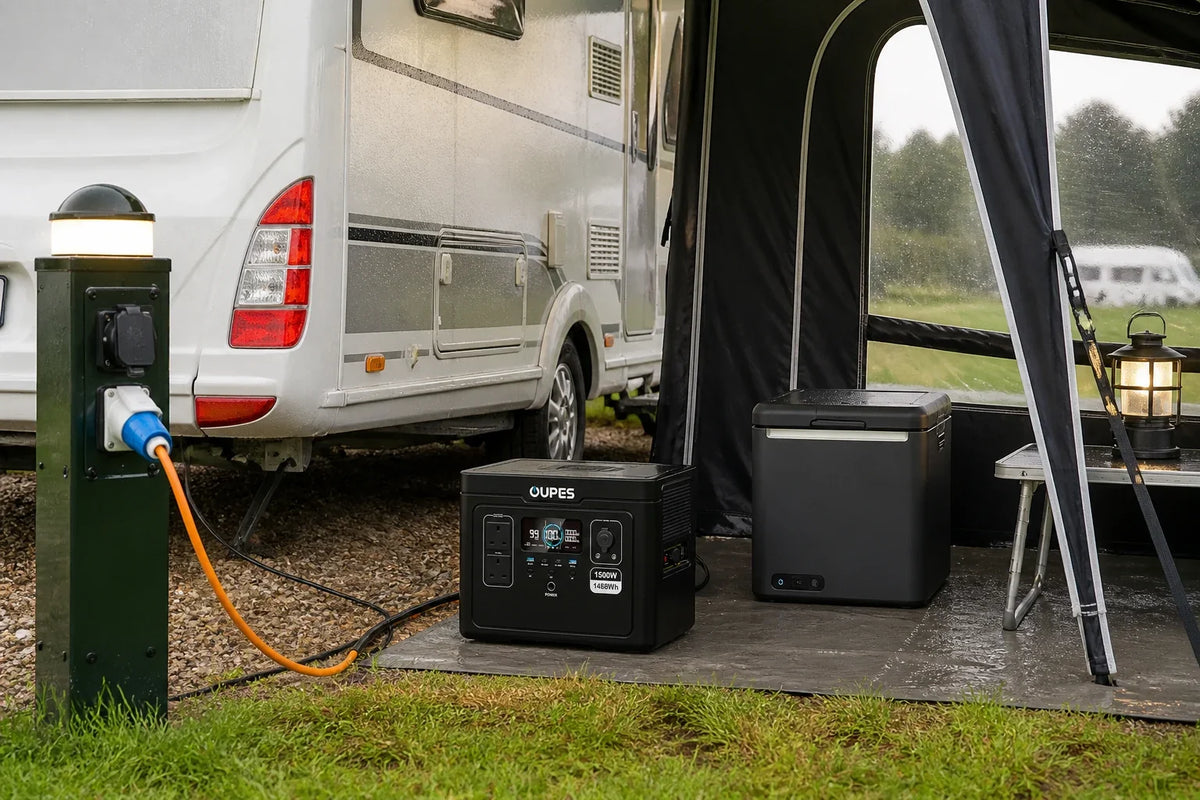
| OUPES Exodus 1500 | 1,488Wh | 1,500W | Up to 480W | Longer low-to-medium-load use where portability matters |
Before ordering from the UK store, confirm the current supplied model’s AC voltage, socket format, cables and appliance compatibility on the product page. Do not infer compatibility from wattage alone.
Practical Checklist
To reduce cost without losing useful cooling:
- Use the lowest speed that remains comfortable.
- Aim airflow at occupied areas rather than an empty room.
- Use a timer for overnight operation.
- Close curtains or blinds before direct sun heats the room.
- Ventilate when outdoor air is cooler and secure windows appropriately.
- Clean the grille and blades according to the manual.
Safety and Limitations
Keep the fan stable, dry and clear of curtains, bedding and loose objects. Inspect the cable and plug, and do not use a damaged appliance.
For battery operation, check the fan’s voltage and plug against the exact output being used. Runtime estimates do not prove electrical compatibility.
Final Verdict
Most household fans cost only a few pence for several hours. Use the label or measured watts, the current tariff and real operating time for a defensible answer; timer use and targeted airflow usually matter more than small differences between quoted fan types.
Frequently Asked Questions
1. How much does a 50W fan cost to run for eight hours?
At 26.11p/kWh, about 10.44p. Replace that rate with your own tariff for a current answer.
2. Does a fan use a lot of electricity?
Usually no compared with active cooling appliances, although continuous operation still adds up.
3. Is it cheaper to run a fan on a lower speed?
Often yes, but the reduction varies by motor and control design; measure it if precision matters.
4. Should I include the standing charge?
Not when calculating the incremental cost of the fan, because the standing charge applies even if the fan is off.
5. How long can a power station run a fan?
Divide usable watt-hours by the fan’s average watts and allow for conversion losses and other loads.
6. Is a fan cheaper than air conditioning?
A fan normally draws far less electricity, but it circulates air rather than actively cooling and dehumidifying the room.

Leave a comment
This site is protected by hCaptcha and the hCaptcha Privacy Policy and Terms of Service apply.