




Quick Answer
A domestic fridge may draw roughly 50–200W while its compressor is running, but it cycles on and off. The nameplate wattage is therefore not the same as average power or daily energy use. A plug-in energy meter measured over at least 24 hours gives a much better figure.
For backup planning, check three separate values: compressor running watts, brief startup demand and daily watt-hours. Keep the door shut during an outage and follow official food-safety guidance rather than relying only on a runtime estimate.
Key Facts
Fridge consumption varies with size, efficiency, room temperature, thermostat setting, ventilation, door openings and the quantity of warm food added.
| Measure | What It Describes | Best Source | Why It Matters |
|---|---|---|---|
| Running watts | Draw while the compressor operates | Energy meter or label | Continuous output requirement |
| Startup watts | Brief motor-start demand | Meter with peak capture or manufacturer | Inverter surge requirement |
| Daily kWh | Energy used across compressor cycles | 24–72 hour meter test | Runtime and running cost |
| Annual kWh | Standardised annual estimate | UK energy label | Model comparison |
How It Works
A thermostat starts and stops the compressor to maintain temperature. That cycling is why multiplying a compressor’s running watts by 24 hours usually overstates consumption.
Older appliances, restricted airflow around condenser components, damaged door seals and a hot room can increase duty cycle. A fridge-freezer generally uses more energy than a small larder fridge, but efficiency varies significantly by model.
Motor startup can momentarily exceed normal running watts. A backup system must handle the real peak without nuisance shutdown while also storing enough energy for the required hours.
Measure Fridge Energy and Estimate Cost
Connect a suitable plug-in energy meter, reset it and record kWh after at least 24 hours of normal use. Daily cost equals measured kWh multiplied by your electricity unit rate.
Estimated backup hours equal usable battery Wh divided by measured average watts. A planning allowance for inverter loss, standby draw, temperature and battery condition is essential.
| Example | Calculation | Result | Interpretation |
|---|---|---|---|
| 0.8kWh/day fridge | 0.8 × 26.11p | 20.89p/day | About £76.24/year at the example rate |
| 1.2kWh/day fridge-freezer | 1.2 × 26.11p | 31.33p/day | About £114.35/year |
| 1,024Wh battery, 50W average | 1,024 × 0.85 ÷ 50 | About 17.4 hours | Illustrative, not guaranteed |
| 3,072Wh battery, 75W average | 3,072 × 0.85 ÷ 75 | About 34.8 hours | Check startup demand separately |
Compare the Main Options
Use measured energy for runtime and use peak power for compatibility; neither figure can replace the other.
| Approach | Accuracy | Advantage | Limitation |
|---|---|---|---|
| Nameplate only | Low for daily energy | Fast compatibility clue | Does not capture cycling |
| Energy label | Useful standard comparison | Easy annual estimate | Household conditions differ |
| 24-hour meter | Good | Captures real cycling | One day may be atypical |
| 72-hour meter | Better | Smooths daily variation | Still season-dependent |
UK Planning Considerations
For worked examples, this guide uses 26.11p/kWh, the Great Britain average Direct Debit electricity unit rate published by Ofgem for 1 July to 30 September 2026. Your tariff may differ, so replace it with the unit rate on your bill.
During an interruption, keep appliance doors closed. Food Standards Agency emergency guidance gives official advice for chilled and frozen food; discard food when its safety is uncertain.
For the underlying UK guidance or current figures, check Food Standards Agency food-safety guidance. Published tariffs, standards and safety advice can change, so verify the source again before acting.
Relevant OUPES UK Options
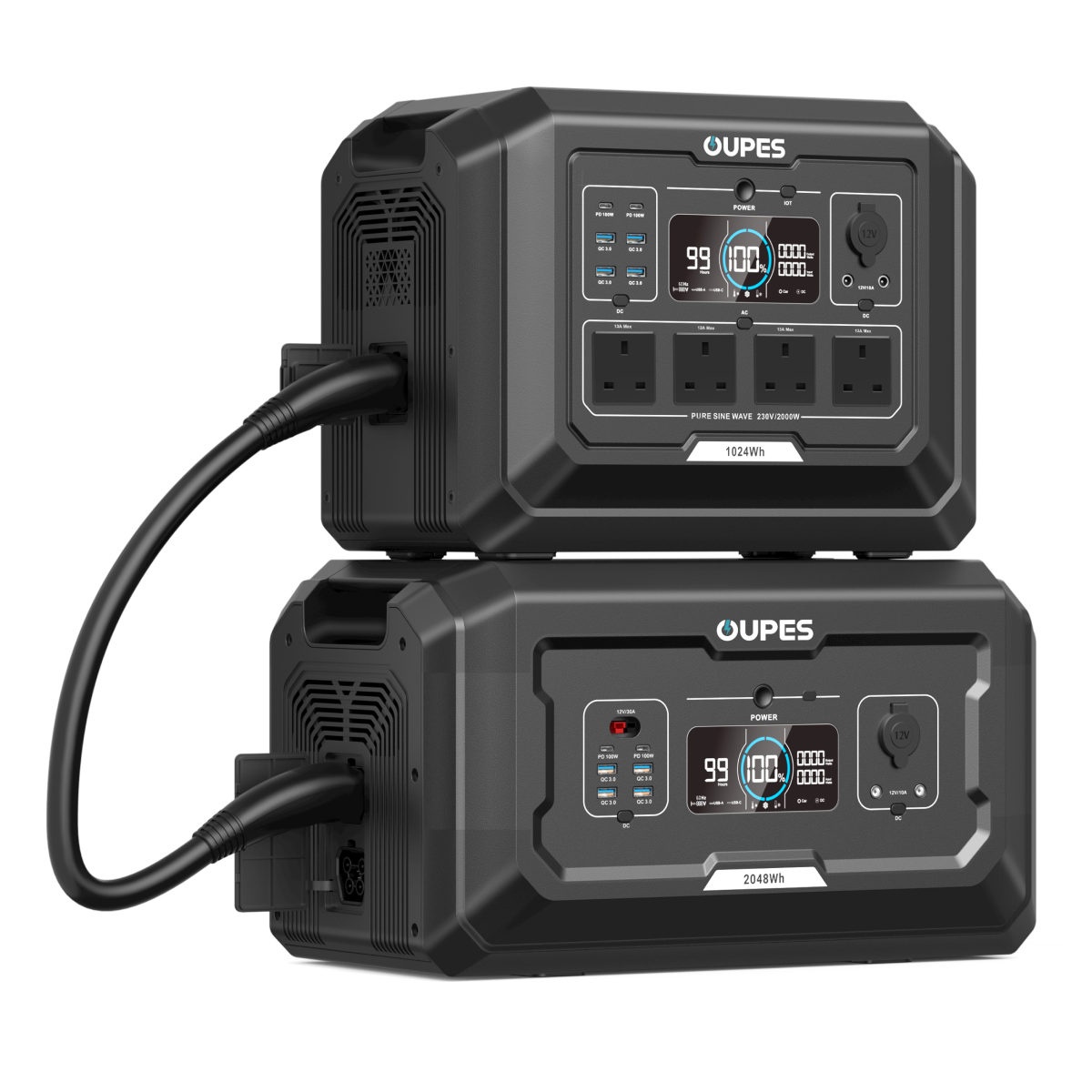
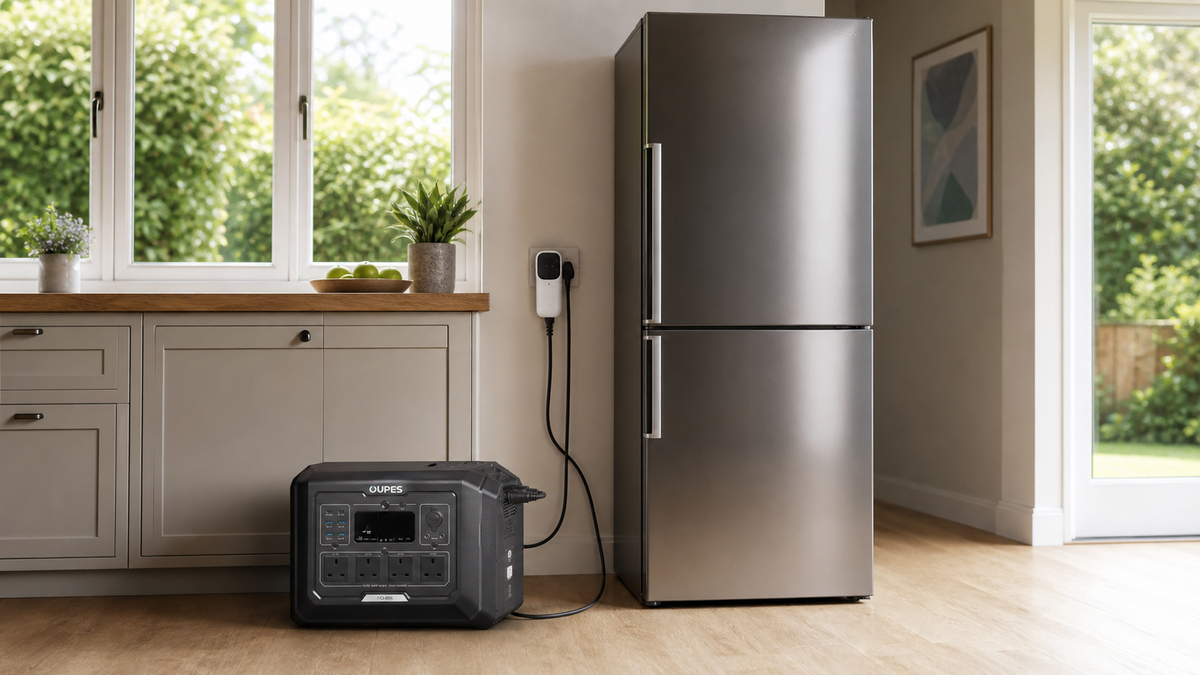
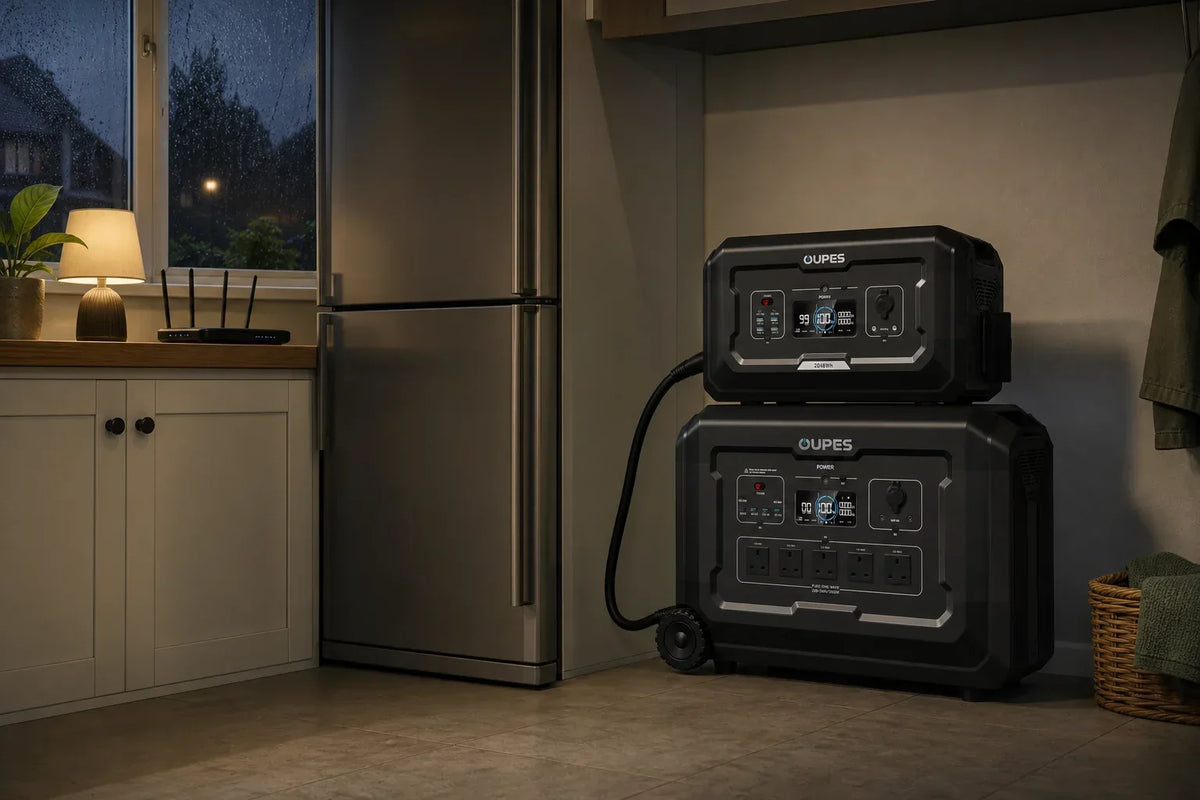
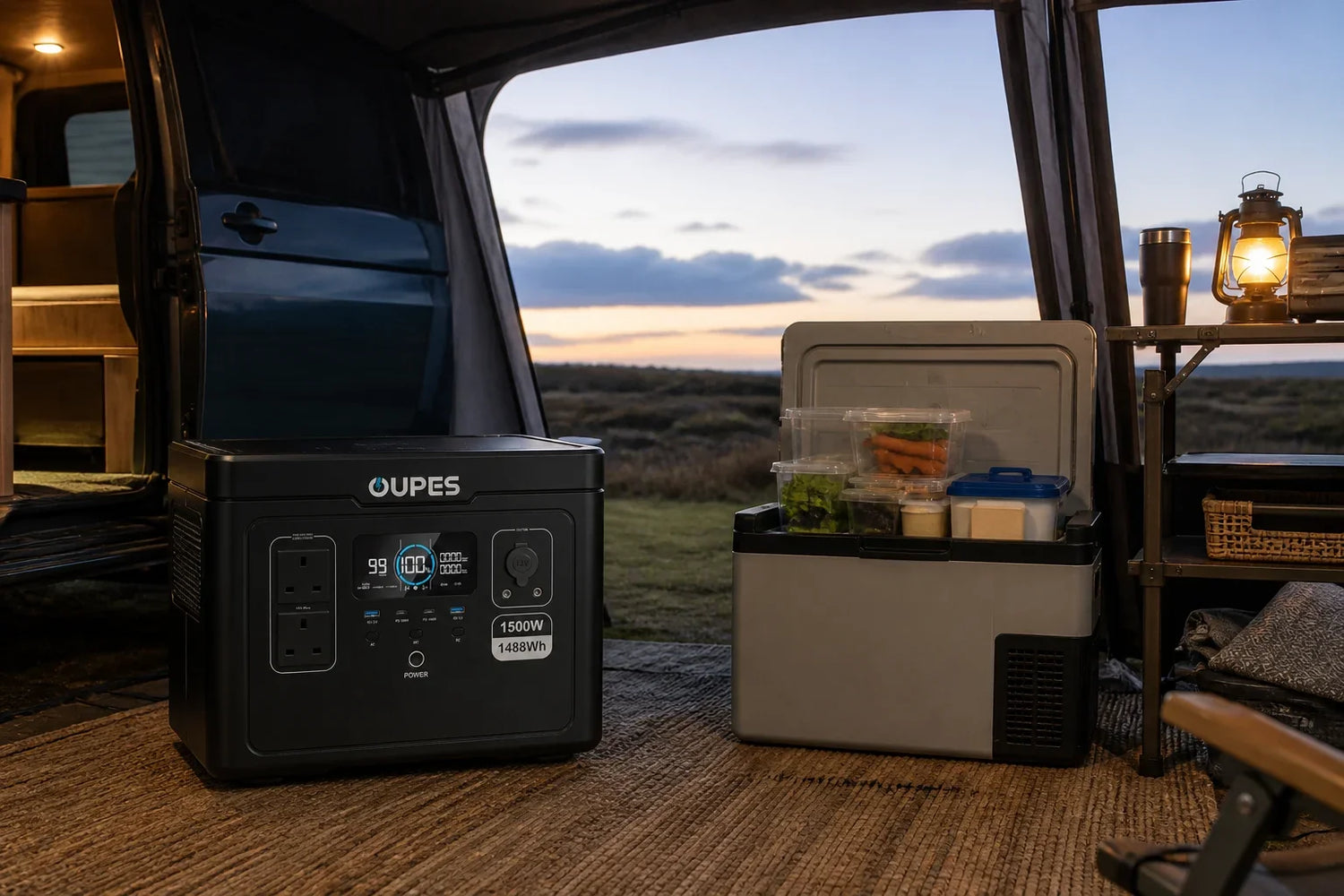
For fridge backup, choose an OUPES UK station only after measuring the appliance’s startup demand and daily Wh. The table supports initial comparison, not a guaranteed runtime.
| UK-Site Product | Capacity | Rated Output | Solar | Planning Role |
|---|---|---|---|---|
| OUPES Mega 1 | 1,024Wh | 2,000W | Up to 800W | Portable everyday loads and shorter backup sessions |
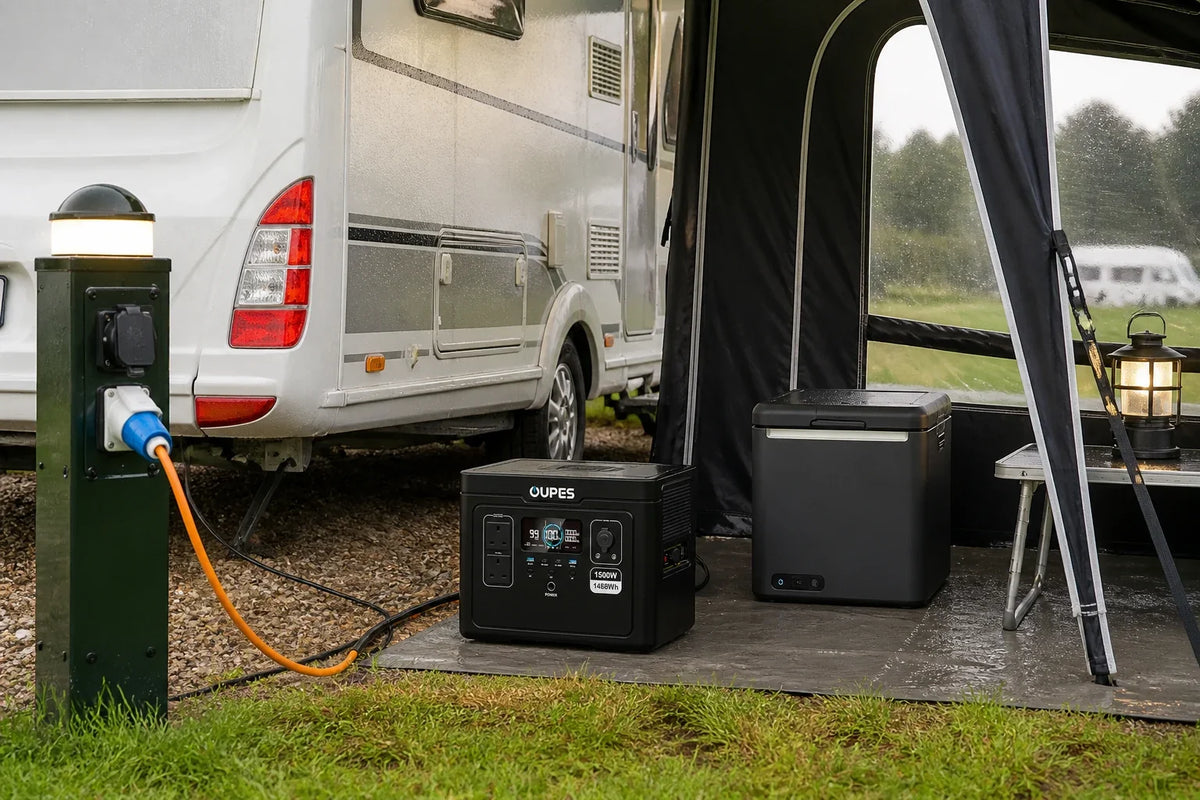
| OUPES Exodus 1500 | 1,488Wh | 1,500W | Up to 480W | Longer low-to-medium-load use where portability matters |
| OUPES Exodus 2400 | 2,232Wh | 2,400W | Up to 800W | Higher energy budgets and compatible higher-power appliances |
| OUPES Mega 3 | 3,072Wh | 3,600W | Up to 2,100W | Large loads, longer backup plans and expandable storage |
Before ordering from the UK store, confirm the current supplied model’s AC voltage, socket format, cables and appliance compatibility on the product page. Do not infer compatibility from wattage alone.
Practical Checklist
Before planning fridge backup:
- Measure at least 24 hours of kWh.
- Capture or verify startup watts.
- Check the station’s continuous and surge limits.
- Allow for conversion and standby losses.
- Keep doors closed in an outage.
- Use official food-safety advice if temperatures rise.
Safety and Limitations
Do not use extension leads that are damaged, undersized or coiled under high load. Keep the power station dry, ventilated and used according to its manual.
Battery runtime cannot prove food remained safe. Time, temperature and official guidance determine whether food should be kept.
Final Verdict
Measure daily kWh rather than assuming the label wattage runs continuously. Size backup from both startup power and usable energy, then treat food safety as a separate decision governed by temperature and official advice.
Frequently Asked Questions
1. How many watts does a fridge use?
Often about 50–200W while running, but the compressor cycles and models vary.
2. How much does a fridge cost to run?
Multiply measured daily kWh by your tariff; at 26.11p/kWh, 0.8kWh costs about 20.89p.
3. Can a 1,024Wh power station run a fridge?
Potentially, if startup and running power are compatible; actual runtime depends on measured average demand and losses.
4. Why does my fridge wattage change?
The compressor, defrost heater, fans and controls switch at different times.
5. Should I use annual kWh or watts?
Use annual or measured kWh for energy cost and watts for output compatibility.
6. How long is food safe in a power cut?
Follow current Food Standards Agency advice and use time and temperature, not battery estimates alone.

Leave a comment
This site is protected by hCaptcha and the hCaptcha Privacy Policy and Terms of Service apply.