




Quick Answer
A generator produces electrical energy from another energy source. A combustion generator converts fuel into mechanical rotation and electricity; an inverter converts DC electricity into AC. An inverter generator combines an engine-driven generator with electronic power conversion.
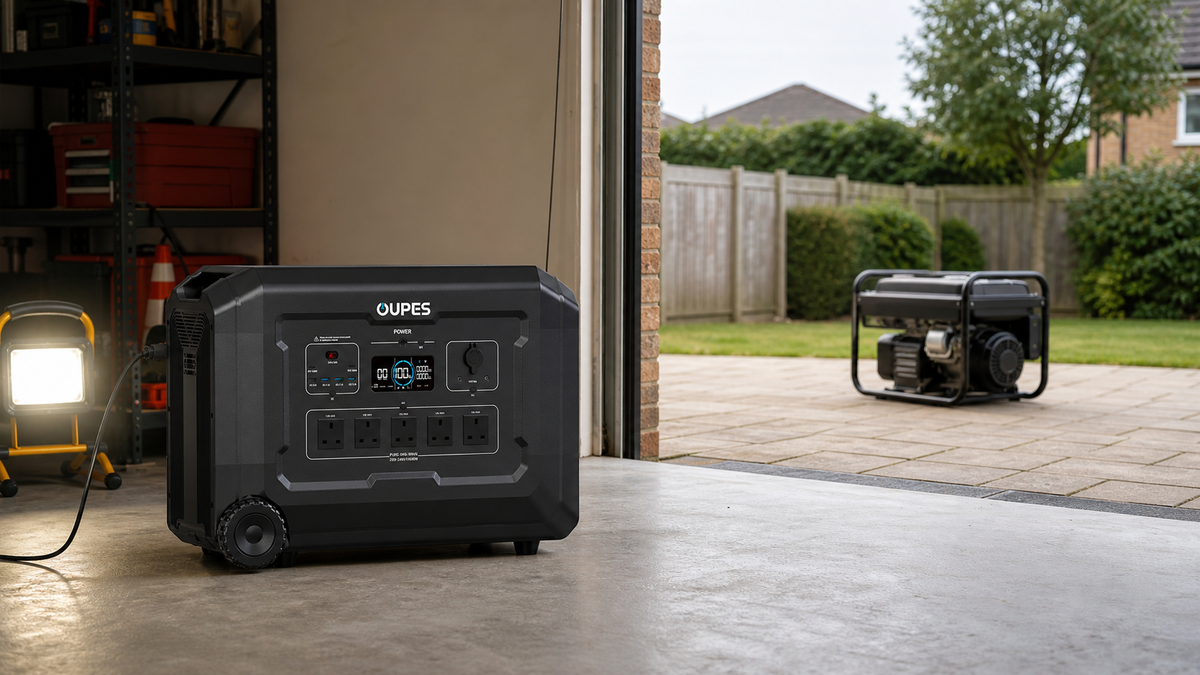
A battery power station stores energy and uses an inverter to supply compatible AC loads. It is quiet and has no combustion exhaust at the point of use, but stored energy is finite. Fuel generators can continue after refuelling but require safe outdoor operation, fuel and maintenance.
Key Facts
The terms are often mixed together, so identify energy source, conversion stage and operating location before comparing products.
| System | Energy Source | Main Conversion | Operating Constraint |
|---|---|---|---|
| Conventional generator | Petrol, diesel or gas | Engine drives alternator | Outdoor exhaust, noise and maintenance |
| Inverter generator | Fuel | AC to DC to regulated AC | Still produces exhaust |
| Battery power station | Stored electricity | Battery DC to inverter AC | Finite stored Wh |
| Solar generator kit | Battery plus solar input | Solar DC charging and inverter AC | Weather-dependent recharge |
How It Works
A conventional generator usually links engine speed to the electrical output arrangement. An inverter generator can vary engine speed and reconstruct a regulated AC waveform electronically, which can improve fuel efficiency and noise under lighter loads.
A standalone inverter does not create energy. It draws DC from a battery and supplies AC, with losses. A complete power station adds charging electronics, battery management, protection, ports and a display.
Sensitive electronics need more than a “pure sine wave” claim. Voltage, frequency, earthing, neutral arrangement, surge capability and transfer behaviour must all fit the load.
How to Size the Right System
Add simultaneous running watts, identify the largest realistic startup event and calculate daily watt-hours. Output determines what can run; energy source and capacity determine how long.
For a battery station, estimated runtime is rated Wh × an assumed usable factor ÷ average watts. For a fuel generator, model fuel availability, safe refuelling and required continuous operation.
| Design Check | Battery System | Fuel Generator | Common Mistake |
|---|---|---|---|
| Continuous output | Inverter rating | Generator rating | Using surge as continuous power |
| Startup demand | Surge duration and waveform | Motor-start capability | Ignoring compressors |
| Runtime | Usable Wh and recharge | Fuel tank and consumption | Comparing watts only |
| Location | Dry, ventilated within manual | Outdoors away from openings | Operating combustion indoors |
Compare the Main Options
The best system depends on outage duration, noise limits, indoor needs and replenishment options.
| Priority | Better Starting Point | Why | Limitation |
|---|---|---|---|
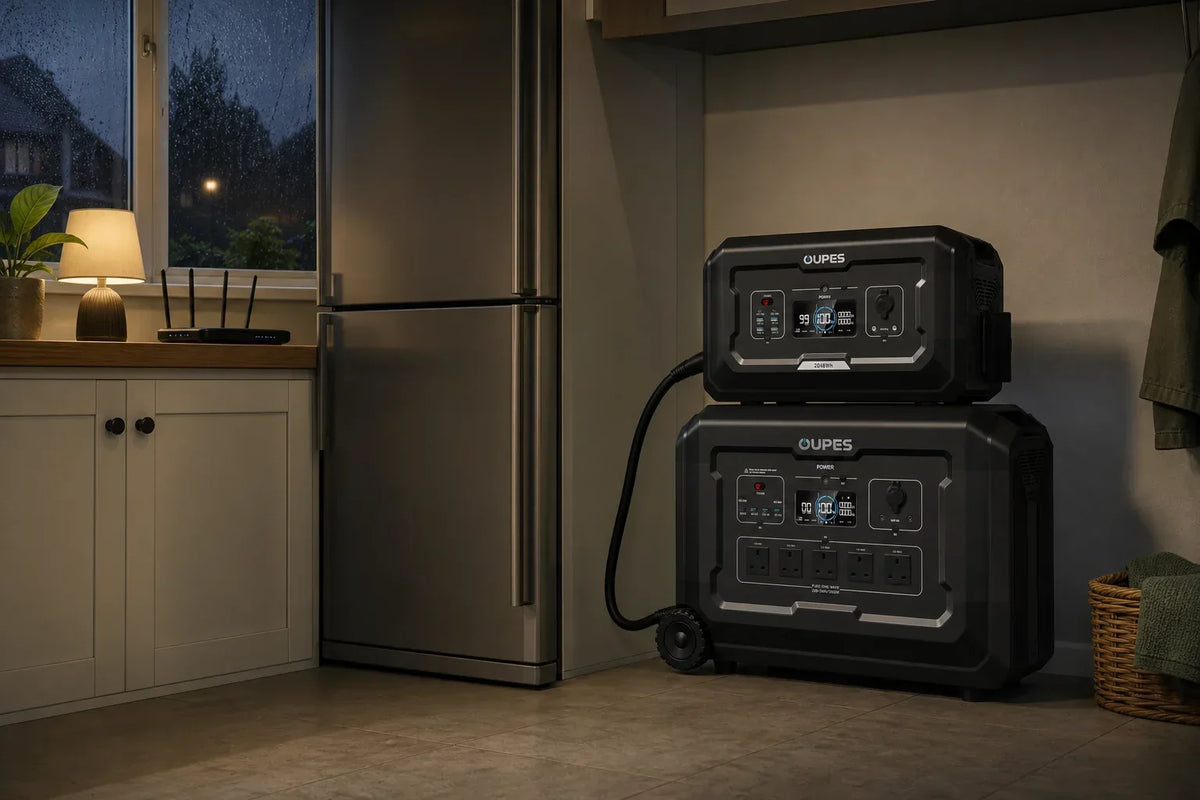
| Quiet indoor essentials | Battery power station | No combustion exhaust at point of use | Finite energy |
| Multi-day remote high load | Fuel generator | Rapid energy replenishment | Outdoor operation and fuel |
| Quiet nights plus long outage | Hybrid plan | Separates roles | More equipment and management |
| Renewable off-grid use | Solar plus battery | Can recharge without fuel | Weather and input limits |
UK Planning Considerations
UK users should check campsite, local authority and noise restrictions before operating a generator. Exhaust must be kept outside and away from doors, windows and vents.
Permanent or circuit-level backup requires approved changeover equipment and qualified electrical design. Never energise household wiring through an improvised lead.
For the underlying UK guidance or current figures, check Health and Safety Executive carbon-monoxide guidance. Published tariffs, standards and safety advice can change, so verify the source again before acting.
Relevant OUPES UK Options
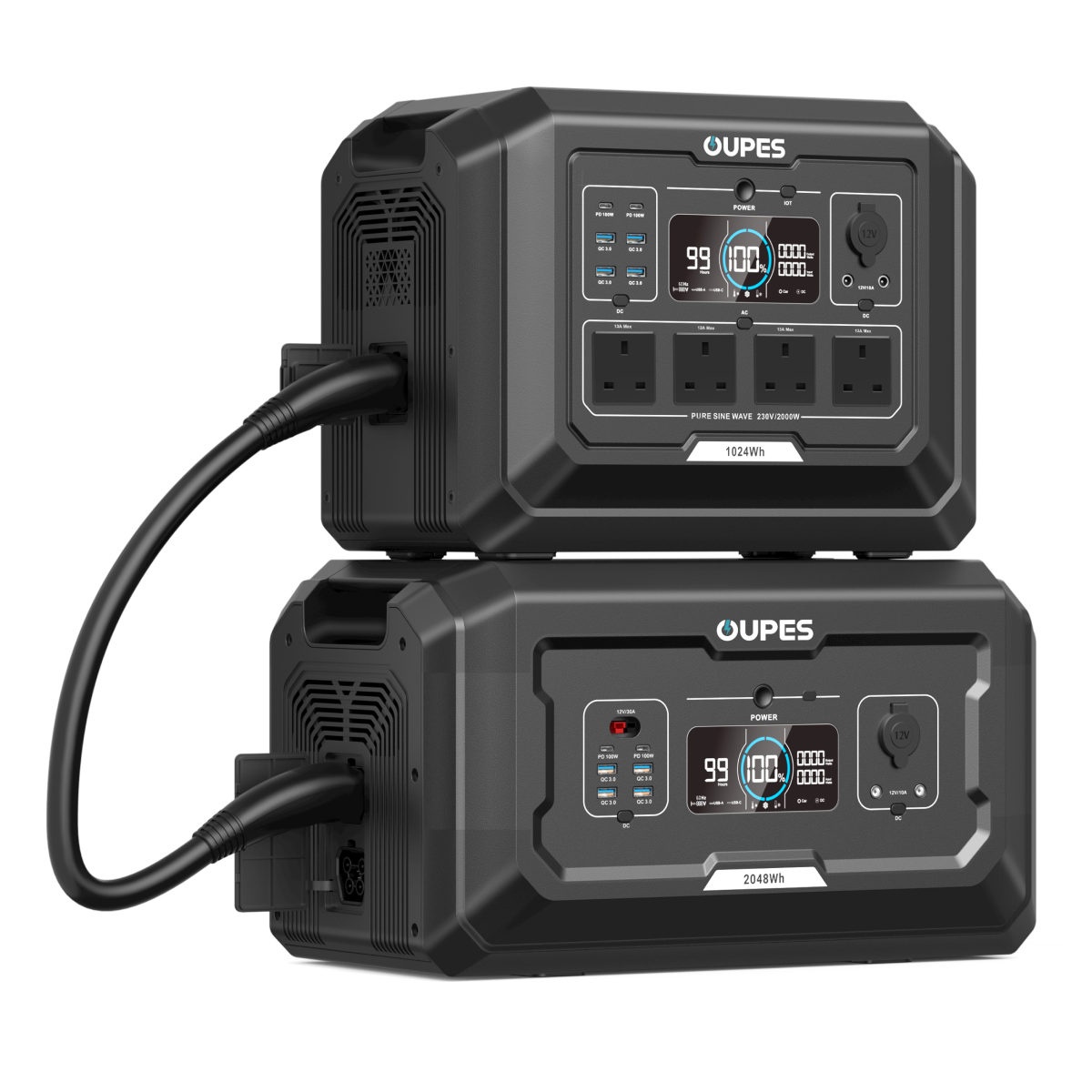
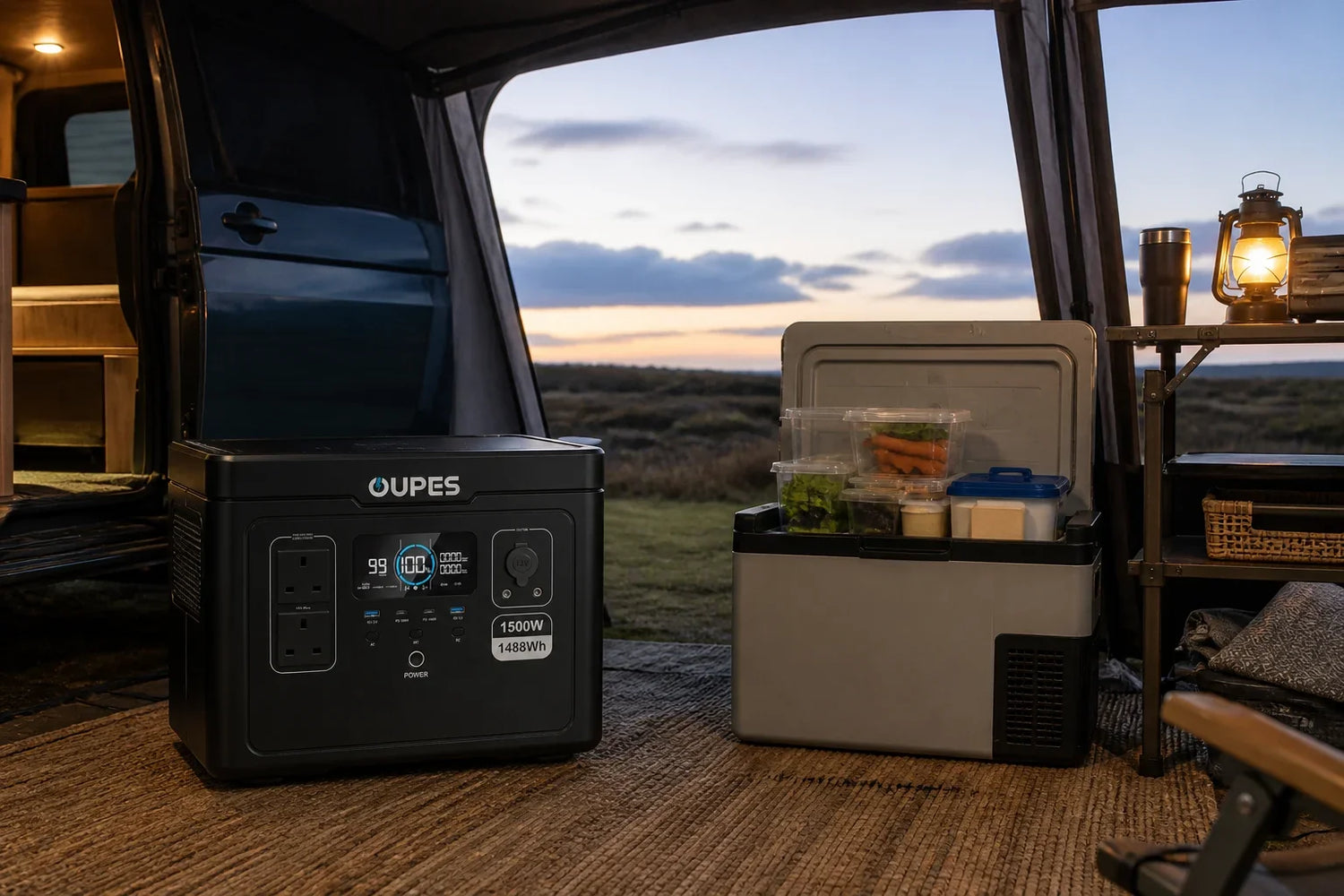
The OUPES UK range represents battery inverter systems rather than fuel generators. Mega 1 suits lighter essential plans, Exodus models add fixed storage choices, and Mega 3 provides the highest output and compatible expansion in the current range.
| UK-Site Product | Capacity | Rated Output | Solar | Planning Role |
|---|---|---|---|---|
| OUPES Mega 1 | 1,024Wh | 2,000W | Up to 800W | Portable everyday loads and shorter backup sessions |
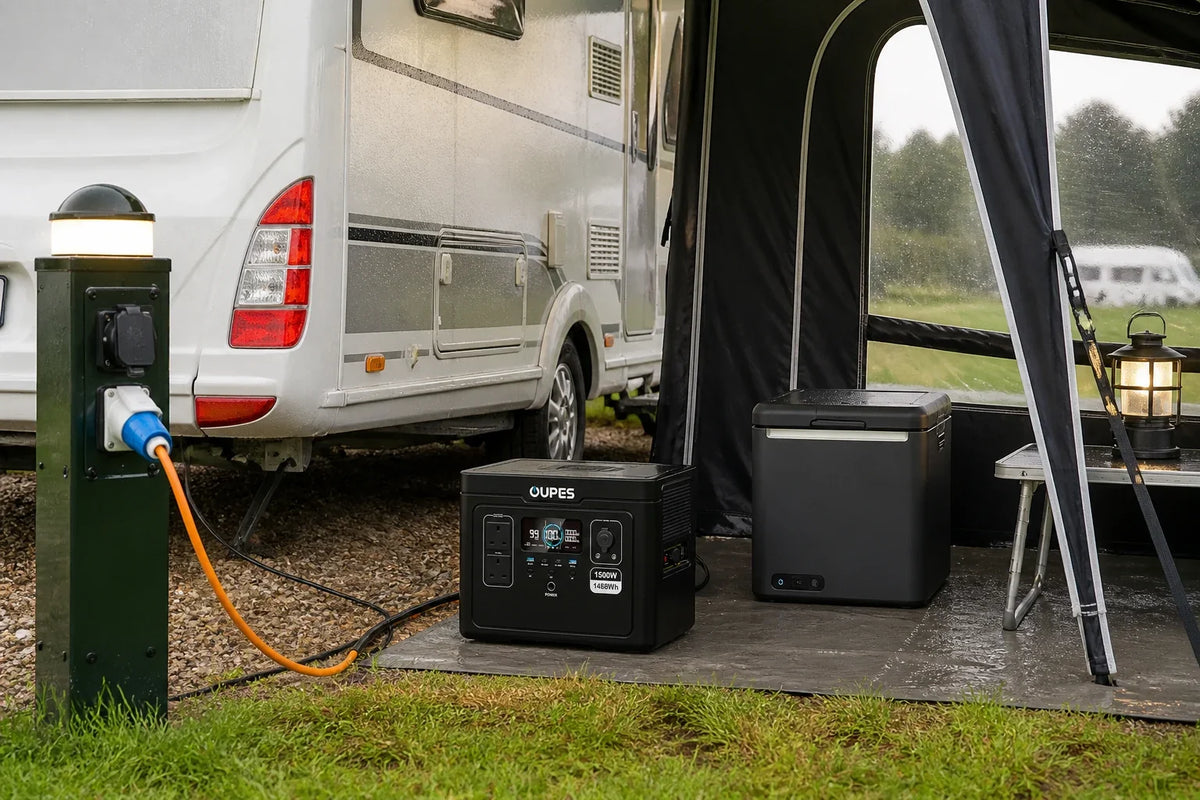
| OUPES Exodus 1500 | 1,488Wh | 1,500W | Up to 480W | Longer low-to-medium-load use where portability matters |
| OUPES Exodus 2400 | 2,232Wh | 2,400W | Up to 800W | Higher energy budgets and compatible higher-power appliances |
| OUPES Mega 3 | 3,072Wh | 3,600W | Up to 2,100W | Large loads, longer backup plans and expandable storage |
| OUPES B2 Extra Battery | 2,048Wh | USB and 12V DC outputs | Up to 2,100W independent solar input | Expanding compatible Mega 1 or Mega 3 systems |
Before ordering from the UK store, confirm the current supplied model’s AC voltage, socket format, cables and appliance compatibility on the product page. Do not infer compatibility from wattage alone.
Practical Checklist
Before choosing generator or inverter equipment:
- List continuous and startup watts.
- Calculate energy required between recharging or refuelling.
- Confirm AC voltage, sockets and earthing.
- Plan the safe operating location.
- Check noise and campsite restrictions.
- Test the emergency plan before it is needed.
Safety and Limitations
Never operate a combustion generator in a home, garage, tent, awning or other enclosed or partly enclosed space. Carbon monoxide can kill without warning.
Keep battery stations dry, vents clear and within temperature limits. Use approved transfer equipment for fixed circuits.
Final Verdict
Choose a battery inverter system for quiet, managed loads and indoor point-of-use operation; choose a fuel generator only when safe outdoor operation and extended refuelling solve a genuine need. A hybrid plan can cover both quiet essentials and long-duration energy.
Frequently Asked Questions
1. Is an inverter the same as a generator?
No. An inverter converts DC to AC; a generator produces electricity from another energy source.
2. What is an inverter generator?
A fuel generator that uses electronic conversion to provide regulated AC output.
3. Can a battery power station be used indoors?
It has no combustion exhaust, but must still be used within ventilation, moisture and temperature instructions.
4. Which is quieter?
Battery stations are generally quieter; inverter generators can be quieter than conventional fuel models at light load.
5. Can either power a house?
Only with compatible output, capacity and approved transfer equipment designed for the circuits.
6. What matters more, watts or watt-hours?
Both: watts govern load compatibility; watt-hours govern approximate battery duration.

Leave a comment
This site is protected by hCaptcha and the hCaptcha Privacy Policy and Terms of Service apply.