




Quick Answer
A DC-to-AC converter is normally called an inverter. It switches and filters direct current from a battery or solar system into alternating current for compatible appliances.
Choose an inverter by input voltage, AC output voltage and frequency, continuous watts, surge duration, waveform, efficiency and grounding arrangement. Battery current can be much higher than AC current because low-voltage DC must deliver the same power plus losses.
Key Facts
AC and DC describe current direction, not energy quality. Each is useful in the right part of the system.
| Feature | DC | AC | Common Use |
|---|---|---|---|
| Direction | Flows one way | Reverses periodically | Batteries vs mains |
| Voltage conversion | DC-DC converter | Transformer or electronics | Matching loads |
| Battery source | Native output | Requires inverter | Portable stations |
| Long building distribution | Application-specific | Standard mains infrastructure | Homes and businesses |
How It Works
An inverter uses semiconductor switches to create a rapidly switched waveform, then control and filtering produce the intended AC output. Pure sine wave inverters are generally preferred for sensitive electronics and motor loads.
Efficiency below 100% means the battery supplies more power than the appliance receives. A 1,000W AC load at 90% efficiency requires about 1,111W from the battery side.
A DC air conditioner can avoid one inverter conversion stage when designed for the battery voltage, but its high DC current requires substantial cables, protection and correct installation.
How to Size an Inverter and DC Supply
Add simultaneous AC running watts and confirm motor startup. Choose continuous output with margin rather than relying on a brief surge claim.
Estimate DC current with amps = AC watts ÷ inverter efficiency ÷ battery volts. Use that only for planning; cable and protection design requires the equipment manual and installation conditions.
| AC Load | Battery Voltage | Assumed Efficiency | Approximate DC Current |
|---|---|---|---|
| 300W | 12V | 90% | 27.8A |
| 600W | 12V | 90% | 55.6A |
| 1,000W | 24V | 90% | 46.3A |
| 2,000W | 48V | 90% | 46.3A |
Compare the Main Options
Higher battery voltage can reduce current for the same power, but every component must be designed for that voltage.
| Inverter Type | Output | Best Fit | Limitation |
|---|---|---|---|
| Modified sine wave | Stepped waveform | Some simple resistive loads | Noise, heat or incompatibility |
| Pure sine wave | Sine-like regulated output | Electronics, motors and broad use | Higher cost |
| Grid-tie inverter | Synchronised with grid | Solar generation systems | Not standalone outage power by itself |
| Portable station inverter | Integrated with battery and controls | Portable loads | Finite capacity and fixed outputs |
UK Planning Considerations
Do not assume a converter is UK-compatible because its wattage is sufficient. Confirm AC output voltage, frequency, socket, neutral and earthing requirements.
Fixed wiring and high-current DC systems should be designed by a competent person. Even 12V systems can start fires because currents can be extremely high.
For the underlying UK guidance or current figures, check IET information on BS 7671. Published tariffs, standards and safety advice can change, so verify the source again before acting.
Relevant OUPES UK Options
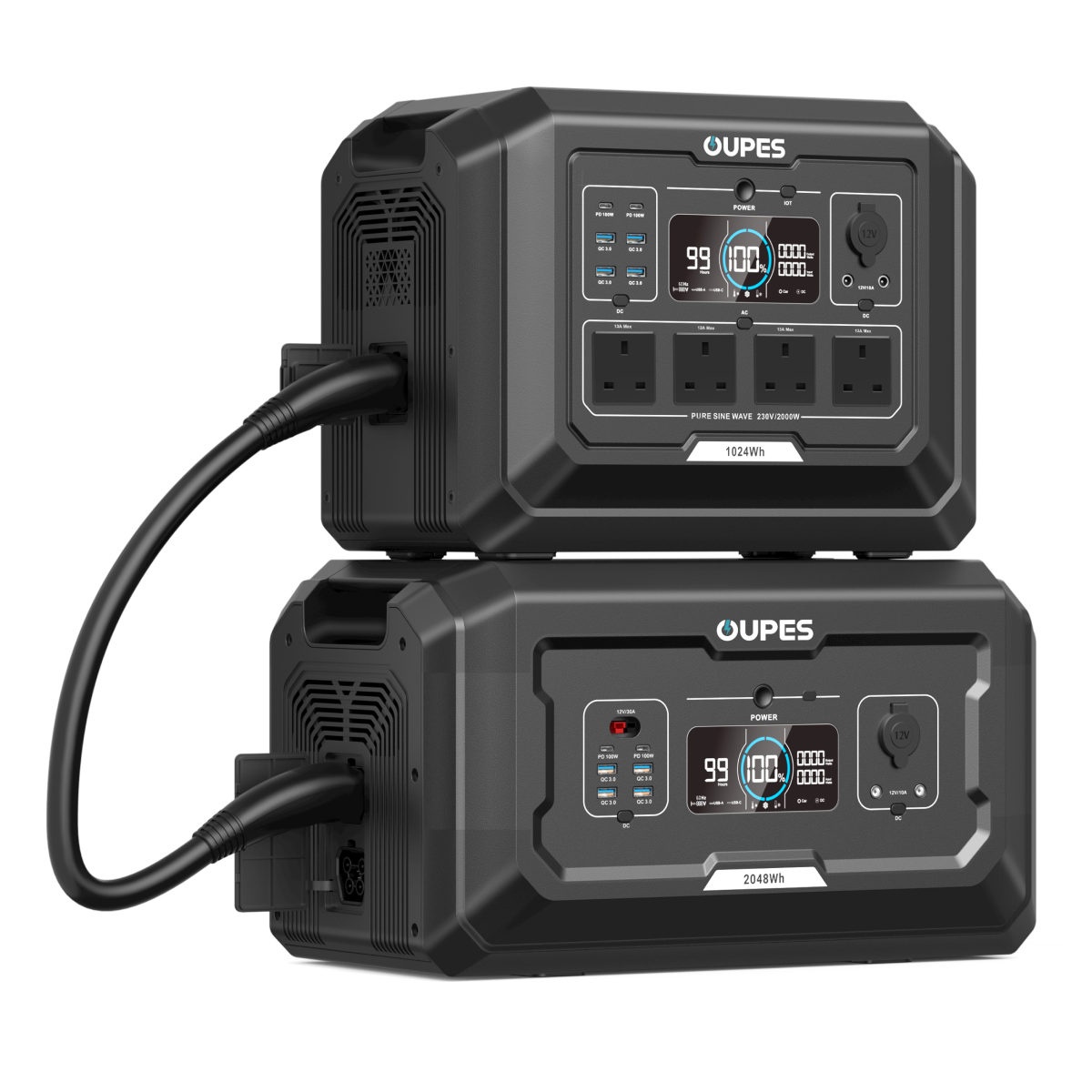
OUPES power stations integrate a LiFePO4 battery, pure sine wave inverter, charging electronics and outputs. Their rated watts and Wh still need to be checked against the exact appliance and supplied UK-market AC configuration.
| UK-Site Product | Capacity | Rated Output | Solar | Planning Role |
|---|---|---|---|---|
| OUPES Mega 1 | 1,024Wh | 2,000W | Up to 800W | Portable everyday loads and shorter backup sessions |
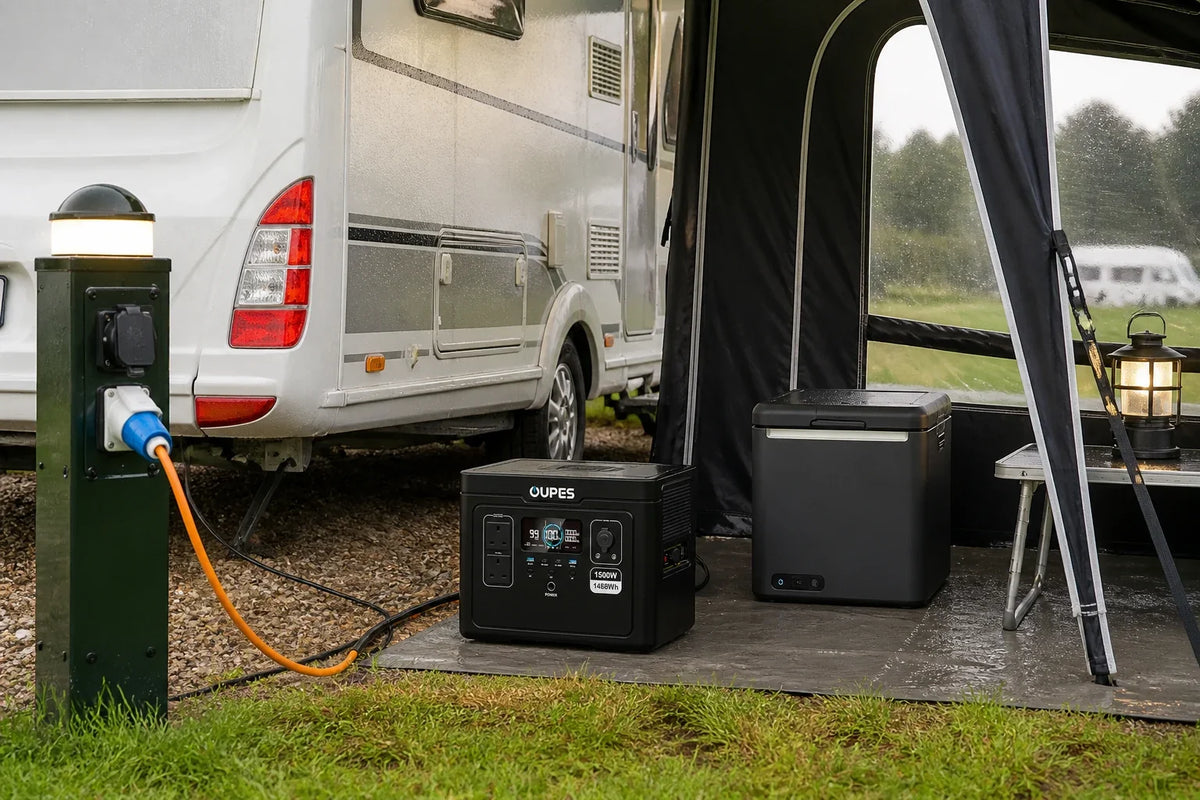
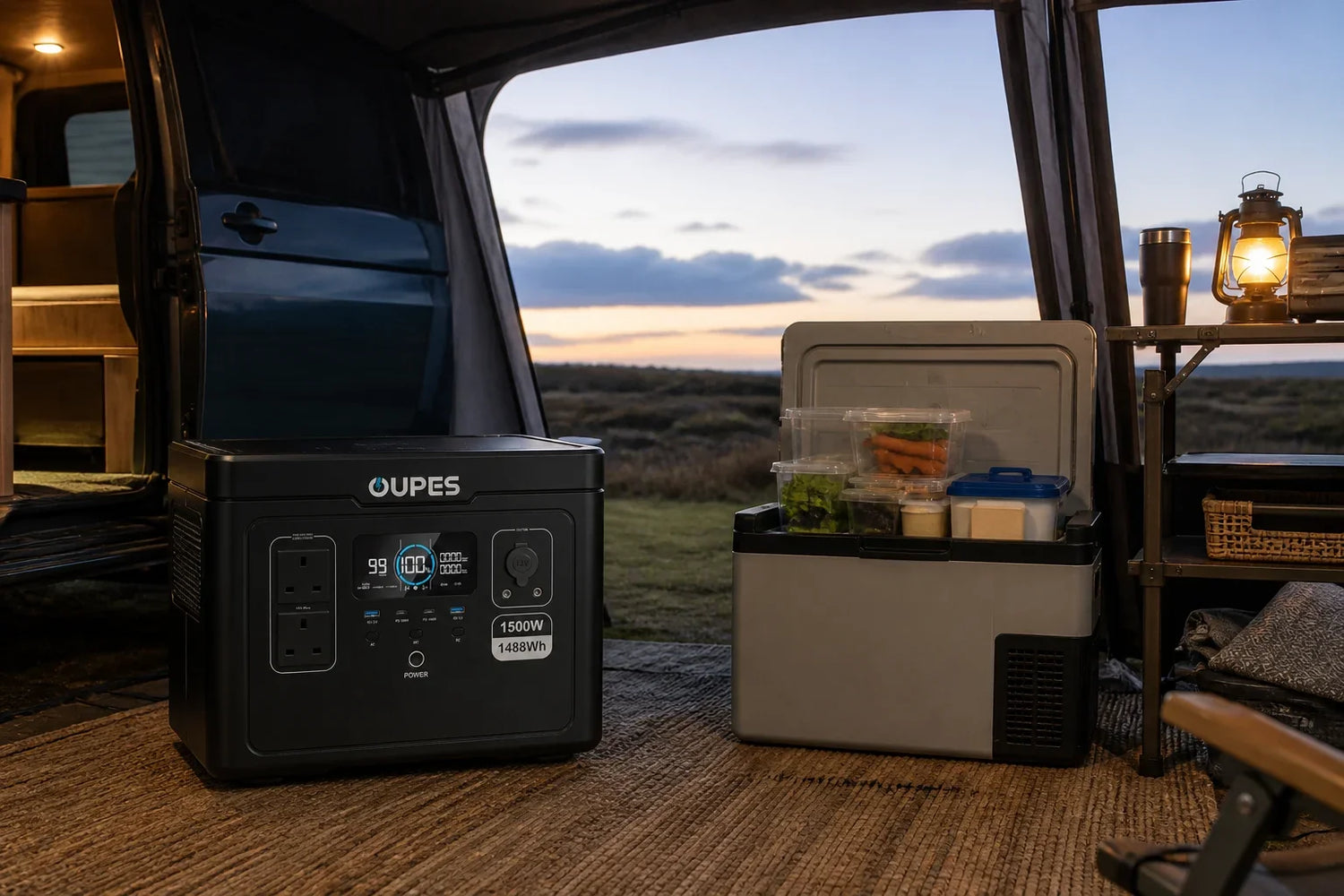
| OUPES Exodus 1500 | 1,488Wh | 1,500W | Up to 480W | Longer low-to-medium-load use where portability matters |
| OUPES Exodus 2400 | 2,232Wh | 2,400W | Up to 800W | Higher energy budgets and compatible higher-power appliances |
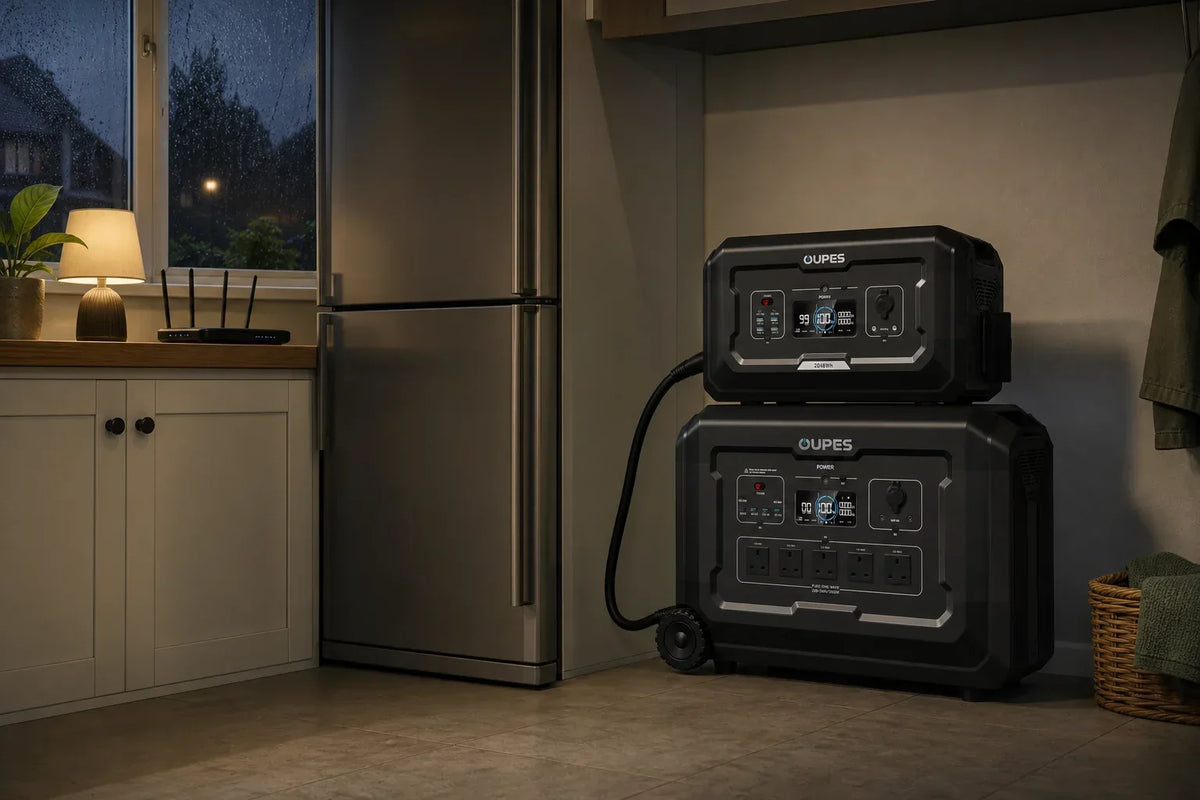
| OUPES Mega 3 | 3,072Wh | 3,600W | Up to 2,100W | Large loads, longer backup plans and expandable storage |
Before ordering from the UK store, confirm the current supplied model’s AC voltage, socket format, cables and appliance compatibility on the product page. Do not infer compatibility from wattage alone.
Practical Checklist
Inverter selection checklist:
- Match the DC battery voltage.
- Confirm AC voltage and frequency.
- Add continuous watts and startup surge.
- Choose appropriate waveform.
- Calculate high-side DC current and cable needs.
- Verify grounding, isolation and protection.
Safety and Limitations
High-current battery connections can cause severe arcing, burns and fire. Use correctly rated fuses close to the energy source and follow the equipment design.
Never connect an inverter to household wiring through an improvised plug. Use approved transfer arrangements installed by a qualified electrician.
Final Verdict
An inverter is a DC-to-AC converter, but correct sizing requires more than watts. Match both voltage systems, allow for surge and losses, and treat battery cables and protective devices as critical parts of the design.
Frequently Asked Questions
1. What converts DC to AC?
An inverter.
2. Does an inverter create electricity?
No. It converts stored or generated DC energy into AC and incurs losses.
3. How big should the inverter be?
Above simultaneous continuous watts with verified startup capability and suitable margin.
4. Is pure sine wave better?
It is generally the safer choice for sensitive electronics and many motors.
5. Why is 12V current so high?
The same power at lower voltage requires more current.
6. Can I power a house with an inverter?
Only through a designed battery, inverter and approved transfer system compatible with the circuits.

Leave a comment
This site is protected by hCaptcha and the hCaptcha Privacy Policy and Terms of Service apply.