




Quick Answer
Rain does not have to end a camping trip, but wind, flooding, cold and lightning can make a site unsafe. Check the forecast and warnings, pitch away from depressions and watercourses, and keep a dry sleeping system protected from wet equipment.
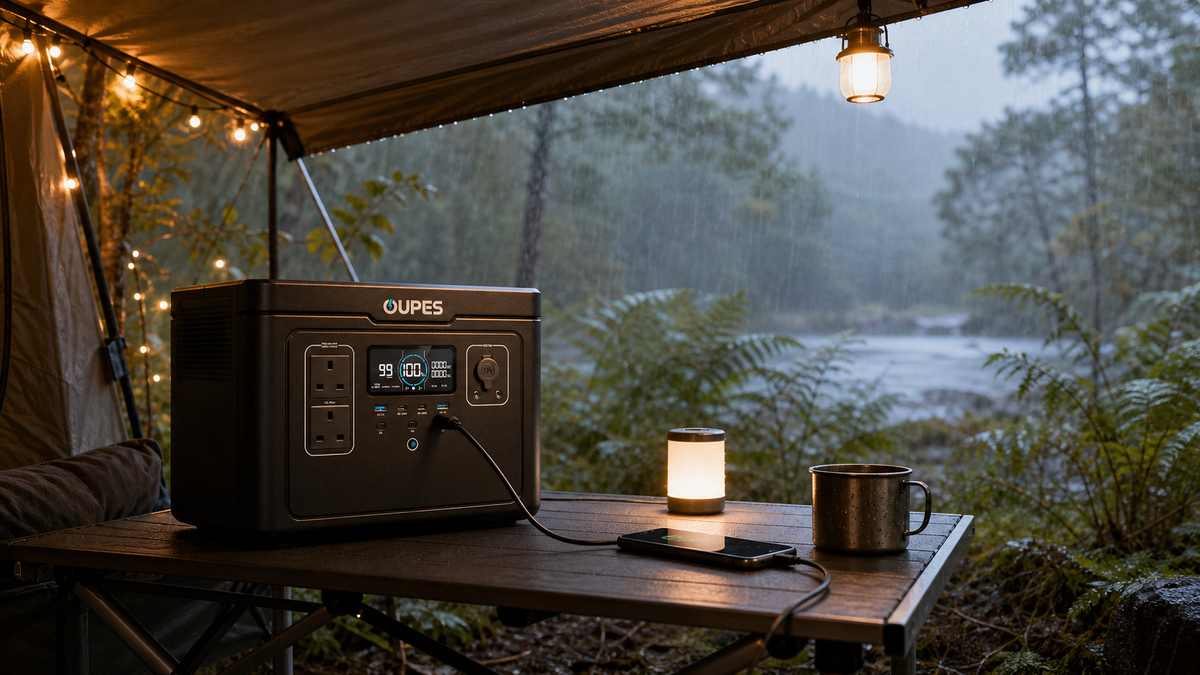
Use a sound flysheet, groundsheet, ventilation and correctly tensioned guylines. Keep power equipment and connectors dry; an IP-rated solar panel does not make the connected battery station waterproof.
Key Facts
The priorities are safe location, dry insulation, ventilation and a realistic decision about when to leave.
| Risk | Prevention | Warning Sign | Action |
|---|---|---|---|
| Surface water | Avoid hollows and channels | Water pooling near tent | Move before conditions worsen |
| Wind | Use correct pegs and guylines | Pole deformation or failed anchors | Lower exposure or leave |
| Condensation | Maintain ventilation | Wet inner walls without leaks | Increase airflow |
| Cold and wet | Protect dry layers and sleeping bag | Shivering and poor coordination | Warm up and seek shelter |
How It Works
A waterproof outer does not eliminate moisture. Occupants breathe and cook, and damp ground releases water vapour. Ventilation lets that moisture escape and reduces condensation on the inner surface.
Hydrostatic-head ratings, seam sealing and fabric condition affect weather performance. A footprint can protect the tent floor but should not extend beyond it where it can collect rain.
Site choice matters more than digging drainage channels, which can damage the campsite. Use existing durable pitches and follow site rules.
Wet-Weather Camp Setup
Pack the inner tent and sleeping gear in separate waterproof liners. If possible, pitch the flysheet first, then bring dry gear underneath.
Create wet and dry zones. Store boots and waterproofs near the entrance, keep sleeping insulation away from walls and use a dedicated dry bag for emergency clothing.
| Stage | Action | Purpose | Common Mistake |
|---|---|---|---|
| Before travel | Check warnings and campsite drainage | Avoid foreseeable hazards | Looking only at rainfall total |
| Pitching | Face the strongest structure into expected wind | Reduces wind loading | Pitching under damaged trees |
| Living | Ventilate and separate wet gear | Controls condensation | Sealing every vent |
| Packing | Separate wet fabric from dry insulation | Protects sleep system | Stuffing everything together |
Compare the Main Options
Different shelters handle rain differently, but none removes the need for site judgement.
| Shelter | Rain Advantage | Limitation | Best Practice |
|---|---|---|---|
| Double-wall tent | Inner separated from fly | Can still condense | Keep fly tensioned |
| Single-wall shelter | Fast and light | More condensation management | Vent aggressively |
| Tarp | Large covered living space | Exposed to wind shifts | Use secure anchors |
| Campervan | Hard shell and heating options | Flooding and carbon-monoxide risks remain | Park on a safe pitch |
UK Planning Considerations
The Met Office camping guidance recommends checking weather and warnings and being prepared to change plans. Wind and flooding can be more dangerous than ordinary rain.
Wild camping rules differ across the UK and by land ownership. Obtain permission where required, follow access rules and leave no trace.
For the underlying UK guidance or current figures, check Met Office camping weather advice. Published tariffs, standards and safety advice can change, so verify the source again before acting.
Relevant OUPES UK Options
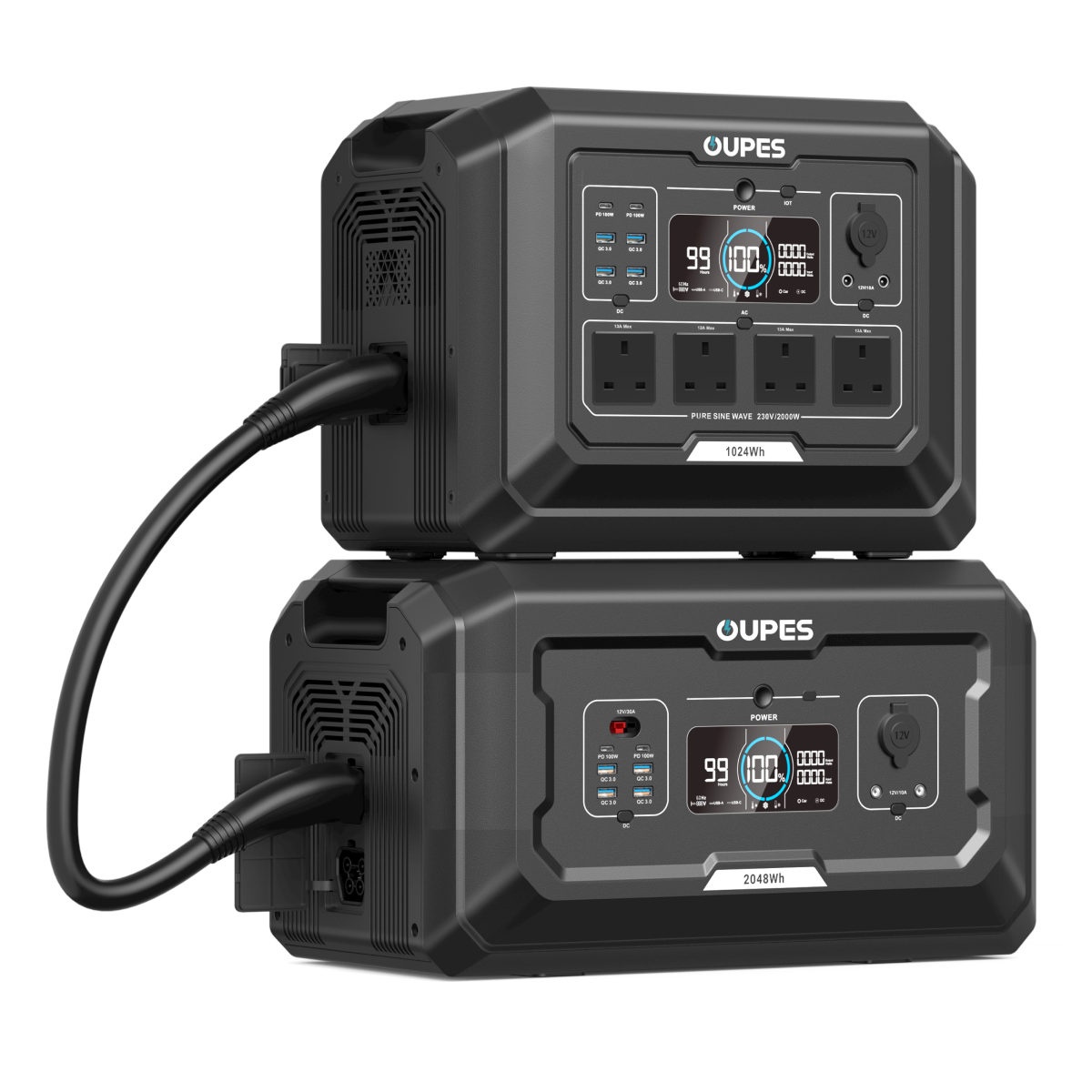
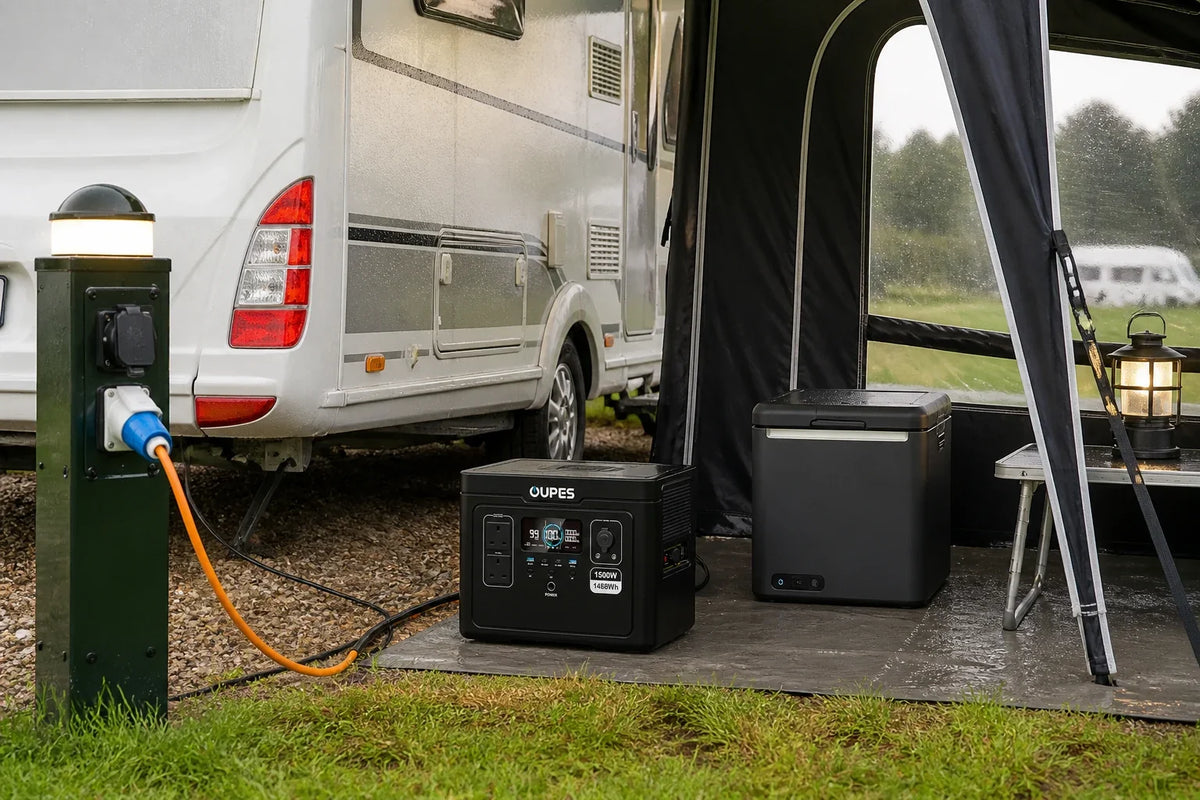
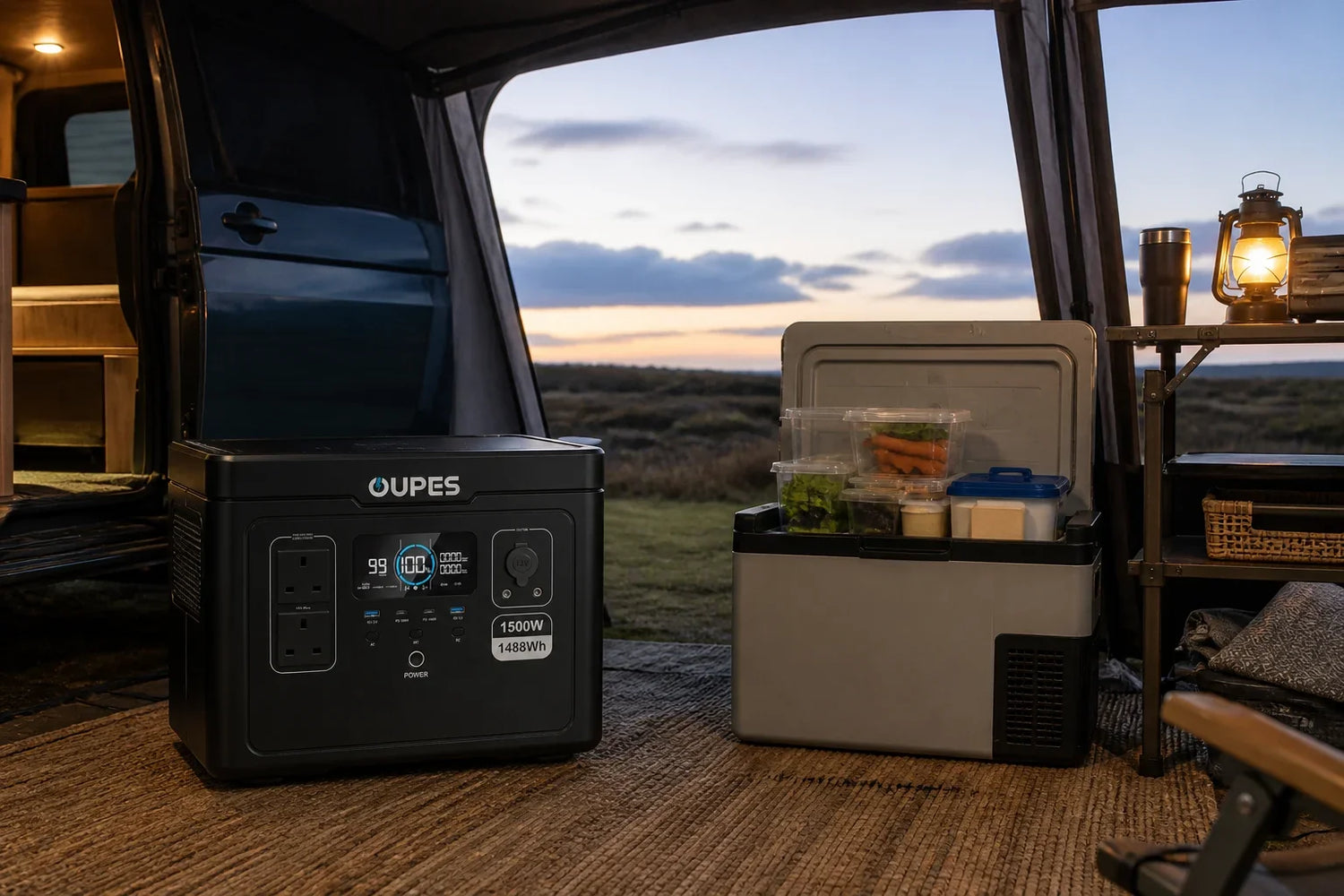
A power station can keep phones, lights and weather communications charged, but it must remain dry and within its operating limits. Use the OUPES 240W panel only when conditions and the manual permit safe deployment.
| UK-Site Product | Capacity | Rated Output | Solar | Planning Role |
|---|---|---|---|---|
| OUPES Mega 1 | 1,024Wh | 2,000W | Up to 800W | Portable everyday loads and shorter backup sessions |
| OUPES Exodus 1500 | 1,488Wh | 1,500W | Up to 480W | Longer low-to-medium-load use where portability matters |
| OUPES 240W Portable Solar Panel | 240W panel | MC4 connector | ≥23% stated cell efficiency | Portable solar charging within the station’s input limits |
Before ordering from the UK store, confirm the current supplied model’s AC voltage, socket format, cables and appliance compatibility on the product page. Do not infer compatibility from wattage alone.
Practical Checklist
Rain-camping packing list:
- Waterproof jacket and trousers.
- Dry sleep layers in a sealed bag.
- Spare pegs, guylines and repair tape.
- Absorbent cloth and rubbish bags.
- Head torch and charged communication devices.
- Emergency route to safer shelter.
Safety and Limitations
Do not cook or use combustion heaters in a sealed tent. Keep flames away from fabric and follow stove instructions and campsite rules.
If water rises, wind damages the shelter, lightning becomes close or anyone shows hypothermia symptoms, leave for suitable shelter rather than trying to preserve the camp.
Final Verdict
Successful rain camping depends on site choice and dry insulation more than gadgets. Check warnings, maintain ventilation, separate wet and dry gear, protect electrical equipment and leave early when conditions exceed the shelter.
Frequently Asked Questions
1. Is it safe to camp in the rain?
Often, but flooding, wind, lightning and cold can make a trip unsafe; check warnings and site conditions.
2. How do I stop condensation?
Maintain ventilation, avoid touching the fly and separate wet gear from sleeping areas.
3. Should a groundsheet extend beyond the tent?
No, exposed edges can collect and direct rain underneath.
4. Can I use a power station in rain?
Keep it dry and use it only within the manufacturer’s environmental limits.
5. How do I keep a sleeping bag dry?
Pack it in a sealed liner and keep it away from wet walls, clothing and boots.
6. When should I abandon the campsite?
When flooding, wind damage, lightning, cold injury or official warnings make staying unsafe.

Leave a comment
This site is protected by hCaptcha and the hCaptcha Privacy Policy and Terms of Service apply.