




Quick Answer
The best leisure battery is the one that covers daily watt-hours, peak current, desired depth of discharge, charging sources and safe installation. Lithium iron phosphate often offers high usable capacity and cycle life, while AGM or gel can suit simpler or lower-cost systems designed for those chemistries.
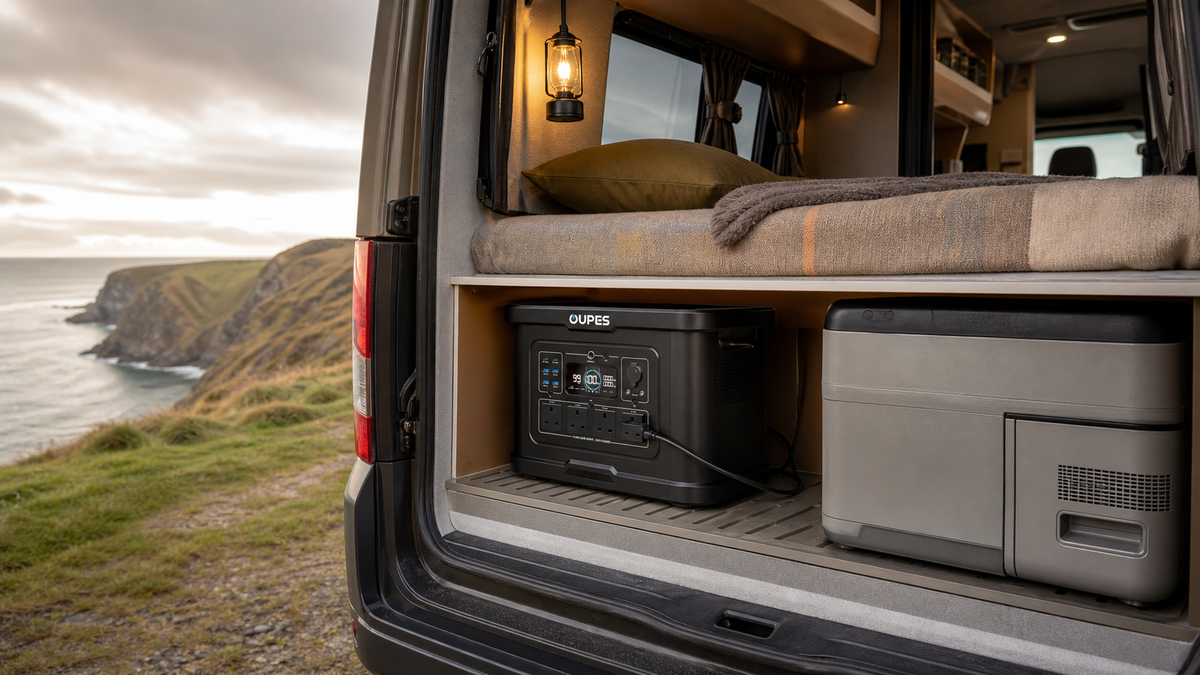
A portable power station is an alternative to a permanently installed leisure-battery system for plug-in appliances and charging. It combines storage, inverter and outputs, but it should not be treated as a drop-in replacement for the campervan’s fixed 12V electrical installation.
Key Facts
Separate power in watts from energy in watt-hours. The inverter must handle simultaneous and startup demand; the battery must contain enough usable energy between charging opportunities.
| Battery Type | Strength | Limitation | Typical Role |
|---|---|---|---|
| Flooded lead-acid | Low purchase cost | Maintenance, ventilation and limited usable depth | Budget fixed installations |
| AGM | Sealed and widely supported | Heavy and less usable energy than lithium | Conventional campervan systems |
| Gel | Good deep-cycle behaviour when correctly charged | Sensitive charging requirements | Specialised low-rate use |
| LiFePO4 | High usable energy and cycle capability | Higher initial cost and cold-charge limits | Frequent off-grid cycling |
How It Works
A leisure battery is designed for repeated discharge and recharge rather than short engine-starting bursts. It may power lighting, water pumps, refrigeration, fans and electronics through 12V circuits or an inverter.
Battery amp-hours cannot be compared without voltage. A nominal 100Ah 12.8V battery contains about 1,280Wh before applying its permitted depth of discharge and system losses. Loads supplied through an inverter also incur conversion overhead.
Charging must match the battery. Alternator, mains charger and solar controller settings should be compatible with the chosen chemistry and voltage. Lithium conversions may also require changes to fusing, cable size and charge control.
How to Size an Off-Grid Battery
List each appliance’s average watts and daily operating hours. Multiply to obtain Wh/day, add the results, then divide by an assumed usable-system factor. Size cables and the inverter separately from maximum simultaneous current and motor startup.
Plan for poor solar days rather than annual average sunshine. A two-day autonomy target roughly doubles storage before any charging, although load shedding can reduce the required system.
| Load | Example Power | Daily Use | Daily Energy |
|---|---|---|---|
| Compressor fridge | 45W average while running | 10 equivalent hours | 450Wh |
| Lighting | 20W | 5 hours | 100Wh |
| Laptop charging | 65W | 3 hours | 195Wh |
| Water pump and small devices | Variable | Allowance | 150Wh |
| Example total | — | — | 895Wh/day before losses |
Compare the Main Options
A conventional leisure-battery installation and a portable station solve overlapping but different problems.
| Approach | Best For | Advantages | Limitations |
|---|---|---|---|
| Fixed 12V leisure system | Permanent van loads | Integrated wiring and charging | Installation design required |
| Portable power station | Plug-in loads and removable backup | Integrated inverter and ports | Not a vehicle electrical-system replacement |
| Hybrid arrangement | Fixed essentials plus portable AC power | Flexible load separation | Avoid duplicate or unsafe connections |
| Hook-up only | Developed campsites | Minimal battery complexity | No resilience away from mains |
UK Planning Considerations
For UK campervans and caravans, follow applicable vehicle, campsite and electrical guidance. Secure heavy batteries against movement, provide the ventilation required by the chemistry and protect every circuit with correctly sized overcurrent protection.
Solar yield varies significantly by season. Design critical refrigeration and lighting around conservative winter or shoulder-season conditions if the vehicle will be used year-round.
For the underlying UK guidance or current figures, check Camping and Caravanning Club electricity guidance. Published tariffs, standards and safety advice can change, so verify the source again before acting.
Relevant OUPES UK Options
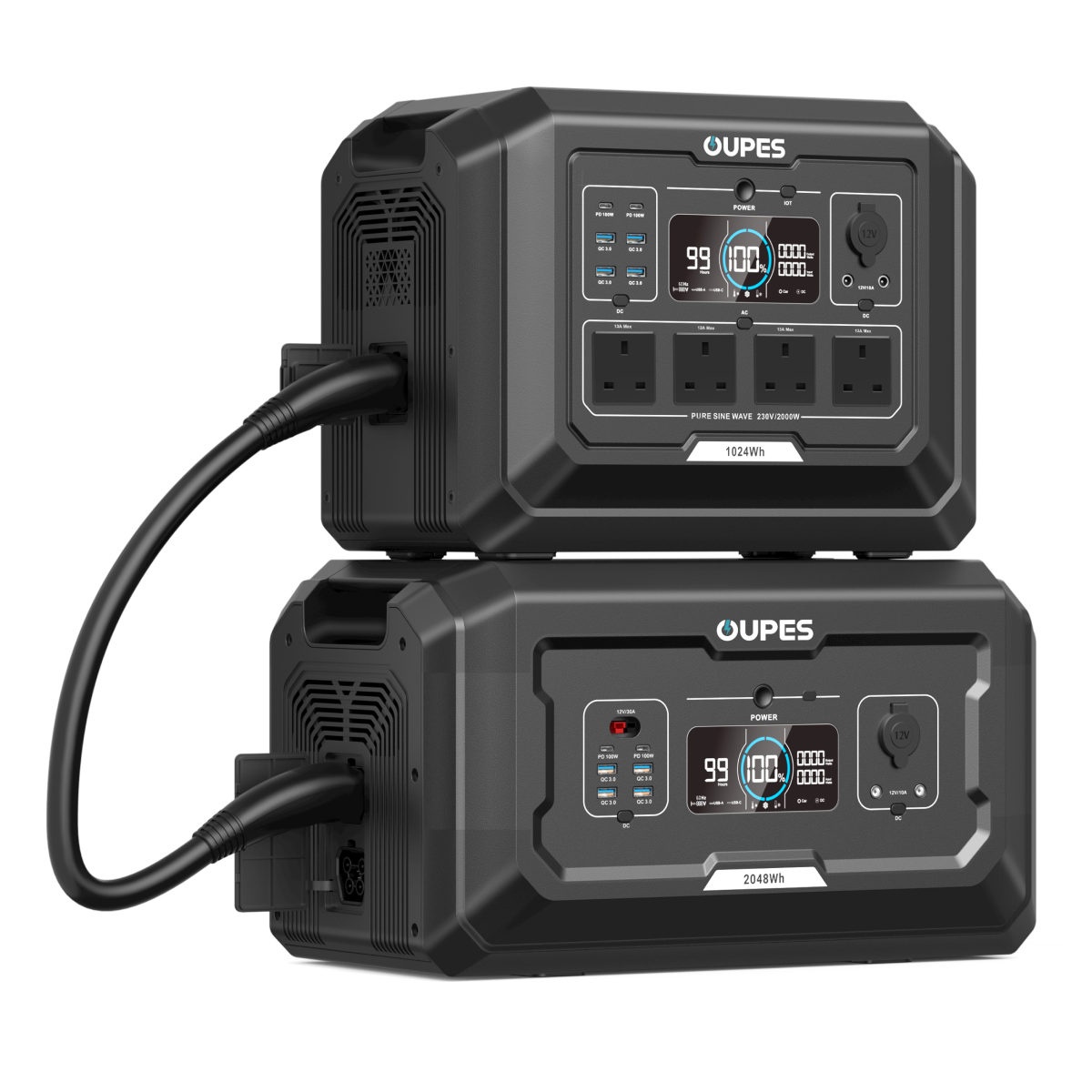
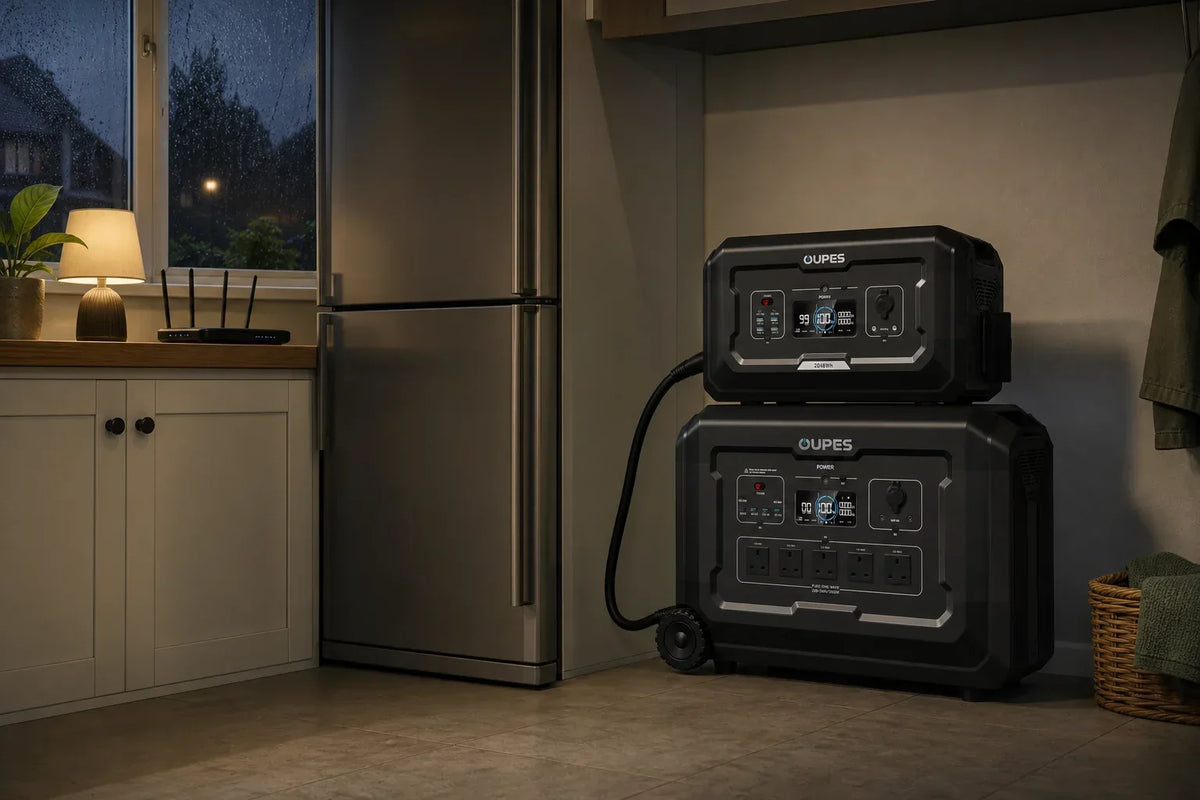
OUPES stations can serve removable plug-in loads or backup energy. Mega 1 and Mega 3 accept compatible B2 expansion, while Exodus models offer fixed integrated capacities. Confirm the supplied AC configuration and use only approved cables.
| UK-Site Product | Capacity | Rated Output | Solar | Planning Role |
|---|---|---|---|---|
| OUPES Mega 1 | 1,024Wh | 2,000W | Up to 800W | Portable everyday loads and shorter backup sessions |
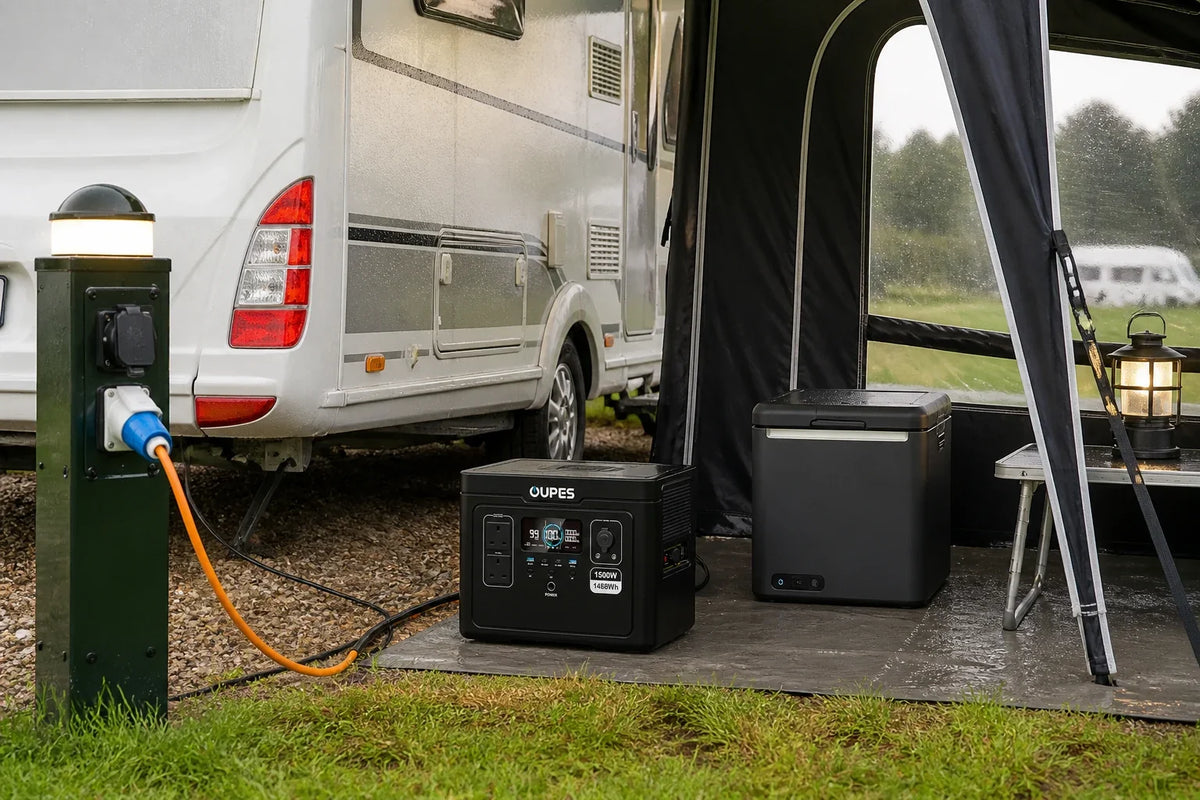
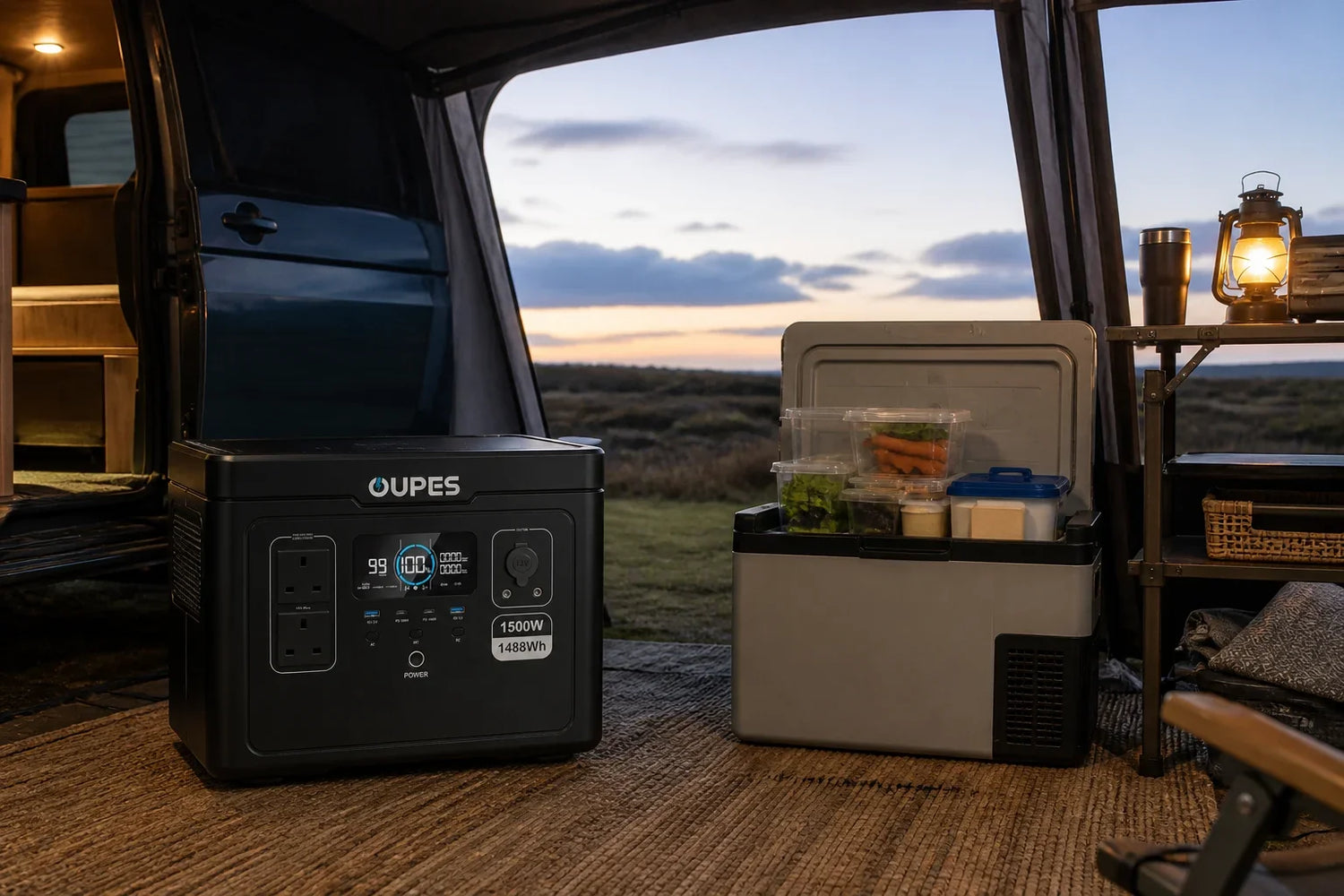
| OUPES Exodus 1500 | 1,488Wh | 1,500W | Up to 480W | Longer low-to-medium-load use where portability matters |
| OUPES Exodus 2400 | 2,232Wh | 2,400W | Up to 800W | Higher energy budgets and compatible higher-power appliances |
| OUPES Mega 3 | 3,072Wh | 3,600W | Up to 2,100W | Large loads, longer backup plans and expandable storage |
| OUPES B2 Extra Battery | 2,048Wh | USB and 12V DC outputs | Up to 2,100W independent solar input | Expanding compatible Mega 1 or Mega 3 systems |
Before ordering from the UK store, confirm the current supplied model’s AC voltage, socket format, cables and appliance compatibility on the product page. Do not infer compatibility from wattage alone.
Practical Checklist
Build the system specification before selecting a battery:
- Calculate daily Wh rather than guessing from amp-hours.
- Record compressor and pump startup demand.
- Choose a charging plan for mains, alternator and solar.
- Confirm chemistry-specific temperature limits.
- Size conductors, fuses and isolation for maximum current.
- Secure equipment and keep required ventilation clear.
Safety and Limitations
Vehicle electrical work can create fire, shock and carbon-monoxide risks when improvised. Use qualified help where the installation is beyond your competence, and never operate combustion generators inside a vehicle, awning or enclosed campsite space.
Do not connect a portable station to fixed vehicle or site wiring through improvised leads. Verify earthing, RCD protection, socket type and manufacturer instructions.
Final Verdict
For frequent deep cycling, a correctly engineered LiFePO4 system can offer a strong balance of usable energy and service life. AGM or gel may still suit established designs. Choose a portable station when removable, integrated AC/DC power better matches the use case.
Frequently Asked Questions
1. How many amp-hours do I need off-grid?
Convert the daily Wh requirement to Ah at the battery’s nominal voltage, then allow for depth of discharge, losses and autonomy.
2. Is lithium better than AGM for a campervan?
Lithium often provides more usable energy for its weight, while AGM may cost less and fit an existing charging design.
3. Can a portable power station replace a leisure battery?
It can power compatible plug-in devices but is not automatically a replacement for fixed 12V vehicle circuits.
4. How much solar do I need?
Size solar from daily Wh, seasonal production, shading and the charge controller or station input limits.
5. Can I mix battery chemistries?
Do not mix them in one bank unless a professionally designed system expressly supports it.
6. What is the most important buying figure?
There is no single figure: usable Wh, output current, charging compatibility, weight and installation safety all matter.

Leave a comment
This site is protected by hCaptcha and the hCaptcha Privacy Policy and Terms of Service apply.