




Quick Answer
For an ordinary small tent, clothing, sleeping-bag rating, insulated mats and a suitable shelter are safer primary controls than running a heater while sleeping. Combustion heaters can create carbon monoxide, fire and condensation hazards and should never be used contrary to their instructions.
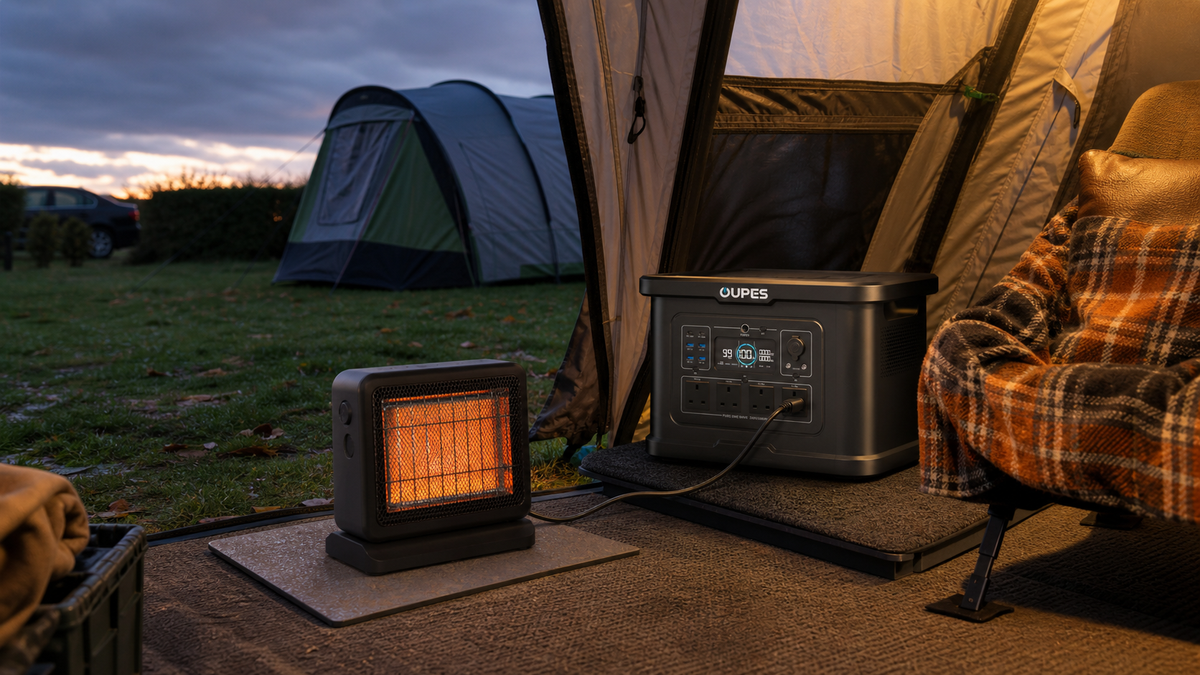
Electric heaters avoid combustion exhaust at the point of use but consume battery energy rapidly. A 500W heater needs 500Wh for every continuous hour before losses; a 1,500W heater can deplete a large portable station within a short session.
Key Facts
The best camping heater depends on the shelter, campsite rules, ventilation, weather and whether the appliance is expressly approved for the intended environment.
| Heating Method | Main Benefit | Main Risk or Limitation | Best Role |
|---|---|---|---|
| Electric blanket or heated pad | Targets the person at lower watts | Must be compatible and kept dry | Managed pre-warming or attended use |
| Electric fan heater | No on-site combustion | Very high battery demand | Hook-up or short attended sessions |
| Gas or catalytic heater | Strong portable heat | Carbon monoxide, fire and moisture | Only as manufacturer permits with ventilation |
| Diesel heater | Efficient cabin heating when installed correctly | Exhaust and permanent installation | Campervan systems designed for it |
How It Works
Heat loss from a tent is rapid because the fabric has little insulation and wind replaces warm air. Trying to heat all the air can require much more energy than warming the sleeper with suitable clothing and bedding.
Combustion consumes oxygen and can produce carbon monoxide if burning is incomplete. Carbon monoxide has no smell or colour, so lack of visible smoke does not mean the environment is safe.
Electric resistance heat converts electrical energy into heat almost one-for-one at the point of use, but that does not make it low energy. Lower-wattage heated bedding can be more practical than a space heater when the equipment is approved for the situation.
Camping Heater Battery Runtime
Estimated runtime = rated battery Wh × assumed usable AC factor ÷ heater watts. The table uses 85% as a planning factor and assumes no other loads. Thermostat cycling may extend runtime, while cold, conversion overhead and other devices reduce it.
Output compatibility is separate. The station must support the heater’s continuous power, plug, voltage and startup behaviour before any runtime estimate is relevant.
| Battery | 500W Heater | 1,000W Heater | 1,500W Heater |
|---|---|---|---|
| 1,024Wh | About 1.7 hours | About 0.9 hour | About 0.6 hour |
| 1,488Wh | About 2.5 hours | About 1.3 hours | About 0.8 hour |
| 2,232Wh | About 3.8 hours | About 1.9 hours | About 1.3 hours |
| 3,072Wh | About 5.2 hours | About 2.6 hours | About 1.7 hours |
Compare the Main Options
Reduce the heat required before adding any heater.
| Need | Lowest-Energy Starting Point | Why | Check |
|---|---|---|---|
| Warm sleep | Correct sleeping bag and insulated mat | Retains body heat without continuous power | Comfort and seasonal rating |
| Warm clothes before bed | Hot-water bottle used safely | Stores heat without electricity | Secure cap and burn prevention |
| Local warmth | Approved heated blanket or pad | Targets the user | Moisture and power compatibility |
| Whole-tent heat | Usually avoid during sleep | High loss and safety risk | Manufacturer and campsite rules |
UK Planning Considerations
UK campsites may prohibit open flames, certain fuels or unattended heaters. Check the site rules and the heater manual before travel.
The Health and Safety Executive explains that carbon monoxide can be produced when fuels do not burn fully. Barbecues, stoves and combustion equipment must not be used in enclosed sleeping spaces.
For the underlying UK guidance or current figures, check Health and Safety Executive carbon-monoxide guidance. Published tariffs, standards and safety advice can change, so verify the source again before acting.
Relevant OUPES UK Options
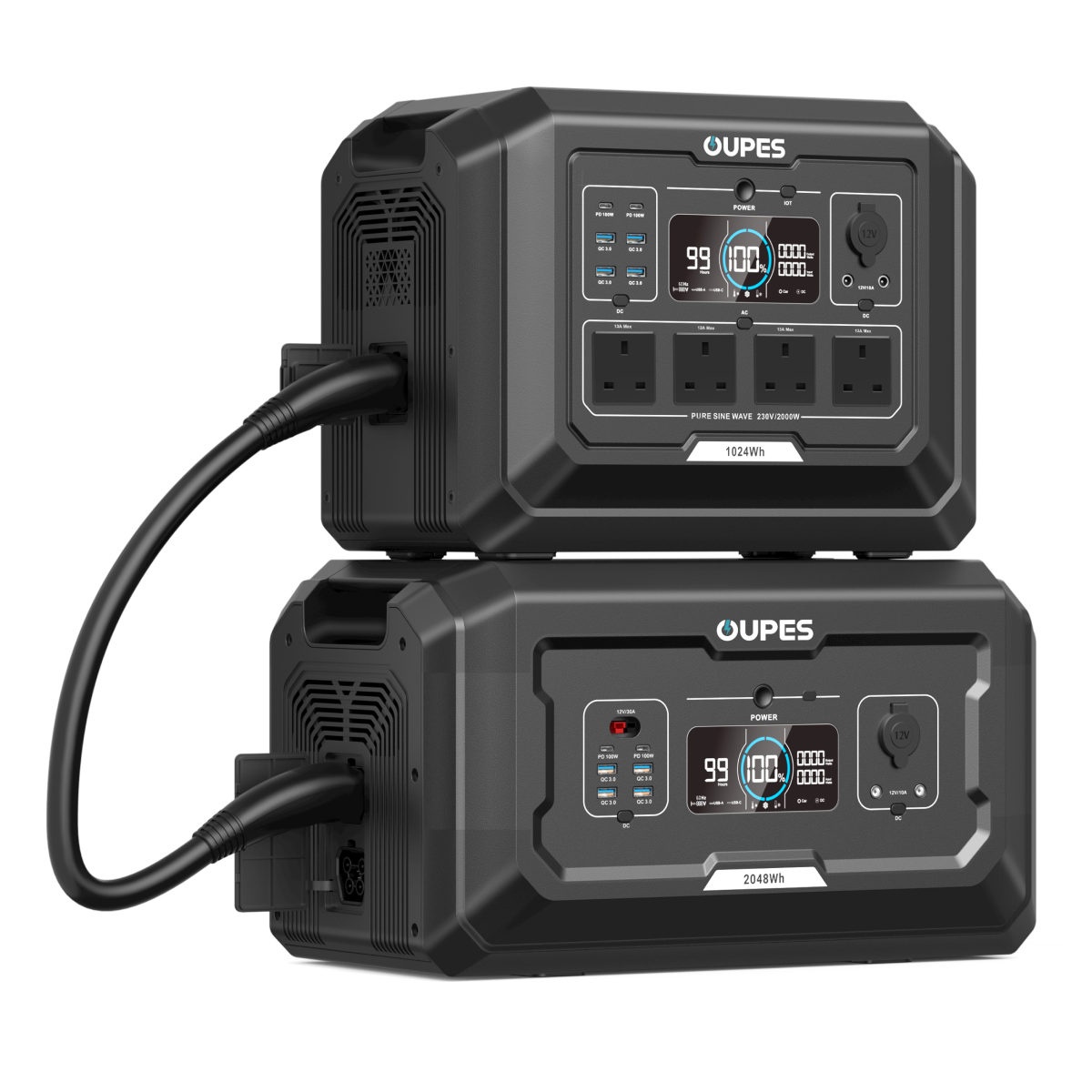
For a compatible low-wattage heated pad or short attended electric-heater session, choose by measured watts and required Wh. Mega 3 stores the most energy of the listed UK models, but even it cannot make resistance heating unlimited.
| UK-Site Product | Capacity | Rated Output | Solar | Planning Role |
|---|---|---|---|---|
| OUPES Mega 1 | 1,024Wh | 2,000W | Up to 800W | Portable everyday loads and shorter backup sessions |
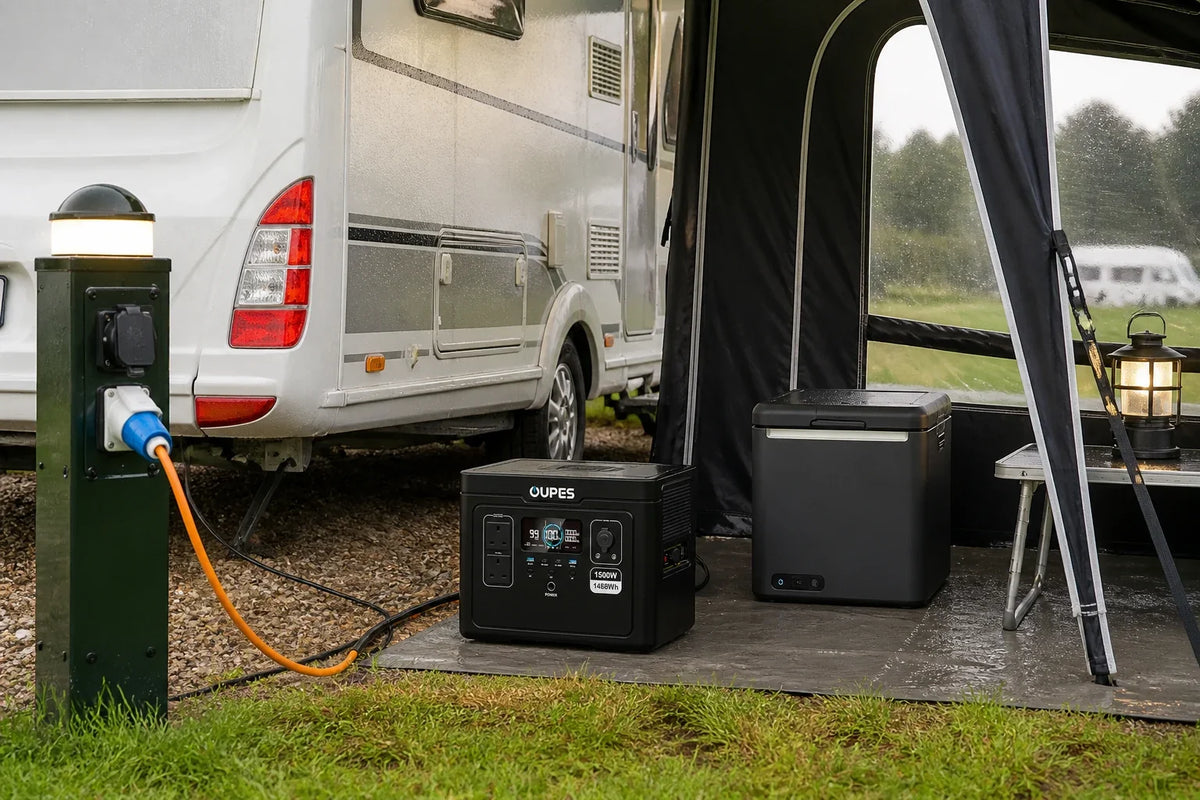
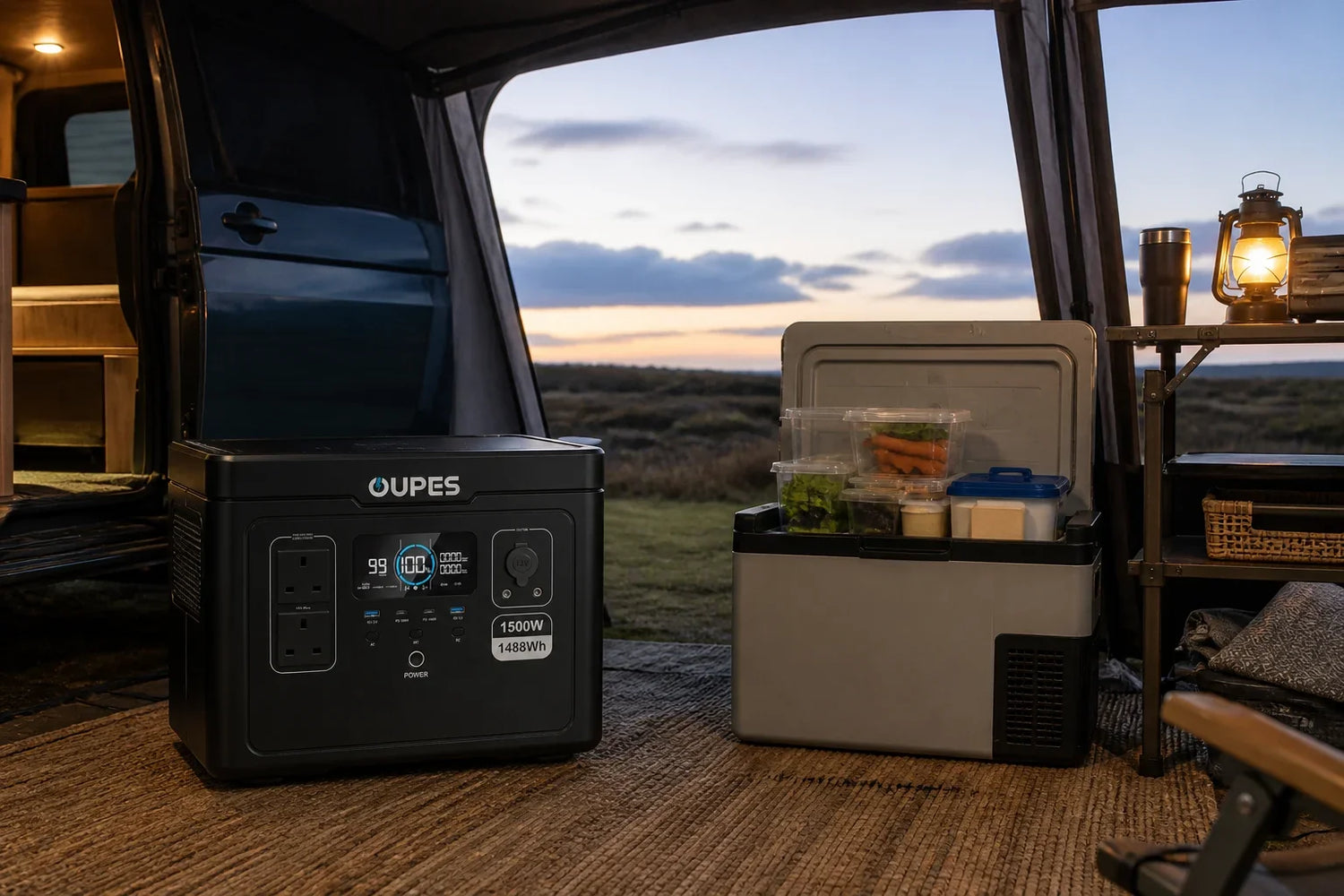
| OUPES Exodus 1500 | 1,488Wh | 1,500W | Up to 480W | Longer low-to-medium-load use where portability matters |
| OUPES Exodus 2400 | 2,232Wh | 2,400W | Up to 800W | Higher energy budgets and compatible higher-power appliances |
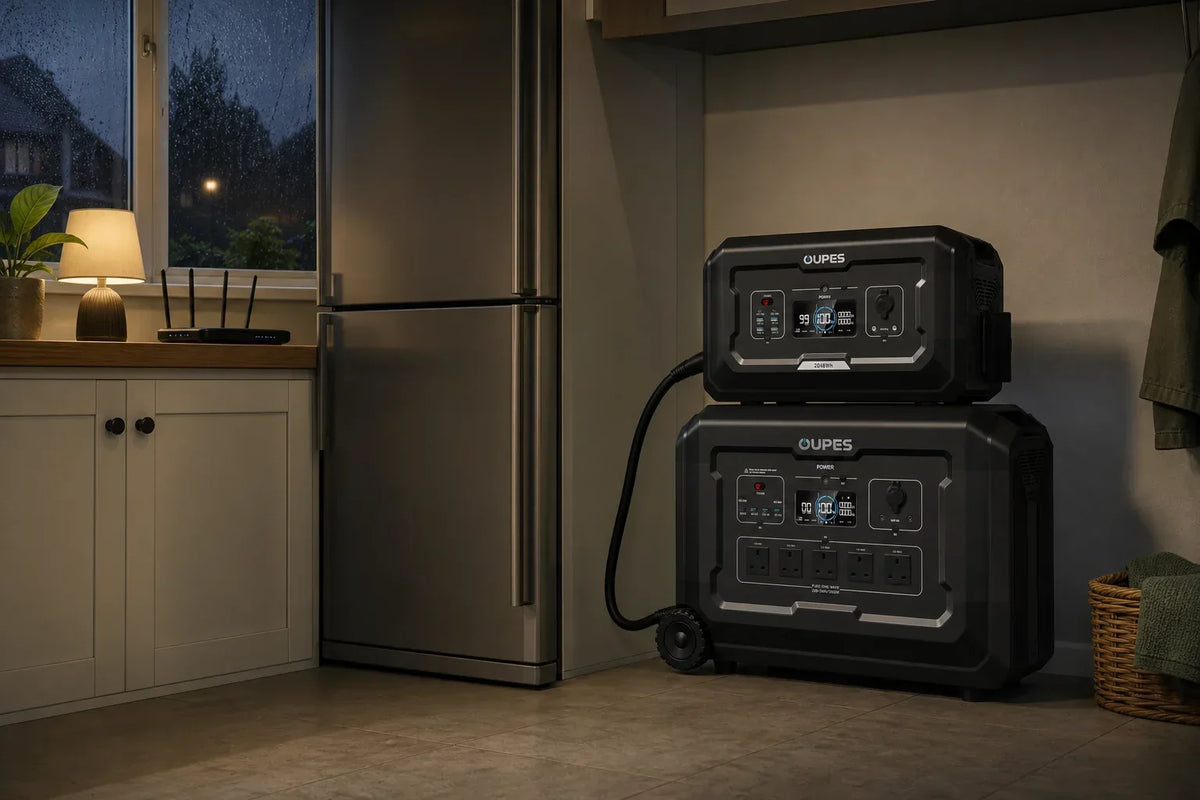
| OUPES Mega 3 | 3,072Wh | 3,600W | Up to 2,100W | Large loads, longer backup plans and expandable storage |
Before ordering from the UK store, confirm the current supplied model’s AC voltage, socket format, cables and appliance compatibility on the product page. Do not infer compatibility from wattage alone.
Practical Checklist
Cold-weather camping checklist:
- Use a sleeping bag and mat rated for expected conditions.
- Carry dry base layers, hat, gloves and spare socks.
- Ventilate the tent to reduce condensation.
- Keep every heat source away from fabric and bedding.
- Check campsite rules and weather warnings.
- Stop the trip if conditions exceed the equipment or group’s ability.
Safety and Limitations
Never bring a barbecue, smouldering fuel or an outdoor combustion appliance into a tent, awning or vehicle. Do not sleep with a heater running unless the product and shelter instructions expressly allow that use.
Keep electric heaters and battery stations dry, upright and ventilated. Do not cover them, coil heavily loaded extension leads or place hot equipment against tent fabric.
Final Verdict
The safest camping-heater plan begins with insulation and weather-appropriate sleep equipment. Use electric heat only as a managed, compatible load; treat any combustion heater as a serious ventilation and fire-safety decision, not as a convenient tent accessory.
Frequently Asked Questions
1. What is the safest way to stay warm in a tent?
Use suitable sleeping gear, insulation, dry layers and a shelter appropriate for the forecast.
2. Can I use a gas heater in a tent?
Only if the exact heater and shelter instructions permit it, with required ventilation and campsite approval; carbon monoxide risk remains.
3. How long will a power station run a 500W heater?
Roughly rated Wh × 0.85 ÷ 500 as a planning estimate, subject to compatibility and conditions.
4. Is an electric blanket better than a fan heater?
It often uses much less power because it warms the person rather than the whole tent, but it must be approved and kept dry.
5. Can I sleep with a heater running?
Avoid it unless the manufacturer expressly approves unattended sleeping use and every safety requirement is met.
6. Does solar make electric tent heating unlimited?
No. UK winter solar is variable and resistance heating can consume several kilowatt-hours overnight.

Leave a comment
This site is protected by hCaptcha and the hCaptcha Privacy Policy and Terms of Service apply.