




Quick Answer
For a fixed UK installation, a south-facing array tilted roughly 30–40 degrees is a useful starting point, but it is not a universal optimum. Latitude, roof pitch, shading, local weather and when the household uses electricity all change the best design.
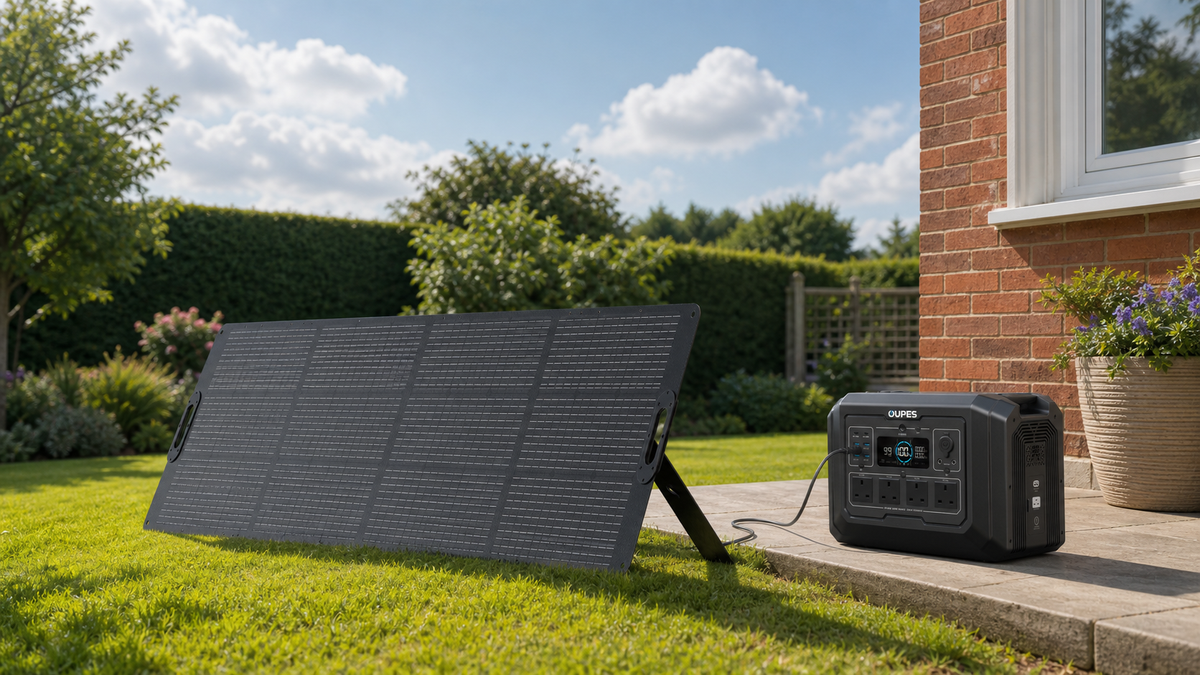
Portable panels are different because their angle can be adjusted. Point the panel towards the sun, keep the face unshaded and reposition it during the day when the extra energy is worth the effort. Always stay within the connected power station’s voltage, current and power limits.
Key Facts
Angle is only one part of solar performance. Direction, shade and electrical compatibility can have a larger effect than changing the tilt by a few degrees.
| Factor | Practical Starting Point | Why It Matters |
|---|---|---|
| Direction | South for maximum annual generation; east or west for morning or evening output | Changes when direct sunlight reaches the panel |
| Tilt | Around 30–40° for many fixed UK arrays | Balances lower winter sun and higher summer sun |
| Shade | Avoid even partial shade where possible | One shaded section can reduce useful power |
| Portable use | Re-aim towards the sun during the day | Improves incident sunlight without changing the panel |
How It Works
A photovoltaic panel produces the most power when sunlight strikes its surface close to perpendicular. The sun’s height and compass position change by hour and season, so no fixed panel can remain perfectly aligned all year.
A shallow tilt tends to favour higher summer sun, while a steeper tilt can help with lower winter sun and water run-off. Roof-mounted systems are normally designed for total annual yield and structural practicality. Portable panels can be adjusted for the current trip, season and charging window.
Do not confuse panel nameplate watts with guaranteed charging watts. Cloud, temperature, cable loss, dirt, controller efficiency and the power station’s input ceiling all reduce or cap real output.
How to Set the Angle
Start with the site rather than a single angle from the internet. Identify true south, inspect shade across the intended charging hours and use the existing roof pitch if a fixed installation is being assessed.
For a portable panel, place it on firm ground, use its kickstand and compare input watts after each small adjustment. A stable position that stays unshaded is usually better than a theoretically perfect position that moves, folds or becomes unsafe in wind.
| Situation | Suggested Approach | Check |
|---|---|---|
| Fixed roof array | Model annual production using roof pitch and orientation | Structure, wind loading, planning and installer design |
| Summer portable charging | Use a somewhat shallower tilt and re-aim around midday | Panel temperature and changing shade |
| Winter portable charging | Use a steeper tilt towards the low sun | Wind stability and shorter daylight |
| East/west roof | Keep the real orientation in the model | Output may align better with morning or evening demand |
Compare the Main Options
The most useful comparison is not simply south versus east or west; it is annual energy, time-of-day production and the cost or complexity of changing the installation.
| Orientation | Typical Output Pattern | Best Fit | Limitation |
|---|---|---|---|
| South-facing | Strongest around the middle of the day | Maximum annual generation focus | May not match evening demand |
| East-facing | More generation in the morning | Early household demand | Lower afternoon output |
| West-facing | More generation later in the day | Afternoon and evening demand | Lower morning output |
| East/west split | Broader production window | Self-consumption across the day | May need more roof area |
UK Planning Considerations
The Energy Saving Trust notes that south-facing panels generally produce the most electricity, while east- and west-facing roofs can still perform well and may better match when electricity is used.
For a permanent array, use a qualified installer and a location-specific yield model. The best angle for a portable charging panel can be tested from the power station’s live input display, but cable routing, wind and weather remain part of the decision.
For the underlying UK guidance or current figures, check Energy Saving Trust solar installation guidance. Published tariffs, standards and safety advice can change, so verify the source again before acting.
Relevant OUPES UK Options
The OUPES 240W portable panel can be repositioned for the available sun. Pairing decisions should be based on each station’s accepted solar voltage, current and power, not on panel wattage alone.
| UK-Site Product | Capacity | Rated Output | Solar | Planning Role |
|---|---|---|---|---|
| OUPES 240W Portable Solar Panel | 240W panel | MC4 connector | ≥23% stated cell efficiency | Portable solar charging within the station’s input limits |
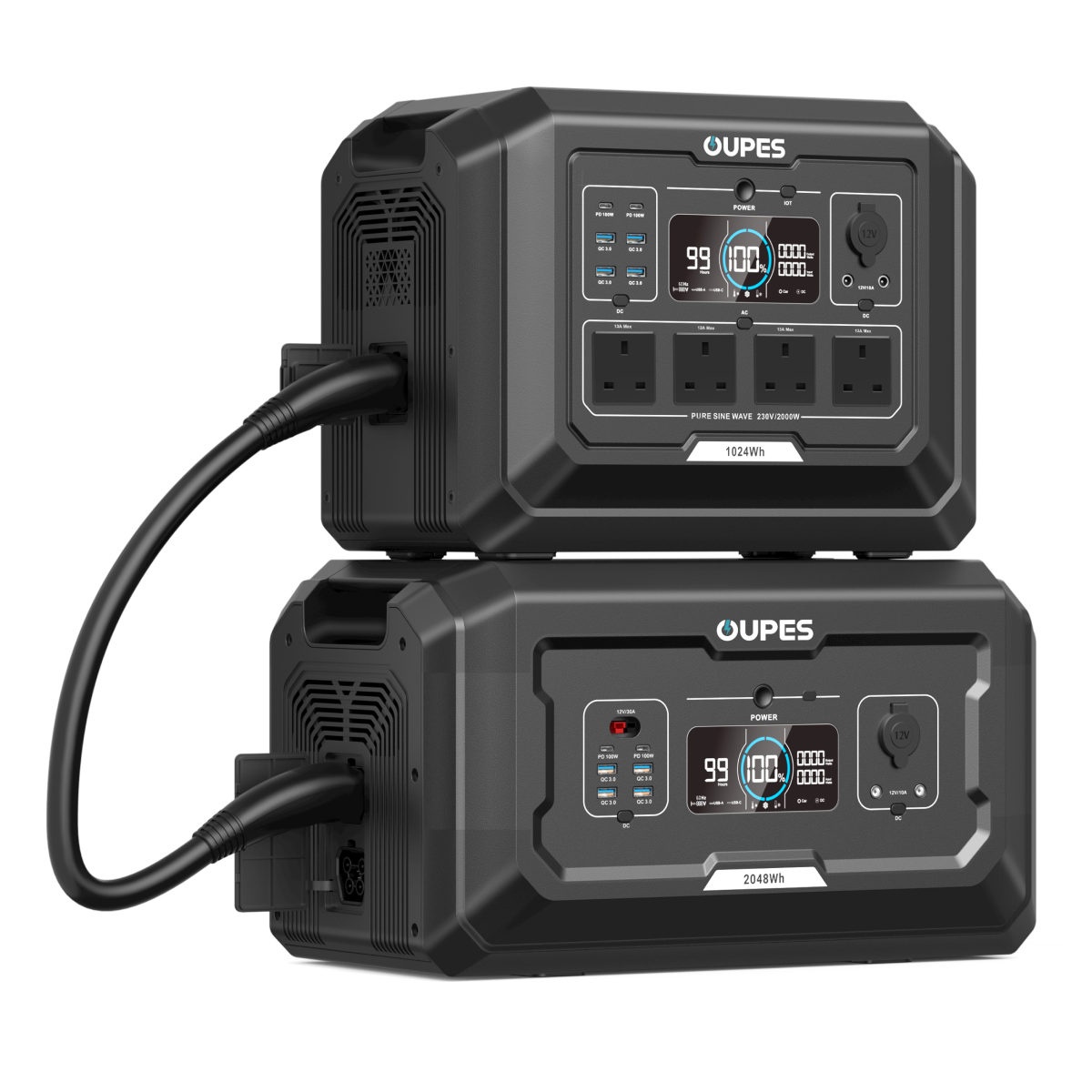
| OUPES Mega 1 | 1,024Wh | 2,000W | Up to 800W | Portable everyday loads and shorter backup sessions |
| OUPES Exodus 2400 | 2,232Wh | 2,400W | Up to 800W | Higher energy budgets and compatible higher-power appliances |
| OUPES Mega 3 | 3,072Wh | 3,600W | Up to 2,100W | Large loads, longer backup plans and expandable storage |
Before ordering from the UK store, confirm the current supplied model’s AC voltage, socket format, cables and appliance compatibility on the product page. Do not infer compatibility from wattage alone.
Practical Checklist
Before setting or changing a panel angle:
- Confirm true compass direction rather than judging from a wall or road.
- Check shade at several times of day and in different seasons.
- Keep portable panels secure against wind and away from standing water.
- Stay within every solar-input voltage and current limit.
- Use appropriate connectors and inspect cables for damage.
- Record input watts over time instead of relying on one instant reading.
Safety and Limitations
Do not climb onto a roof to adjust panels without suitable access equipment and competence. Fixed rooftop solar involves structural, weatherproofing and electrical work that should be designed and installed appropriately.
Portable panels may carry an IP rating, but that does not make every connector, cable or power station suitable for rain. Follow the product manuals and disconnect equipment if conditions become unsafe.
Final Verdict
Use 30–40 degrees and south-facing as a planning baseline, not a promise. The best real configuration is the one that combines low shade, safe installation, compatible electrical input and useful generation at the times energy is needed.
Frequently Asked Questions
1. What is the best angle for solar panels in the UK?
Around 30–40 degrees is a common fixed-array starting point, but location, roof pitch and shade should be modelled.
2. Should UK solar panels face south?
South usually maximises annual production, while east or west can still be worthwhile and may suit morning or evening demand.
3. Do solar panels work on cloudy days?
Yes, but output is normally lower because less direct solar irradiance reaches the cells.
4. Should portable solar panels be moved during the day?
Repositioning can improve harvest if it can be done safely and the gain justifies the effort.
5. Does a steeper angle help in winter?
It can better face the lower winter sun, although weather, shade and short daylight may still dominate output.
6. Can I connect any solar panel to an OUPES station?
Only when voltage, current, connector polarity and power remain within the exact model’s published input limits.

Leave a comment
This site is protected by hCaptcha and the hCaptcha Privacy Policy and Terms of Service apply.