




Quick Answer
Convert amp-hours to kilowatt-hours with kWh = Ah × nominal volts ÷ 1,000. Voltage is compulsory: 100Ah equals 1.28kWh at 12.8V, 2.56kWh at 25.6V and 5.12kWh at 51.2V.
For the reverse conversion, Ah = kWh × 1,000 ÷ volts. These are nominal conversions; available output is lower after battery-management limits, temperature effects and conversion losses.
Key Facts
Ah measures charge capacity while kWh measures energy. Voltage connects the two.
| Input | Conversion | Output | Use |
|---|---|---|---|
| Ah and V | Ah × V | Wh | Battery energy |
| Wh | Wh ÷ 1,000 | kWh | Larger energy unit |
| kWh and V | kWh × 1,000 ÷ V | Ah | Reverse conversion |
| kWh and load kW | kWh ÷ kW | Ideal hours | Runtime starting point |
How It Works
Two batteries with the same Ah can contain very different energy because their voltages differ. This is why comparing a 12V leisure battery and a higher-voltage power-station pack by Ah alone is misleading.
Use nominal voltage rather than the momentary terminal voltage. A “12V” LiFePO4 battery is commonly calculated around a 12.8V nominal value, but the product data sheet is authoritative.
Nominal kWh is not automatically usable kWh. The battery may reserve capacity, and an inverter consumes energy while changing DC to AC.
Ah to kWh Formula and Worked Examples
Step 1: identify Ah. Step 2: identify nominal volts for the same battery. Step 3: multiply them to obtain Wh. Step 4: divide by 1,000 for kWh.
To estimate delivered AC runtime, multiply nominal kWh by a realistic usable factor and inverter efficiency, then divide by average load kW.
| Capacity | Voltage | Calculation | Nominal Energy |
|---|---|---|---|
| 50Ah | 12.8V | 50 × 12.8 ÷ 1,000 | 0.64kWh |
| 100Ah | 12.8V | 100 × 12.8 ÷ 1,000 | 1.28kWh |
| 100Ah | 25.6V | 100 × 25.6 ÷ 1,000 | 2.56kWh |
| 100Ah | 51.2V | 100 × 51.2 ÷ 1,000 | 5.12kWh |
Compare the Main Options
Use kWh for energy comparison, then separately compare output power, connectors and charging.
| Comparison | Valid? | Reason | Better Method |
|---|---|---|---|
| 100Ah vs 200Ah at same voltage | Broadly | Energy scales with Ah | Still check usable capacity |
| 100Ah at 12.8V vs 100Ah at 51.2V | No by Ah alone | Energy differs fourfold | Compare kWh |
| 1.28kWh vs 1,280Wh | Yes | Same nominal energy | Check test basis |
| 2kWh battery vs 2kW inverter | No | Energy and power differ | Specify both |
UK Planning Considerations
In UK leisure, marine and off-grid systems, nominal voltage conventions vary by chemistry. Use the data sheet, not a rounded marketing name, for calculation.
NIST’s electrical SI information provides unit context. Installation and protection remain engineering matters beyond a unit conversion.For the underlying UK guidance or current figures, check NIST electrical SI guidance. Published tariffs, standards and safety advice can change, so verify the source again before acting.
Relevant OUPES UK Options
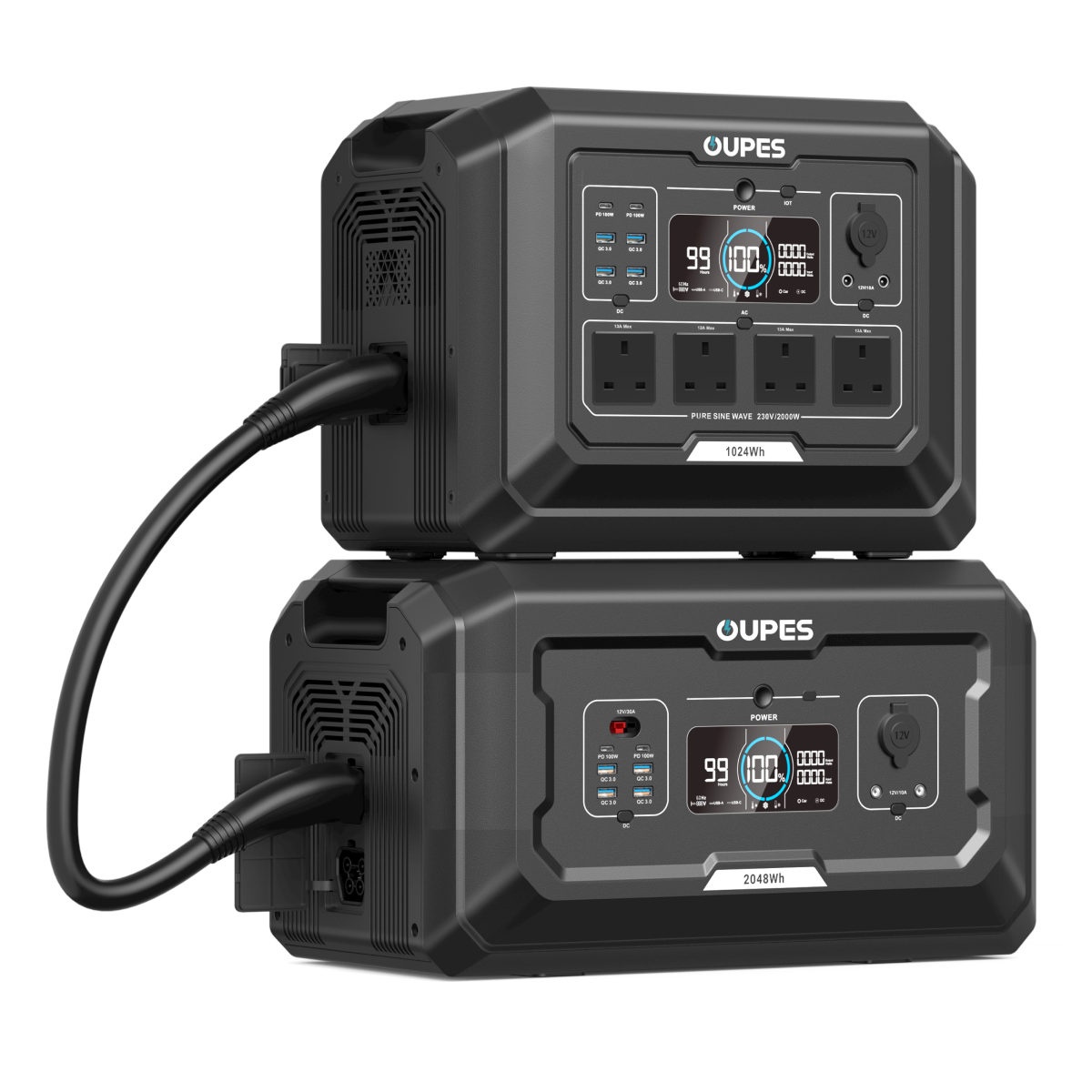
OUPES UK capacities are already stated in Wh. Divide by 1,000 for kWh; converting to Ah requires choosing a voltage and is not needed for normal model comparison.
| UK-Site Product | Capacity | Rated Output | Solar | Planning Role |
|---|---|---|---|---|
| OUPES Mega 1 | 1,024Wh | 2,000W | Up to 800W | Portable everyday loads and shorter backup sessions |
| OUPES Exodus 1500 | 1,488Wh | 1,500W | Up to 480W | Longer low-to-medium-load use where portability matters |
| OUPES Exodus 2400 | 2,232Wh | 2,400W | Up to 800W | Higher energy budgets and compatible higher-power appliances |
| OUPES Mega 3 | 3,072Wh | 3,600W | Up to 2,100W | Large loads, longer backup plans and expandable storage |
| OUPES B2 Extra Battery | 2,048Wh | USB and 12V DC outputs | Up to 2,100W independent solar input | Expanding compatible Mega 1 or Mega 3 systems |
Before ordering from the UK store, confirm the current supplied model’s AC voltage, socket format, cables and appliance compatibility on the product page. Do not infer compatibility from wattage alone.
Practical Checklist
Avoid conversion errors by checking:
- Ah and volts refer to the same battery.
- Voltage is nominal, not charger voltage.
- Wh is divided by 1,000 only once.
- Usable capacity is not assumed to be 100%.
- Load power is average, not just peak.
- Inverter and cable losses are included.
Safety and Limitations
A capacity conversion does not specify safe cable size, fuse rating, charge current or battery configuration. Follow the manufacturer and competent installer.
Do not measure or modify live battery assemblies merely to obtain voltage. Use the published specification.
Final Verdict
Multiply Ah by nominal volts and divide by 1,000. Without voltage there is no unique Ah-to-kWh answer, and without loss allowances the result is not a dependable runtime.
Frequently Asked Questions
1. How many kWh is 100Ah?
It depends on voltage: 1.28kWh at 12.8V or 5.12kWh at 51.2V.
2. Can I convert Ah to kWh without volts?
No. Ah measures charge and kWh measures energy.
3. How many Ah is 1kWh at 12.8V?
About 78.13Ah using 1 × 1,000 ÷ 12.8.
4. Is 1,000Wh equal to 1kWh?
Yes.
5. Does 1.28kWh mean 1.28kWh usable?
Not necessarily; protection limits, losses, temperature and age reduce delivered energy.
6. Why use nominal voltage?
It provides a consistent conversion value across the battery’s changing state of charge.


Leave a comment
This site is protected by hCaptcha and the hCaptcha Privacy Policy and Terms of Service apply.